



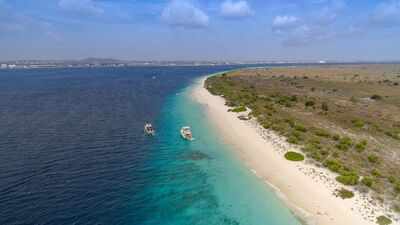
Dry tropical forests can take years to recover after logging, land clearing and grazing. A 15-year study on the Caribbean island of Bonaire shows that this recovery can begin when pressure from introduced herbivores is reduced. Researchers compared fenced plots, landscape-scale goat removal, and tree planting to understand how the forests responded over time. After 15 years, but not after eight, fenced plots had more saplings and adult trees, showing that forest recovery takes time. According to the Journal of Applied Ecology, titled ‘Strategies for dry forest recovery: Fifteen years of Caribbean experimentation across scales, ’ planted seedlings also showed high survival beneath protected forest remnants.
How did removing goats help Bonaire’s dry forests recover
The researchers tested how removing introduced mammalian herbivores affected forest recovery. In one experiment, they compared 14 pairs of fenced and unfenced plots over 15 years. They also monitored 24 plots for four years after goats were removed across a wider area. Seedlings were more abundant in fenced plots after eight years, and seedling numbers also rose across the wider area after goat removal, especially in rainy years. The results indicate that goats and other introduced herbivores can prevent young trees from becoming established. Controlling these animals can thus support forest recovery on Bonaire, particularly by giving young trees a better chance to survive and grow.
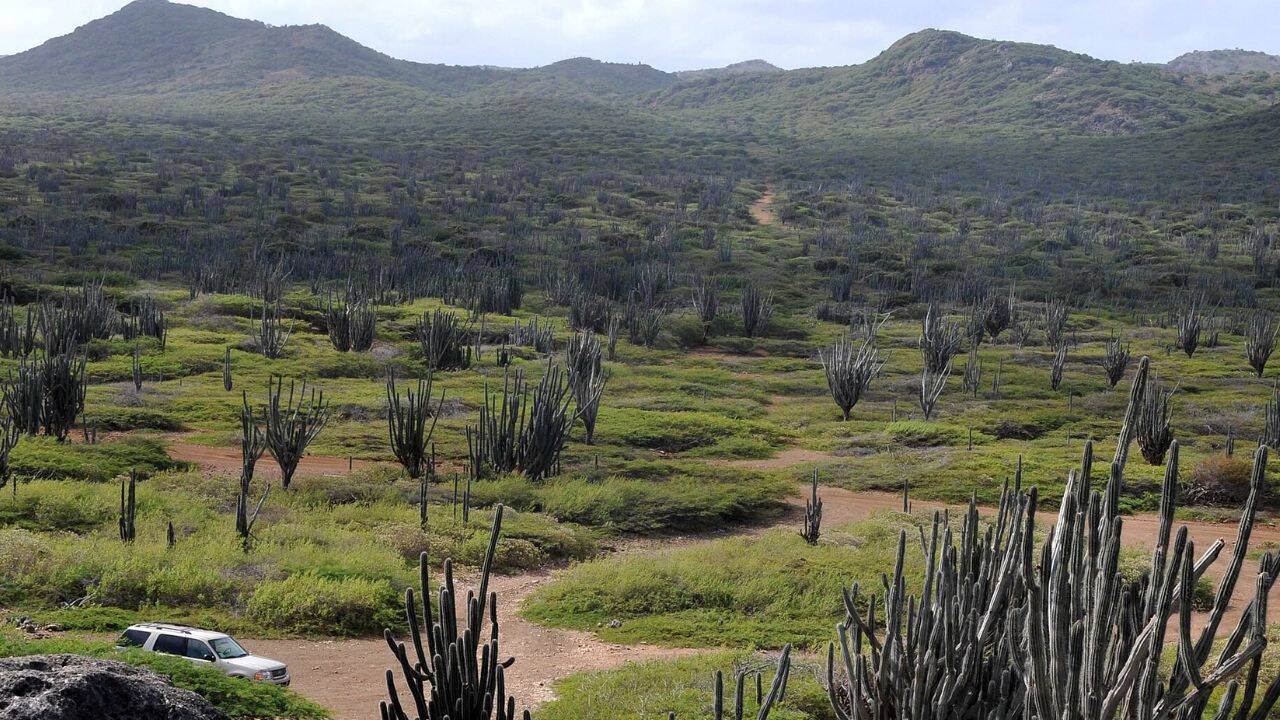
PC: JERRYE AND ROY KLOTZ MD/ Wikipedia
Why was natural recovery limited to some tree species
Bonaire’s dry forests are home to 60 native tree species, but only 22 were found to establish naturally in plots protected from herbivores for 15 years. The same pattern was observed after goats were removed from a wider area. After four years, only 16 tree species were naturally growing there. The researchers say this represents roughly one third of the potential tree flora.A lack of nearby trees producing seeds, along with limited seed movement, may help explain why some species did not return. This shows that natural forest recovery can increase the number of trees without restoring the full range of species. Planting additional trees may be needed to bring back rare species and rebuild a more diverse forest community.
How did researchers use tree planting to restore forest diversity
Researchers also examined active restoration by planting seedlings beneath fenced remnants of dry forest. Between 2016 and 2019, the project planted 12,000 seedlings representing 53 tree species across 11 fenced forest patches. For eight sites with monitoring records, the researchers analysed the survival of 7,655 seedlings.Planted seedlings generally survived well, though survival varied by site. This approach was particularly useful for rare or declining species that may struggle to reach new areas naturally. The reforestation plots included 58% of the 38 tree species listed as rare or having special conservation status, and most of these species showed high survival.
Why is long-term management important for forest recovery
The researchers note that dry forest recovery on Bonaire is a long-term process and cannot be measured only by early changes in vegetation. Keeping herbivores out increased litter accumulation and reduced organic matter in runoff, but after nine years, it showed no significant differences in soil nutrients, runoff quantity, or water infiltration. These findings indicate that past disturbance can continue to affect the forest even after restoration begins.The study also highlights the value of combining goat control with tree planting beneath remaining forest patches across larger areas. Local involvement was another important part of the work, with volunteers helping remove goats and students taking part in monitoring.
About The Author


