


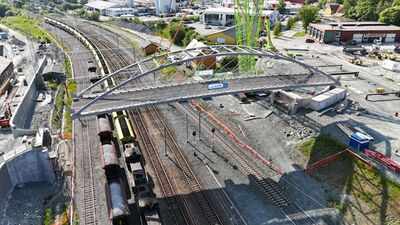
Norway has given old oil-industry material a very different purpose, turning 20 tonnes of aluminium recovered from the decommissioned Gyda oil platform into part of a new pedestrian and cycle bridge in Trondheim. The 55-metre Hangarbrua crosses the railway at Leangen Station and is the first aluminium bridge built in Norway since 1995. Its deck is made entirely from recycled aluminium, creating a project that links the country’s offshore industrial past with a new piece of urban infrastructure. The bridge also serves as a test project for future aluminium construction.
How did 20 tonnes of oil platform aluminium become a 55-metre bridge
The story begins with Gyda, a North Sea oil platform that operated from 1990 until it was decommissioned in 2021. Aker Solutions dismantled the platform, recovering 18,000 tonnes of steel and other metals, including aluminium from its topsides. Stena Recycling sorted the recovered aluminium before selling the scrap to Hydro for recycling.Hydro then processed the aluminium at its facilities in Sweden. The company cast the recovered material into extrusion ingots at its Sjunnen casthouse before transporting it to its extrusion plant in Finspang. There, it was turned into new aluminium profiles that could be used for the bridge deck. The process allowed material that had once been part of offshore infrastructure to become part of a public structure in Trondheim.The Norwegian Public Roads Administration commissioned Hangarbrua as a pilot project. Leirvik AS designed and built the bridge with COWI, while Hydro, Aker Solutions and Stena worked together on the recycled aluminium deck. The project brought together companies with experience in offshore structures, recycling and bridge design.
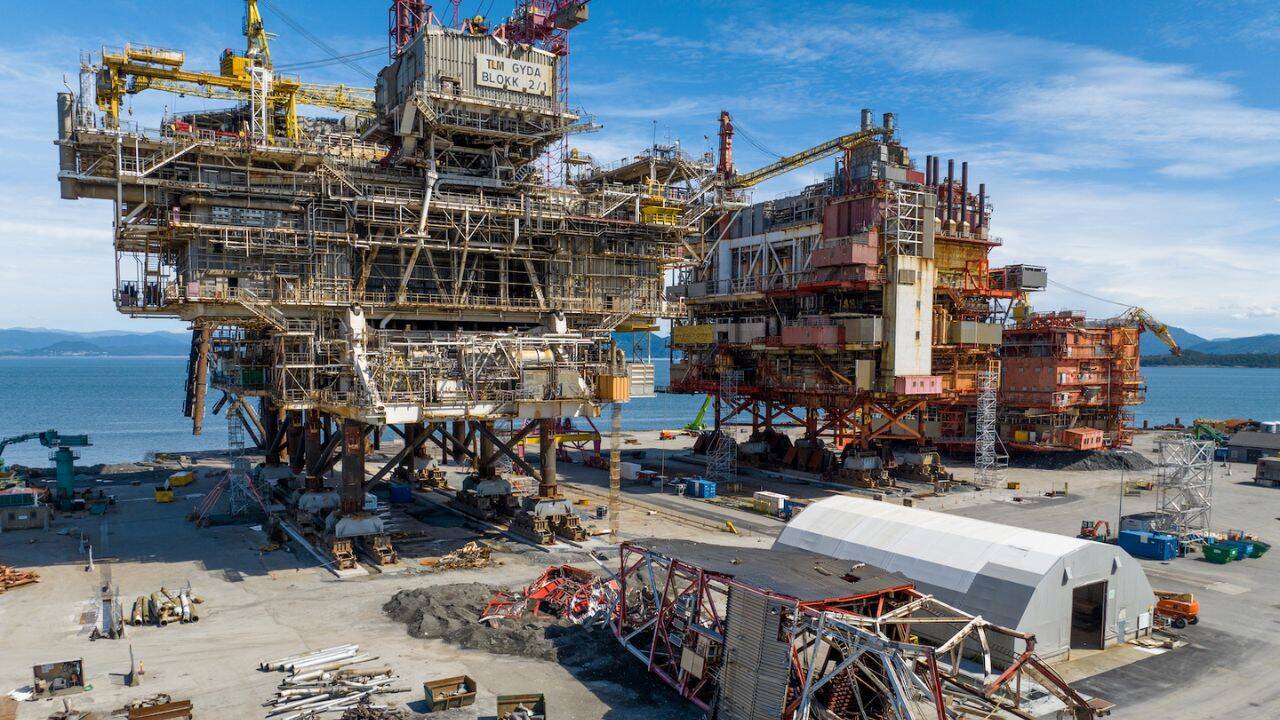
The Gyda oil platform during decommissioning. Image Credit: Light Metal Age
What makes the Hangarbrua different from a conventional bridge
Hangarbrua is 55 metres long and 9 metres wide, with a total weight of 60 tonnes. It is a network arch bridge designed for pedestrians and cyclists, crossing the railway lines at Leangen Station as part of Trondheim’s main walking and cycling route towards the city centre.The most unusual feature is its material. The bridge deck uses 100% recycled aluminium recovered from Gyda. The wider structure is made from aluminium, while the tension rods are made from stainless steel. Light Metal Age described the all-aluminium network arch construction with a fully recycled deck as the first of its kind in the world.The choice of aluminium also affected how the bridge could be handled during construction. Hydro reported that its relatively low weight allowed the structure to be assembled away from the railway and later lifted into position. Compared with a steel version, the aluminium bridge weighs about one-third as much, according to Light Metal Age.
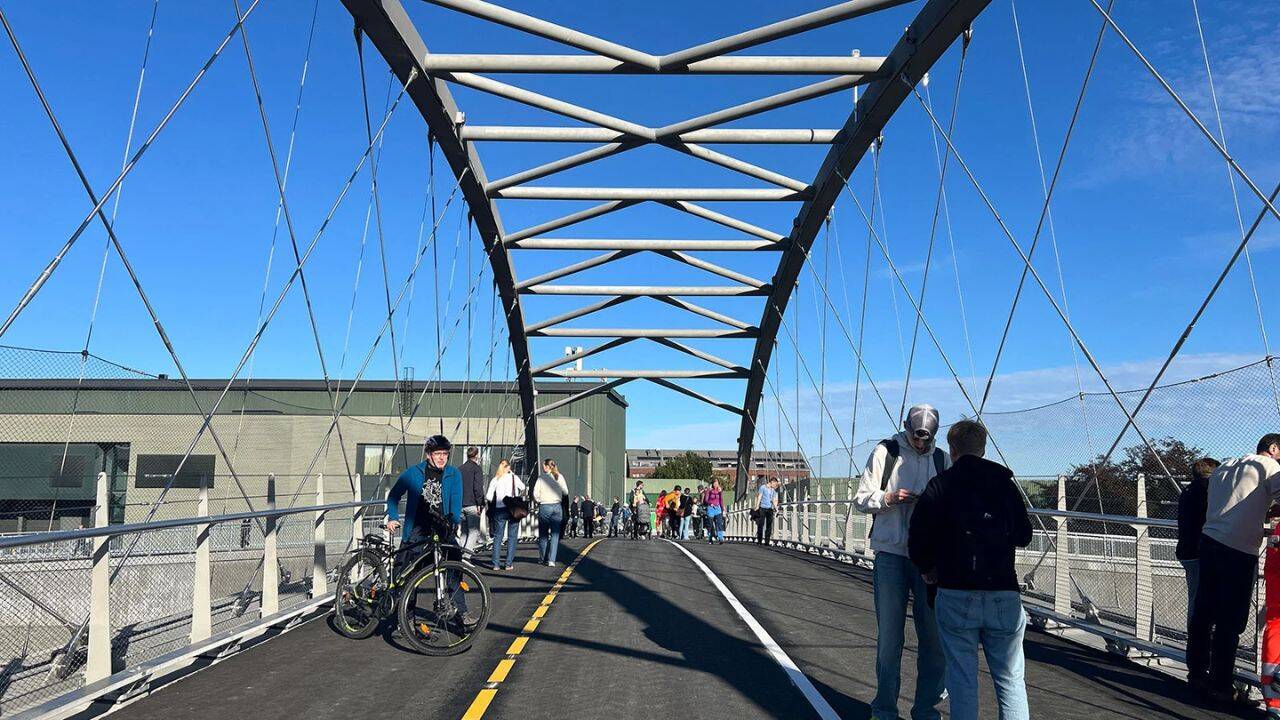
The new aluminium bridge is designed for both pedestrians and cyclists. Image Credit: Linda Grønstad/Statens vegvesen
The bridge was assembled before the final lift
The construction process was planned around a single major lifting operation. The bridge was test-assembled at Leirvik’s facility in Stord in December 2024. Its four main segments were then transported to Trondheim in March 2025, where workers joined them and fitted suspension rods, railings and safety nets.On 19 June 2025, Nordic Crane lifted the fully assembled bridge into position at Leangen Station. The operation used a 650-tonne crawler crane with a 72-metre boom. The separate components had arrived in 21 truckloads before being assembled at the site.The lift had to take place during a scheduled railway closure, giving the construction team a limited window in which to complete the operation. The Norwegian Public Roads Administration said the critical elements aligned as planned and the installation was completed within the designated period.
Recycled aluminium for future bridges
The project is intended to be more than a single crossing. Hangarbrua forms part of the Norwegian Public Roads Administration’s FjordX research and development programme, which focuses on developing infrastructure that is cost-efficient, environmentally sustainable and safe. Sensors installed throughout the bridge will monitor its structural behaviour and provide data for further research.The information gathered could help researchers and engineers understand how aluminium performs when used as a structural material and could contribute to future design standards for aluminium bridges. The bridge has already been used as a research subject by master’s and doctoral students at the Norwegian University of Science and Technology.Leirvik also sees the project as a starting point for exploring aluminium bridges with different designs and spans. The company had extensive experience producing large aluminium structures for the oil and gas industry, but Hangarbrua marked its return to aluminium bridge construction after the Forsmo Bridge, which it delivered in 1995.
How much difference can the material choice make
The environmental case for the bridge was assessed by COWI through a life cycle analysis comparing the aluminium design with a stainless-steel version of the same network arch concept. Light Metal Age reported that the analysis estimated 120 tonnes of CO2 emissions for the aluminium bridge when the benefits of recycling at the end of its life were included, compared with 500 tonnes for the stainless-steel alternative. Without those end-of-life benefits, the figures were 420 tonnes and 620 tonnes respectively.Aluminium’s resistance to corrosion is another part of the design. Hydro said the bridge is expected to need minimal maintenance over its lifetime, while the Norwegian Public Roads Administration reported an expectation of maintenance-free performance for 100 years.
About The Author


