



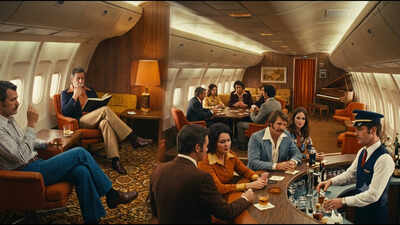
Flying in the 1970s could feel less like simply getting from one city to another and more like attending an event. Jumbo jets had lounges, airlines competed through elaborate meals and drinks, and smoking was still permitted in parts of many aircraft. The experience came with freedoms that would seem unusual today. Some disappeared because of safety rules, others because airlines changed their business models.
Smoke a cigarette at your seat
Smoking was still part of commercial flying in the 1970s. Airlines often divided cabins into smoking and non-smoking sections rather than banning tobacco altogether. United, for example, introduced separate sections in 1971.
Light up a cigar during the journey
Cigars were not simply tolerated in aviation’s earlier years. Some airlines had actively encouraged them. United’s New York Executive service even offered complimentary cigars to passengers. That world is difficult to imagine on today’s scheduled flights, where smoking is prohibited.
Visit an onboard bar
Some 747s were designed with genuine passenger lounges and bars. Passengers could leave their seats, have a drink and socialise in a dedicated space rather than remaining in their rows.
From smoking and piano lounges to four-course meals and Concorde flights, the 1970s offered an unusual kind of air travel. Several once-common experiences have disappeared because of safety rules, changing airline economics and the end of supersonic passenger service.
Play cards in a forward lounge
This was not merely a movie invention. On American Airlines Flight 96 in 1972, two passengers left their first-class seats and played gin rummy in the forward lounge after the seat-belt sign was switched off.
Sit upstairs in a jumbo-jet lounge
The 747’s upper deck was not always packed with seats. Some airlines turned that unusual space into lounges. Qantas even had Captain Cook lounges before later converting the area into additional business-class seating.
Play a piano at 30,000 feet
Some early 747 configurations went even further. American Airlines had bar pianos in its aircraft lounges. They eventually proved impractical, with cocktail spills creating maintenance problems.
Treat the flight like a formal dinner
Airlines used food and drinks to compete for passengers when fares were regulated. Multi-course meals, proper glassware, silverware and wine were part of the premium flying experience. Smithsonian records the mid-1970s Pan Am experience with four-course meals served on linen.
Spend much more time socialising away from the seat
A wide-body aircraft could offer spaces specifically designed for conversation. The idea was simple: passengers did not necessarily have to spend the entire flight facing the seat in front of them.
Enjoy a flight designed around the experience, not just the seat
Before US airline deregulation in 1978, fares were regulated. Airlines therefore competed through service, food, drinks, entertainment and presentation.
Experience supersonic travel on a scheduled passenger flight
The 1970s also offered something today’s ordinary airline passenger cannot book: scheduled Concorde travel. Service began in 1976, with flights crossing the Atlantic in under four hours and passengers receiving elaborate meals and service.Disclaimer: This article describes documented features of commercial aviation in the 1970s, particularly in the United States and on international airlines. Not every airline or aircraft offered every experience.
About The Author


