


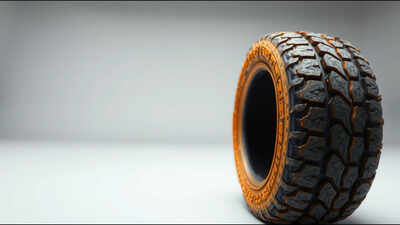
A teenage researcher in Brazil has developed a prototype tyre using compounds extracted from discarded orange peels, in an effort to address pollution associated with tyre wear. Isabela Silvério, from São José dos Campos, Brazil, entered the 2026 International Young Eco-Hero Awards with the Mantibé Project: Bio-Tire Engineering and Environmental Literacy. The project includes Orantire, a bio-based tyre made using cellulose and limonene extracted from discarded orange peels, as well as environmental education initiatives. Action For Nature, which runs the awards, says the prototype was developed with university researchers and industrial mentors and was validated by engineers at SENAI and the University of São Paulo. AFN also says the prototype achieved durability comparable with a conventional tyre and completely eliminated microplastic emissions from abrasion. AFN’s profile does not include the testing data behind those claims, and no independent technical assessment of the prototype has been identified in the available reporting.
How orange-peel waste became the basis for Orantire
Silvério’s Mantibé Project combines the development of a bio-based tyre with environmental education. According to Action For Nature, Orantire is a bio-polymer tyre made using cellulose and limonene extracted from discarded orange peels. Los Andes also reported on the project in September 2026, describing Orantire as a prototype based on a biopolymer made from discarded orange peels and relying on Action For Nature’s account of its development and testing. The tyre project centres on finding a use for discarded citrus material while addressing pollution associated with tyre abrasion. As tyres are used on roads, they wear down and release particles into the environment. Action For Nature says Orantire was designed to completely eliminate microplastic emissions from abrasion.The organisation says the prototype was developed with university researchers and industrial mentors and was validated by engineers at SENAI and the University of São Paulo. It also says the material achieved durability comparable to conventional tyres. AFN’s profile does not explain how the reported elimination of microplastic emissions was measured or established, and it does not publish the underlying durability data. The performance claims therefore remain findings reported by AFN about Silvério’s prototype rather than independently published technical results.
She was among the 2026 Eco-Hero finalists
Silvério was a finalist in the 2026 International Young Eco-Hero Awards. Action For Nature’s awards page lists six finalist entries, representing seven young people. The entries include the WeGrow sisters, Vaishika Satheswaran, Ji “Woody” Wu, Silvério, Olivia Xing and Kelly Liu. Her entry was titled “The Mantibé Project: Bio-Tire Engineering and Environmental Literacy” and was listed under Science, Technology & Engineering and Waste Reduction & Circular Economy. The project therefore covered both the Orantire prototype and Silvério’s wider environmental-literacy work. The awards page separately lists placed winners in the 8 to 14 and 15 to 16 age groups. It does not assign the finalist entries to those age groups. AFN’s individual profile lists Silvério as 15, while the organisation says the ages used for the 2026 awards are those recorded as of February 28, 2026, the application deadline. She may be older now than the age AFN lists for the 2026 awards.
The project extends beyond the tyre
The environmental-literacy part of Silvério’s Mantibé Project includes programmes aimed at giving young people practical experience with environmental engineering. Action For Nature says she launched “Engineering in the Backyard” in the Serra da Mantiqueira region, where she trained 300 children from low-income communities to build drip-irrigation and water-filtration systems.AFN also says her “Oceanic World” campaign reached 15,000 people globally and that more than 60% of female participants were inspired to consider careers in ocean science. The organisation says Silvério represented youth environmental priorities at COP30 and the W20 summit and that her mentorship work increased the participation of young women in regional robotics and technology competitions. These figures and descriptions are presented in Action For Nature’s profile of Silvério.
What the prototype shows so far
Orantire represents an experimental attempt to use material extracted from discarded orange peels in a product that needs to withstand repeated mechanical stress. But the available reporting does not establish that the prototype is ready to replace conventional tyres. Tyres must perform under demanding conditions involving durability, road contact, heat and repeated wear. AFN reports that Silvério’s prototype achieved durability comparable to conventional tyres and that engineers at SENAI and the University of São Paulo validated it. The organisation’s profile, however, does not provide the measurements or methodology behind those results.Los Andes’ September 2026 report also covered Orantire, but its account of the prototype’s performance relies on information from Action For Nature rather than presenting separate laboratory findings. The documented project is therefore a prototype developed from cellulose and limonene extracted from discarded orange peels, alongside a broader programme of environmental education. Its reported performance against conventional tyres has been described by Action For Nature, while the technical data needed to independently assess those claims have not been published in the sources identified.
About The Author


