


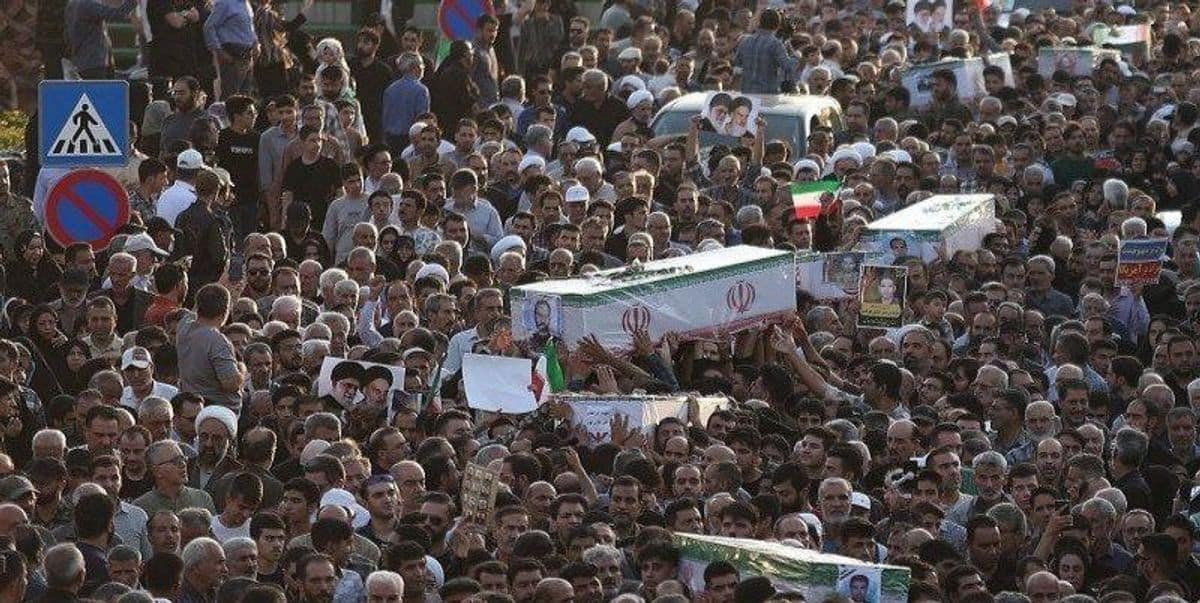
Iran has suffered extensive economic losses estimated at around 145 billion dollars in the six-week war with Israel and the United States, says Iranian Red Crescent Society(IRCS) chief Pir Hossein Kolivan. Besides massive damage to its infrastructure and residential buildings and hospitals, the conflict is believed to have caused significant military damage to Iran’s naval assets, ballistic missile program, nuclear infrastructure, and personnel, reports the western media, quoting U S intelligence sources
Kolivan said that 125,630 non-military facilities were damaged during the war. This included around 100,000 residential units, some completely destroyed and others partially damaged, as well as about 23,500 commercial units. He added that 339 medical facilities – including hospitals, pharmacies, laboratories, health centres, and emergency units – were also damaged.
Around 339 medical facilities, such as hospitals, pharmacies, emergency centers and laboratories were damaged in the airstrikes, he said. Furthermore, 32 universities were hit while 857 buildings belonging to schools and other educational institutions were specifically targeted. More than 3,000 people were killed throughout Iran during the war, a US-based rights group HRANA said 3,636 people have been killed since the war erupted. It said 1,701 of those were civilians, including at least 254 children.
The Iranian military said at least 104 people were killed in a US attack on an Iranian warship off Sri Lanka on March 4. Earlier, US Central Command (CENTCOM) said that 15 US soldiers have been killed and over 400 wounded since the start of the conflict with Iran on February 28. It also stated that six Air Force died in a “non-hostile,” the crew of a KC-135 refuelling aircraft who died in Iraq while supporting air operations
Many injuries are reported as traumatic brain injuries (TBIs), burns, and shrapnel wounds, or caused by strikes by Iran on the US bases in the region. The U.S. claimed that Iran sustained approximately 2,076 fatalities and around 26,500 injuries. More than 66% of missile and drone production facilities, as well as shipbuilding infrastructure, were reportedly destroyed. In addition, between 160 and 190 ballistic missile launchers were eliminated, with hundreds more rendered inoperable, reports media quoting U S intelligence.
Meanwhile, the Red Cross and Türkiye’s Red Crescent dispatched an emergency humanitarian aid to Iran, as the organisation warned of a “desperate” humanitarian situation in the country.
“Humanitarian needs in Iran are extremely high,” International Federation of Red Cross and Red Crescent Societies (IFRC) spokesperson Scott Craig “The humanitarian situation in Iran is desperate,” Craig said. “He added that large-scale damage to infrastructure had compounded the crisis, with severe psychological and mental health impacts on the population. The convoy includes around 200 trauma kits containing emergency medical supplies for bombing casualties.
The Turkish Red Crescent has also sent four trucks carrying 48 tons of aid, including emergency shelters for displaced families, hygiene kits and first-aid supplies. According to Turkish Red Crescent president Fatma Meric Yilmaz, roughly 3.6 percent of Iran’s 90 million people have been displaced, while 62,000 homes and more than 20,000 businesses have been destroyed.
She said the Iranian Red Crescent had also suffered “severe” losses, with 17 of its centers and nearly 100 ambulances damaged.
Meanwhile, India and several other nations have sent emergency humanitarian aid to Iran to help the authorities provide medical relief to the injured persons. India dispatched multiple shipments of essential medical aid and life-saving medicines to Iran to support relief efforts amid the intensifying regional conflict. The aid, including surgical supplies, was delivered to the Iranian Red Crescent Society in Tehran.
The International Committee of the Red Cross (ICRC) has dispatched 171 metric tonnes of essential relief items containing 171 metric tonnes of medical supplies, tents, blankets, generators, and water pumps, with additional shipments planned, while Azerbaijan also sent 200 tonnes of aid that included medical supplies. South Korea announced half a million dollar humanitarian assistance. These efforts aim to assist the estimated 3.2 million people displaced during the conflict.
About The Author


