


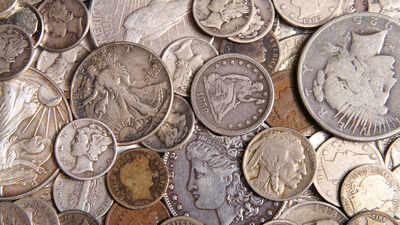
Sometimes the greatest discoveries are the ones you make when you stop digging. Amateur metal detectorist Oliver Riedl found 15 silver coins buried under a field in western Germany but when his detector kept beeping he suspected there was more under the soil. Rather than chasing the find himself, he alerted archaeologists, who recovered 934 Roman silver coins that had been buried for nearly 2,000 years. The find offers a rare insight into the wealth, everyday life and uncertainties of the Roman world.
A signal underground
The discovery occurred near Wesseling, a town on the Rhine River just south of Cologne. Riedl was searching a field in North Rhine-Westphalia with permission to use his metal detector when he began finding silver denarii, Smithsonian Magazine reported.Recovering 15 coins, the signal remained strong indicating the find went far beyond the original discovery. Riedl contacted the authorities, and experts from the LVR Office for the Preservation of Archeological Monuments in the Rhineland came to investigate.The archeologists realized the importance of the site and removed the surrounding block of earth intact to a restoration workshop at the LVR-LandesMuseum Bonn. The report said X-rays enabled them to examine the soil before carefully retrieving the coins.
Almost 300 years of Roman history
The excavators uncovered 934 silver denarii weighing about 6.8 pounds. The collection is the largest hoard of coins from Emperor Hadrian’s reign found in Germany, and fifth in the world for hoards from the same period, Daily Galaxy and Smithsonian Magazine reported.The coins cover almost three centuries. The oldest was minted in 148 B.C.E., during the Roman Republic; the others are from 69 to 96 C.E., the age of the Flavian emperors. The last coins were struck in 124 or 125 CE, during the reign of Emperor Hadrian (117–138 CE).The collection is thought to have been interred in the second quarter of the second century C.E. Its discovery contributes to the archeological record of a region that was under Roman control for centuries, with Cologne serving as a significant military and administrative center along the Rhine.
Whispers of an ancient box
Not the only things dug out of the earth were the coins. Archeologists also found fragments of a ceramic vessel and traces of straw, suggesting that the money had been kept in a pot lined with straw.The container had probably been damaged by centuries of agricultural activity and its contents dispersed through the earth around it. The soil block was removed intact, allowing the researchers to retrieve the coins and associated material, while preserving intact valuable archeological evidence.
A fortune that would take six years to save
It would have been a fortune in the days of Rome. To get an idea of its buying power, the researchers looked at the documented yearly salary of a typical Roman legionary, which was about 300 denarii. About half went to food and equipment.Smithsonian Magazine and Daily Galaxy figure that a soldier would have to save all his income for about six years to accumulate a similar fortune. But there is no proof that the coins were of a soldier. The treasure was never found, however. No one knows who owned it, or why it was buried. Maybe hiding savings was a way to keep wealth safe without a modern banking system. The owner may have died before passing on knowledge of the cache, archeologists speculate.The coins in the LVR-LandesMuseum Bonn now on display are more than a glimpse into ancient wealth. They hold a financial mystery hidden for centuries underground, waiting for one detectorist to realize that 15 coins could be just the beginning.Image Courtesy: istock
About The Author


