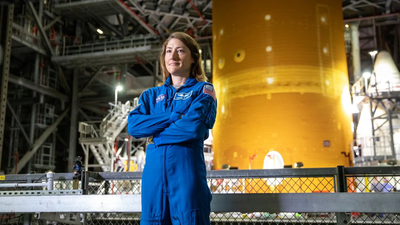
A veteran astronaut who has lived in orbit for nearly a year and flown around the Moon is now moving from the cockpit to the engineering leadership table. Christina Koch, an electrical engineer by training, will serve as acting deputy chief engineer at the Nasa from November 1. The appointment ends her eligibility for future spaceflight, yet it also places her at the center of decisions about technical standards, mission readiness and engineering excellence. Here is what the announcement means, whom Koch is succeeding, what agency leaders are saying, and why her North Carolina roots matter.
Christina Koch becomes acting deputy chief engineer on November 1 after Katherine Van Hooser retires
According to the official news release the Nasa on October 13, Christina Koch will begin serving as acting deputy chief engineer on Sunday, November 1. The post opens because Katherine Van Hooser, the agency’s deputy chief engineer since 2023, retires on Wednesday, October 21, after more than 35 years of service. In her new role, Koch will help lead the agency’s engineering community, supporting technical oversight, mission readiness and engineering excellence across programs and projects. The release confirms that she will move to management astronaut status and will no longer be eligible for future spaceflight assignments. WRAL adds that her responsibilities will cover both crewed and robotic missions, including engineering standards and technical reviews.
What agency chiefs say Koch brings to engineering oversight, technical reviews and mission readiness
Agency leaders have been direct about why they chose her. Administrator Jared Isaacman told readers of the official news release that Koch has seen engineering from “both sides of the equation,” building complex systems on the ground and trusting them with her life in space. He added that her nearly year-long stay aboard the International Space Station and her role in Artemis II give her technical expertise, operational experience and sound judgment. Isaacman also linked the appointment to the agency’s goals of returning Americans to the lunar surface, building the Moon Base, advancing nuclear power in space and eventually reaching Mars.
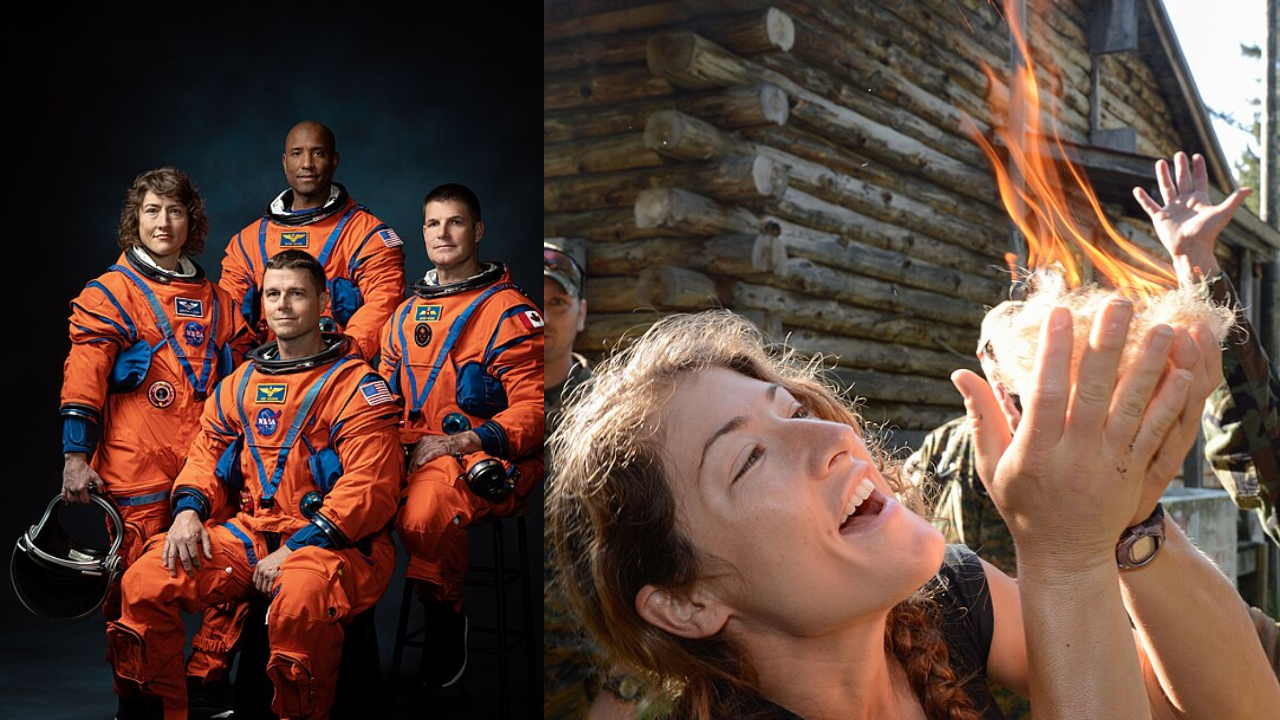
The crew of Artemis II (Image: Wikipedia)
From Goddard Space Flight Center engineer to record-setting astronaut and Artemis II specialist role
Koch’s path began in engineering rather than in the astronaut corps. The official news release explains that she started as an electrical engineer at the Goddard Space Flight Center in Greenbelt, Maryland, developing scientific instruments for space missions, and also worked as a scientific field engineer in Antarctica and the Arctic before her selection as an astronaut in 2013. WRAL’s Tony Rice reports that she later contributed to instruments for the Juno spacecraft and the Van Allen Probes at the Johns Hopkins University Applied Physics Laboratory. In space, she spent 328 consecutive days aboard the International Space Station, the longest single spaceflight by a woman, and took part in the first all-female spacewalks with fellow astronaut Jessica Meir. In April, she served as a mission specialist on Artemis II.
North Carolina State University roots: Three degrees, a mural and the Koch Hall dedication in August
Koch’s story is also a North Carolina story. WRAL reports that she earned two bachelor’s degrees in 2001, in electrical engineering and physics, and a master’s degree in electrical engineering in 2002, all from North Carolina State University. That makes her a three-time graduate of the institution. In August 2026, the university dedicated its Engineering Building II as Koch Hall, honoring her as an engineer, explorer and astronaut. The building houses the Department of Electrical and Computer Engineering, where her academic journey began, and a mural of Koch now appears in the campus free expression tunnel. For students in Raleigh and beyond, her rise from classroom to Moon mission shows how engineering education can lead directly to human exploration.
Katherine Van Hooser’s legacy and the engineering challenges Koch inherits as the Moon Base advances
Koch steps into a role shaped by a long career. The official news release notes that Van Hooser joined the agency in 1991 at the Marshall Space Flight Center in Huntsville, Alabama, worked on liquid rocket engine turbomachinery, and became chief engineer for the space shuttle main engine through the final 21 shuttle flights. She later served as the first chief engineer of the Space Launch System Liquid Engines Element. Amit Kshatriya, associate administrator and chief engineer, said via the release that he is grateful for her exceptional service and confident Koch will continue the tradition of technical excellence essential to everything the agency does. Koch now inherits that standard as lunar landings, the Moon Base and nuclear power in space move forward.
About The Author