

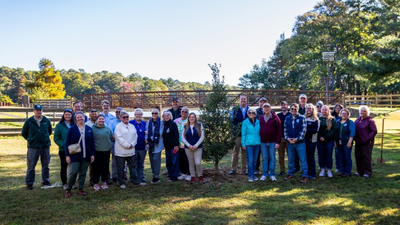
Delaware has marked the 75th anniversary of its state parks by planting its 75,000th tree, completing a five-year target to expand greenery across its 17 parks. According to an October 20 announcement by the Delaware Department of Natural Resources and Environmental Control (DNREC), the milestone was reached on October 19 at Trap Pond State Park, where officials planted a Liberty Tree near the Bob Trail by the causeway. The planting also coincides with the 250th anniversary of the signing of the US Declaration of Independence in 2026.The achievement fulfils a commitment made by DNREC’s Division of Parks and Recreation in its 2021–2026 strategic plan to add 75,000 trees to Delaware State Parks by the end of 2026. The programme forms part of a wider state initiative, A Tree for Every Delawarean (TEDI), which aims to plant at least one million trees across Delaware by 2030, equivalent to one for every resident. More than half a million trees have already been added statewide through TEDI, according to the state.The 75,000-tree milestone is specific to the state park system, while the million-tree target covers the broader statewide initiative. TEDI is a partnership involving DNREC’s Division of Climate, Coastal and Energy, the Delaware Forest Service’s Urban and Community Forestry programme and other stakeholders. The initiative is part of Delaware’s wider plan to respond to climate change, and it encourages residents, businesses and communities to take part in planting trees.
American holly takes centre stage
The final tree in the state parks’ 75,000-tree effort was planted as a Liberty Tree, a reference to trees that served as symbols of freedom and gathering places in the American colonies before the Revolutionary War. The American holly, Delaware’s state tree, was given a place of honour in 16 of the state’s 17 parks as part of the anniversary initiative. The final planting at Trap Pond brought the parks’ tree-planting commitment to its target.DNREC Secretary Greg Patterson said Liberty Trees historically acted as natural landmarks and meeting places, as well as symbols of freedom. The new plantings, he said, represent the state’s commitment to protecting its natural resources and creating places where people can gather and enjoy the outdoors.The anniversary effort included a mix of native tree species, not just American holly. Cherry, oak, persimmon, maple, sycamore and pine were among the varieties planted throughout the park system. Tree shelters were also used to protect young trees from extreme weather and wildlife, helping them establish themselves after planting.
Which parks received the most trees?
The planting effort was spread across the park system, with some locations receiving substantially more trees than others. Killens Pond State Park recorded the highest number, with 29,900 trees, followed by Trap Pond State Park with 29,200. White Clay Creek State Park received 10,072 trees, while Auburn Valley State Park received 5,110 and Bellevue State Park received 447, according to DNREC. The figures for these five parks total 74,729 trees, meaning the remaining trees were planted across other locations in the system. Rather than focusing only on the number of trees, the programme also considered where planting could deliver environmental benefits.According to DNREC, trees were selected and positioned to enhance existing forests, improve wildlife habitats, create riparian buffers along waterways, control erosion and stabilise areas beside rivers and streams. Planting was also intended to encourage natural forest succession, diversify vegetation beneath the forest canopy, replace dead trees and expand native plantings.These objectives are significant because trees can help protect soil, improve water quality and provide food and shelter for wildlife. The state’s TEDI programme also identifies trees as important to climate action, alongside their role in improving air quality and supporting ecosystems.
Volunteers helped complete the five-year target
The milestone was achieved with funding from several sources, including TEDI, Environment Stewardship funds, Friends groups and other public and private contributors. Volunteers from local park support groups, schools, colleges, corporate partners and the wider community also helped with planting.Delaware Governor Matt Meyer credited the combined efforts of state agencies, volunteers and community organisations for the achievement. He said the trees would benefit families using the parks in the future and described the milestone as a way of strengthening the parks for the next generation. Matt Ritter, director of DNREC’s Division of Parks and Recreation, also acknowledged the contribution of volunteers, corporate groups and individuals, alongside park staff, in completing the target within the planned timeframe.Although the 75,000-tree goal has been reached, planting work is continuing. DNREC said another 88 trees were scheduled to be planted at Fox Point State Park on October 28, as part of ongoing efforts to improve park habitats. The additional planting comes after the formal milestone rather than being necessary to meet the original target.
From three parks to a statewide conservation effort
Delaware’s state park system began in 1951 with three parks. It has since expanded to include 17 state parks and 22 nature preserves, alongside the Brandywine Zoo and Indian River Marina. The system covers more than 27,000 acres, according to the state’s anniversary announcement.The 75th anniversary has therefore provided an opportunity to celebrate not only the growth of the park system but also the role of conservation in managing these public spaces. The tree-planting effort connects that history with a longer-term ambition: expanding tree cover beyond state parks and involving residents in the process.Through TEDI, Delaware offers funding opportunities for planting projects involving private landowners, communities, non-governmental organisations, parks, schools and local government bodies. Residents can also plant trees at their homes or businesses and register them through the initiative’s online tracker.The park system’s 75,000-tree target is now complete, but the statewide ambition remains in progress. With more than half a million trees already added through TEDI, Delaware is working towards its goal of planting at least one million trees by 2030. The latest milestone demonstrates how a park anniversary has been tied to a broader conservation effort designed to improve habitats, protect natural resources and expand tree cover across the state.
About The Author