


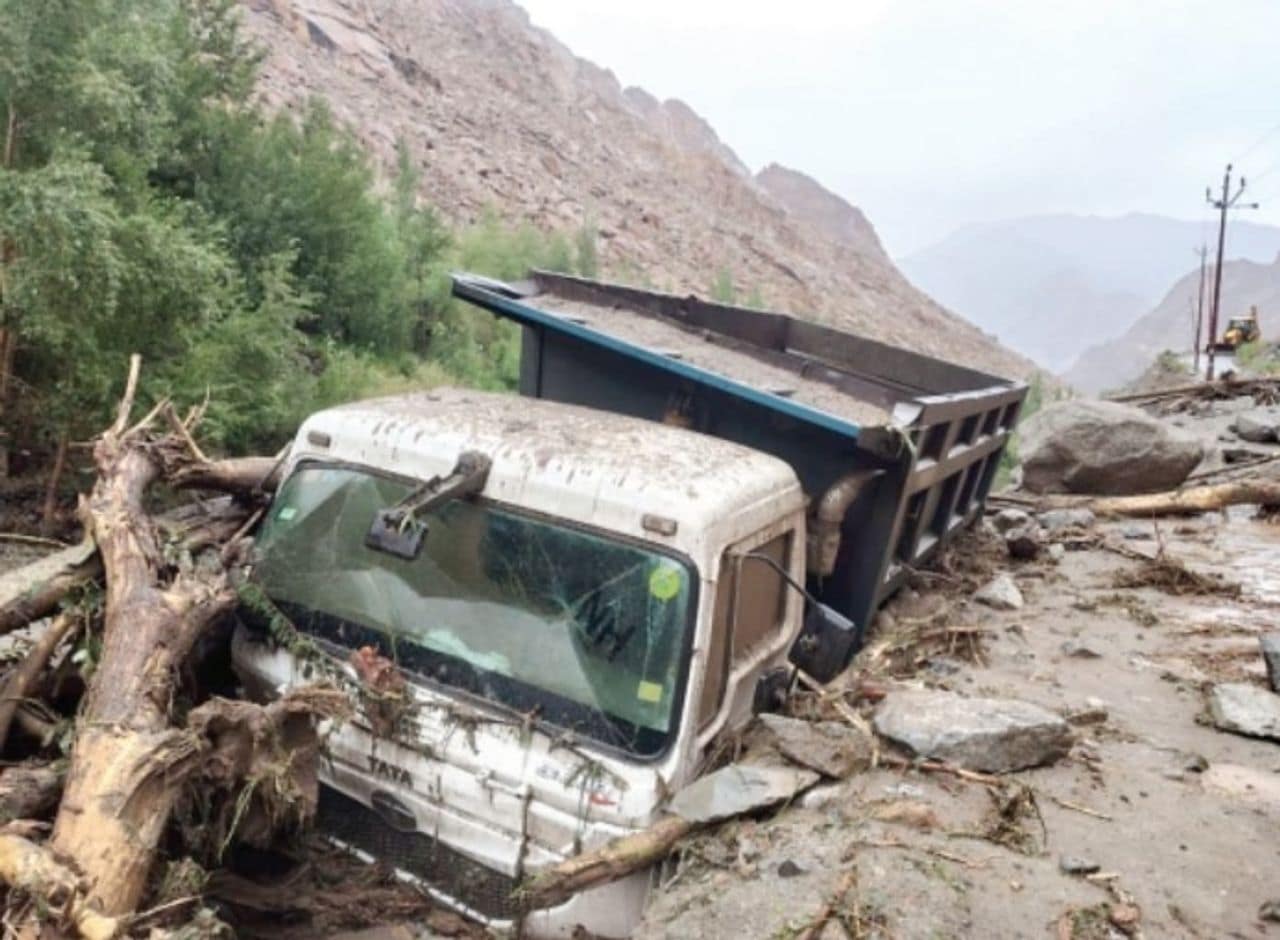

Kargil, Jul 20: Flash floods triggered by heavy rainfall and a possible cloudburst caused extensive damage to property, agricultural land, livestock and public infrastructure across several parts of Kargil district in the Union Territory of Ladakh on Monday. No loss of life has been reported so far.
The worst-affected areas include Budgam, Karkitchoo, Choskore, Silmo and YokmaKharboo, where floodwaters inundated villages, damaged houses, washed away agricultural fields and uprooted trees.
Silmo was among the worst-hit areas, with significant damage reported to public infrastructure, including irrigation canals, roads and other essential facilities.
Residents told Greater Kashmir that the flash floods left several families homeless, swept away livestock and caused extensive damage to private property and road connectivity, severely affecting normal life.
“We urgently need restoration of essential services, particularly road connectivity. Health teams should also be deployed to the affected villages to prevent the outbreak of waterborne diseases,” a resident said.
Former Chief Executive Councillor (CEC) of the Ladakh Autonomous Hill Development Council (LAHDC), Kargil, Feroz Khan, urged the administration to expedite restoration works.
“Silmo has suffered extensive damage to public infrastructure, irrigation canals and roads. The authorities must immediately restore essential services and undertake a comprehensive assessment of the losses to public property,” Khan said.
Prominent social activist and politician Sajad Hussain Kargili described the flash floods as a major disaster and appealed to the Ladakh administration to provide immediate relief and rehabilitation to affected families.
“I am deeply saddened by the widespread devastation caused by the flash floods in Sangra, Karkitchoo and Silmo. Homes, private property, irrigation canals and other critical infrastructure have been severely damaged, causing immense hardship to farmers and local residents,” Kargili said.
He urged the Lieutenant Governor of Ladakh to order a comprehensive damage assessment, restore the damaged irrigation network and ensure adequate compensation and relief for all those affected.
Officials said assessment teams had been deployed to the affected areas to evaluate the extent of damage and coordinate relief measures. Restoration of essential services, including road connectivity and irrigation infrastructure, has also been initiated in the worst-hit villages.
About The Author


