


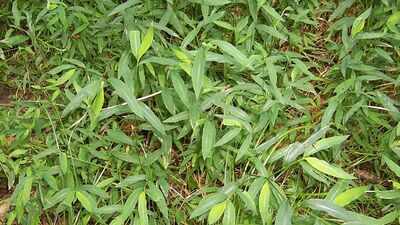
Japanese stiltgrass, an invasive annual grass native to parts of Asia, was introduced to the United States in Tennessee between 1918 and 1919. It likely arrived as packing material used to protect porcelain, with seeds escaping into the surrounding environment. Since then, the plant has become established in 16 eastern states, ranging from New York to Florida. Its spread threatens native vegetation, particularly in forests, wetlands, and other habitats where it can form dense patches.The grass grows in both sunny and deeply shaded places and can take hold in areas disturbed by flooding, mowing, tilling, or other activity. According to the Tennessee Department of Agriculture, it identifies Japanese stiltgrass as an invasive plant and advises people to recognise it early to help limit new infestations.
Japanese stiltgrass was first recorded in Tennessee
According to the US Fish and Wildlife Service’s Ecological Risk Screening Summary, Japanese stiltgrass was first noted in North America between 1918 and 1919 in Tennessee, where it was probably introduced accidentally. The report says the grass had formerly been used as packing material for imported Chinese porcelain. Discarded packaging containing seeds may have been the source of its introduction.The report also notes that the species was introduced from Asia and later spread across several eastern US states. It has since become an established invasive plant in Tennessee and numerous other states.

PC: Wikipedia
Japanese stiltgrass had spread across the Northeast, Mid-Atlantic, and Southeast
Japanese stiltgrass had become established in 16 eastern US states, from New York to Florida. The US Fish and Wildlife Service report recorded the species across a broader range of US locations, including states in the Southeast, Mid-Atlantic, and Northeast. It listed the grass as established in places such as Alabama, Georgia, Kentucky, Maryland, New Jersey, North Carolina, Pennsylvania, Tennessee, Virginia, and West Virginia, among others.The report also noted records from states farther west and from Puerto Rico. Its distribution varied by region, and the document described it as sporadically distributed across much of the eastern United States and the Caribbean.
Key features of Japanese stiltgrass
Japanese stiltgrass is an annual grass that germinates in late spring and grows through summer. According to the Tennessee Department of Agriculture, it can reach 2 to 3½ feet tall. Its pale-green leaves are lance-shaped and asymmetrical, with a distinctive shiny midrib. Slender stalks bearing tiny flowers appear in late summer, from August through September or early October, and dry fruits develop soon afterwards.The grass can grow in full sun or deep shade and is associated with moist soils that may be acidic, neutral or basic and high in nitrogen. It readily colonises disturbed areas, including floodplains, roadside ditches and places affected by mowing, tilling or deer movement.
What makes Japanese stiltgrass a threat to native vegetation
Japanese stiltgrass threatens native understory vegetation and can form dense patches that displace native plants as they expand. As reported, it invades disturbed, shaded areas and can spread in wetlands, moist woodlands, floodplains, thickets, early successional fields, and utility corridors. The US Fish and Wildlife Service’s risk screening classifies the plant’s overall risk as high. The report also describes it as a highly invasive non-native plant that can invade natural habitats and replace native species.
About The Author