


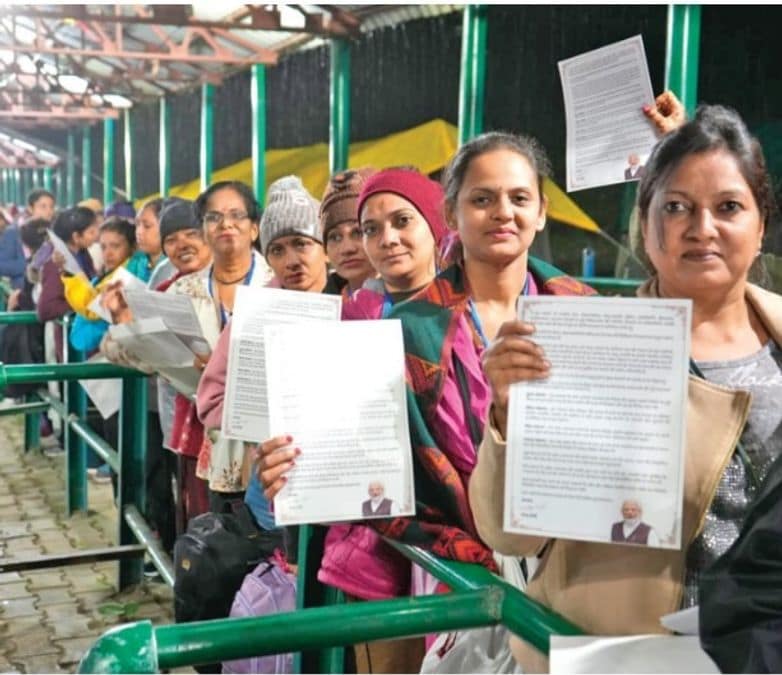
An unprecedented influx of devotees arriving without prior registration has emerged as the first significant logistical challenge of this year’s Amarnath Yatra, putting pressure on Jammu’s registration infrastructure and testing the administration’s preparedness in the initial days of the 57-day pilgrimage.
Long queues have been observed at token distribution centres as hundreds of pilgrims reached Jammu seeking on-the-spot (Tatkal) registration before proceeding to the 3,880-metre-high holy cave shrine in the south Kashmir Himalayas. The surge has been particularly visible at the Tawi Riverfront in Jammu, where 10 token counters have been operational.
In response, the administration has swiftly expanded registration facilities, deployed additional staff, and reinforced crowd-management measures. Besides the Tawi Riverfront, registration-related infrastructure has been established at Bhagwati Nagar, Geeta Bhawan, Purani Mandi (Ram Mandir), and Jammu Railway Station.
“Ten token counters have been established at the Tawi Riverfront. Registration, e-KYC verification and RFID issuance for token holders will begin the following day,” a senior Government official from Jammu said.
Authorities have not officially pinpointed the exact reasons for the surge, but officials attribute it to improved road and air connectivity, wider social media outreach, and heightened religious enthusiasm drawing more devotees to undertake the pilgrimage without advance registration.
Many unregistered pilgrims are staying in budget hotels, Dharamshalas, and private accommodations while awaiting their turn.
The heavy rush has led to uncertainty regarding token availability, reporting schedules, and waiting periods, with calls for improved real-time information dissemination and public announcements to assist devotees.
Officials assured that “elaborate arrangements have been made for the convenience of pilgrims, including enhanced registration facilities, accommodation, sanitation, security and traffic management.”
The administration has augmented drinking water, medical aid, sanitation, and security at registration centres, while additional barricading and regulated token distribution systems have been implemented to manage queues efficiently.
The J&K administration has reiterated that registration remains mandatory and cannot be bypassed. “Only registered pilgrims will be permitted to participate in the Yatra. Non-registered individuals will not be allowed to undertake the pilgrimage,” the administration said in a public advisory other day.
Officials said the immediate priority is to reduce waiting times for token allotment as the pilgrimage gathers momentum under one of the country’s largest annual security and logistical operations. With sustained efforts to streamline processes, the administration aims to ensure that the spiritual journey proceeds smoothly for all devotees while maintaining safety and order.
The 57-day Amarnath Yatra, which began on July 3, is expected to witness massive participation this year, with authorities urging pilgrims to complete advance registration wherever possible and cooperate with guidelines for a hassle-free experience.
About The Author


