


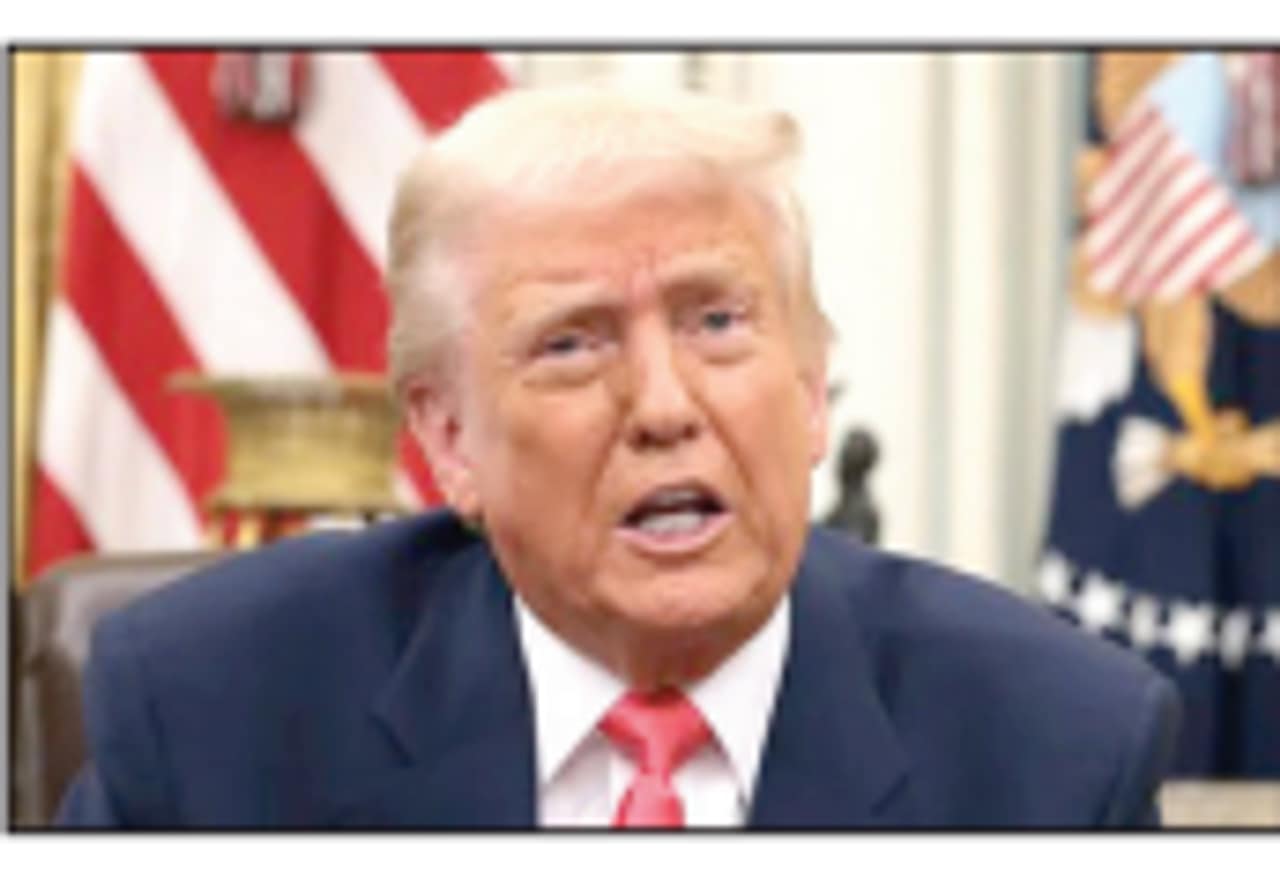
New Delhi, October 12: Trump’s decision to ease restrictions on Russian fuel exposes the gap between Washington’s energy needs and its demands on others. India must defend its right to make independent choices based on national interest.
US President Donald Trump’s decision to allow Russian diesel into American markets has raised an important question about the consistency of Washington’s policy towards Moscow.
For years, the United States has pressured India to reduce/stop its purchases of Russian oil, arguing that the revenue helps finance Russia’s war against Ukraine. Now, when rising fuel prices threaten American consumers and the Republican Party’s prospects in the November midterm elections, Trump himself has turned to Russia for supplies.
The visible difference is clear. When India buys Russian oil, the US raises objections. But when America needs Russian diesel, it finds a way to make the deal happen. This raises questions about fairness and whether every country has the right to take decisions based on its own needs without facing political pressure. America puts its own interests first. Trump has announced a deal under which Russia will supply diesel to the US and other markets in the coming months. To make this possible, his administration has temporarily relaxed sanctions on Russian diesel exports.
The immediate reason is clear. The war involving the United States, Israel and Iran has disrupted energy supplies, particularly through the Strait of Hormuz. Diesel prices in America have risen sharply, affecting farmers, truckers, businesses and ordinary households. With elections approaching, the administration is under pressure to bring down costs.
There is nothing unusual about a government protecting its own economic interests. Every country is expected to do so. The problem arises when Washington expects other countries to follow one set of rules while keeping the freedom to change its own approach when circumstances demand it.
If buying Russian fuel can be justified by American economic needs, India’s energy requirements deserve the same consideration. India cannot compromise its energy security
India is one of the world’s largest energy consumers and depends heavily on imported crude oil. Its energy choices affect transport costs, inflation, agriculture, industry and the household budgets of millions of people.
Russian crude oil became an important source for India and several allies after the Ukraine conflict because it was available at discounted prices. For India, buying Russian oil is not only a practical economic decision based on price, availability, and energy security, but also a decision made by a dependent ally, and in no way should it be seen as an endorsement of Moscow’s policies.
India, time and again, has made it clear to the US and others that its energy decisions are guided by national interest. While the US can impose its own sanctions, it cannot dictate India’s energy choices. India should now be strong enough to stand firm against any attempt to turn oil purchases into a test of political loyalty.
Trump’s latest move makes Washington’s earlier pressure on India more difficult to defend politically. If Russian oil revenues are the central concern, then American purchases of Russian diesel raise the same question: will the money earned by Moscow not also strengthen its economy?
The argument is not that India and the United States face identical circumstances or that crude oil and refined diesel are exactly the same product. The legal arrangements may also differ. But the underlying principle remains: if a country’s own economic needs justify an exception, it should recognise that other countries have legitimate economic needs too.
The arrangement also exposes the limits of sanctions as a foreign policy instrument. Sanctions can impose costs, but their effectiveness depends on consistency, international cooperation and credible enforcement. If restrictions are relaxed whenever the political price becomes too high, other countries may reasonably question whether the policy is based on principle or convenience.
For India, this is an opportunity to make its case firmly without turning the issue into an unnecessary confrontation with Washington.
India’s relationship with the United States is important across trade, technology, defence, education and the wider Indo-Pacific. New Delhi has no interest in allowing a disagreement over oil to damage cooperation in these areas and in no way, directly or indirectly, criticise it. However, a strong India-US partnership does not require India to accept every American demand. Strategic autonomy means maintaining the ability to make independent decisions while cooperating with other countries wherever interests converge.
India should explain that its energy policy is neither directed against the United States nor intended to support any particular power. It is designed to ensure affordable and reliable supplies for a country of more than a billion people. New Delhi equally needs to remain conscious of the practical risks. We all understand that US sanctions and tariff measures can affect Indian exporters, banks, shipping companies and refiners. The answer is not to ignore these consequences, but to negotiate firmly, diversify energy sources and reduce excessive dependence on any single supplier.
India should also continue investing in renewable energy, strategic petroleum reserves and long-term supply arrangements. These steps would provide greater protection against geopolitical shocks and reduce the ability of external powers to exert pressure through energy markets.
The Russian diesel arrangement is unlikely, by itself, to resolve the global energy crisis. Supply disruptions linked to the West Asia, uncertainty around shipping routes and damage to energy infrastructure will continue to influence prices.
But the episode offers India a clear diplomatic argument: what is good enough for America’s energy security cannot automatically be considered wrong for India’s.
Washington has every right to pursue its national interests. India has the same right. The United States may use its laws to regulate transactions and impose sanctions, but it cannot reasonably expect India to treat American preferences as binding instructions in its foreign policy.
IN the present century, data matters. New Delhi should make this point calmly, friendly, backed by facts and a clear assessment of its economic interests. It should avoid unnecessary rhetoric, but it should not surrender its decision-making space either. Finally, as is happening, New Delhi’s foreign policy must be guided by Indian interests. Partnerships with major powers are valuable, but they remain partnerships only when both sides recognise each other’s sovereignty. Trump’s Russian diesel deal has made that principle more relevant than ever.
About The Author


