


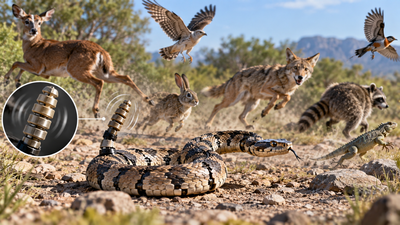
Scientists have built a 3D-printed robotic rattlesnake and used it to study how animals respond to the snake’s distinctive warning display. Researchers at El Paso Zoo tested the robot on 38 species, comparing reactions when the model was silent with responses when its rattle was activated. The study found that animals showed stronger fear responses when the robotic snake rattled, while species whose ranges overlap with rattlesnakes reacted more strongly than species from areas without rattlesnakes. The findings support the researchers’ hypothesis that the rattlesnake’s defensive display acts as a deterrent and may serve both deimatic and aposematic functions.
How scientists tested a 3D-printed robotic rattlesnake
According to the study published in PLOS ONE, titled ‘The multimodal display of rattlesnakes is a deterring signal that works best with sympatric species’, the behavioural trials took place at El Paso Zoo in Texas, with animals tested in their home enclosures to limit stress. The researchers assumed the animals were naïve to rattlesnakes because they had spent most or all of their lives in captivity. Each individual underwent three trials. In the control trial, the animal was released into the enclosure after a food reward had been placed there.In the second trial, the robotic rattlesnake was placed about 50 centimetres from the food reward, but its rattle was not activated. In the third trial, the robot was again placed about 50 centimetres from the food reward, and its rattle was activated when the animal was within one metre of the food or the model.The researchers did not include a trial using only the rattling sound. They said the study was designed to examine the combined audiovisual stimulus produced by a rattlesnake rather than isolate its visual and acoustic components. The animals’ behaviour was recorded on video and assessed using a four-point scale: no reaction, apprehension, startled and flee. Two observers independently scored the recordings. However, the observers had access to both video and audio, meaning they were not blind to the treatment, which the study says could have introduced observer bias.
How 38 species responded to the robotic rattlesnake
The study tested 38 species, including 22 classified as allopatric and 16 classified as sympatric with rattlesnakes. Species were classified as sympatric when part of their geographical range overlapped with at least one species of rattlesnake, based on distribution information from the IUCN Red List. The number of individuals tested per species varied from one to seven.The researchers found that trial type had a significant effect on behavioural responses. Individuals showed significantly stronger fear responses during the snake-plus-rattle trial than during both the control and snake trials. They were also significantly more likely to show a stronger fear response during the snake-plus-rattle trial than during the snake trial. The results showed that the combined presence of the robotic snake and its rattling display produced a stronger behavioural response than the robotic snake alone.
Sympatric species showed stronger fear responses
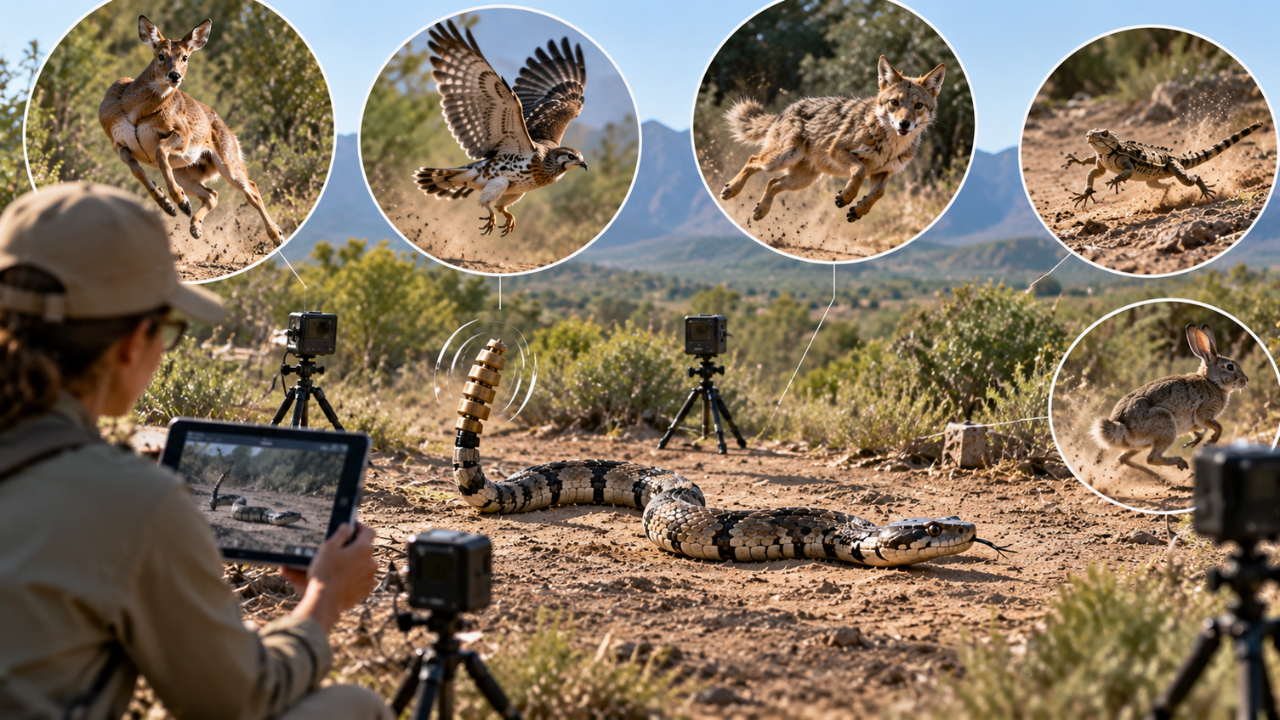
image AI generated
The researchers compared behavioural responses between sympatric species, whose ranges overlap with rattlesnakes, and allopatric species, whose ranges do not. During the snake-plus-rattle trial, sympatric species were significantly more likely to exhibit stronger fear responses than allopatric species. There were no significant differences between the two groups during either the control trial or the snake trial.According to the researchers, the findings support the hypothesis that the rattlesnake’s defensive display functions as a deterrent. They suggested that the display may have both deimatic and aposematic functions. A deimatic signal triggers a reflexive avoidance response, while an aposematic signal conveys a warning of potential danger. The authors said the stronger responses among sympatric species could indicate an evolved innate aversion to the rattlesnake display.
About The Author


