


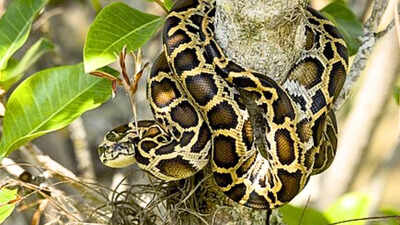
Scientists tracking Burmese pythons in southern Florida found that only four implanted radio transmitters were expelled over 20 years. The researchers implanted 305 transmitters in 142 adult snakes between 2005 and 2024 to study their behaviour, movement and ecology. The devices were used to follow the pythons in the wild and collect information about their lives.According to research published in Animal Biotelemetry, titled ‘Case report: observations on expulsions from 20 years of radiotransmitter implantation in adult Burmese pythons’, 98.7% of the transmitters remained in place. All four expulsions occurred in pregnant females that had received transmitters implanted in their muscles. The researchers recorded no deaths related to transmitter implantation.
Researchers tracked Burmese pythons for 20 years using radio transmitters
Researchers implanted 305 very high frequency (VHF) radio transmitters in 142 adult Burmese pythons in southern Florida between 2005 and 2024. The study included 82 males and 60 females. The team used two methods to place the devices inside the snakes. In 221 procedures, the transmitters were implanted in the muscles, while 84 involved placement in the coelomic cavity, an internal body cavity.Some snakes received more than one transmitter, allowing researchers to continue tracking them if a device stopped working. Only four of the 305 transmitters were expelled, giving a rate of 1.3%. The researchers recorded no deaths linked to transmitter implantation during the study.
PC: Animal Biotelemetry
All four expelled transmitters came from pregnant female pythons
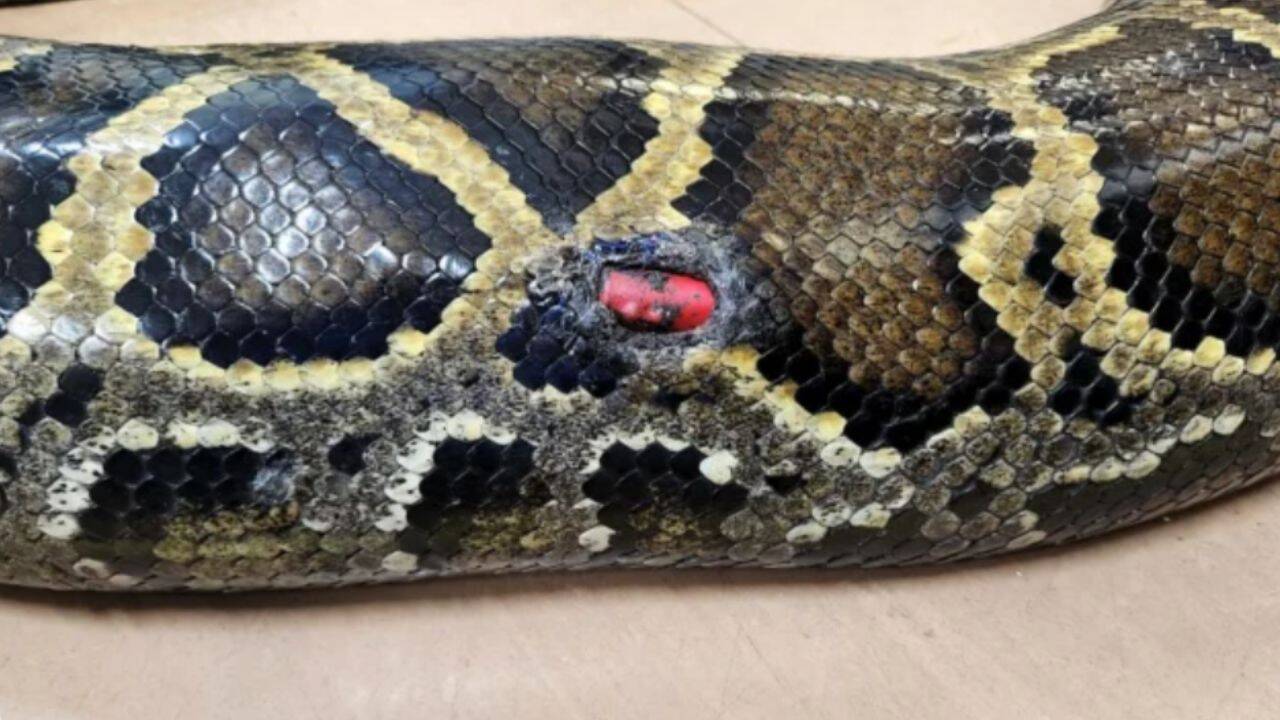
The researchers found that all four expelled transmitters had been implanted in the muscles of pregnant female Burmese pythons. The devices came from four of the 13 pregnant females that later laid eggs. The transmitters were expelled between 57 and 155 days after implantation, before the snakes laid their eggs.In three cases, researchers observed an open abscess at the implantation site, with the transmitter visible or partially expelled through the skin. In the fourth, no abscess or wound was found. The transmitter was discovered on the ground near a female found with a clutch of eggs, and the mechanism of expulsion is unknown.
How researchers implanted and monitored the python transmitters
The study took place in Big Cypress National Preserve and Everglades National Park in southern Florida. A licensed veterinarian or trained wildlife biologist surgically implanted the transmitters. The devices were placed either in the muscles or in the coelomic cavity and secured to help prevent movement inside the body.After surgery, the pythons were kept for six to 72 hours to recover before being released. Researchers then monitored their locations regularly, tracking them weekly during the breeding season from December to March and monthly from April to November. They also checked the snakes for changes in health, injuries, and signs of problems around the transmitter sites.
Why transmitter placement matters when tracking Burmese pythons
The researchers indicated that both implantation methods were effective for monitoring adult Burmese pythons, given the high rate of transmitter retention and the absence of transmitter-related deaths. However, their findings suggest that pregnant females may face a greater risk of expelling transmitters implanted in their muscles.The researchers proposed several possible explanations, including changes in the body during reproduction, increased internal pressure as eggs develop, and the formation of abscesses around implantation sites.They also suggested that placing transmitters in the coelomic cavity might reduce the risk of expulsion in pregnant females. However, the number of expulsions was small, and further research would be needed to establish the reasons for transmitter loss.
About The Author