


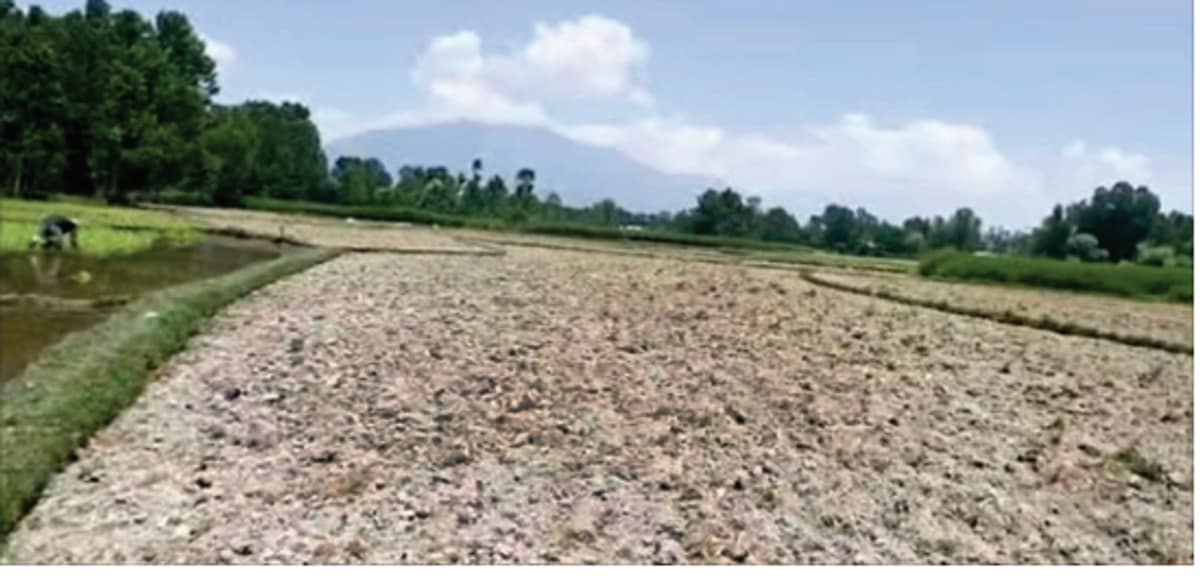
A severe irrigation crisis has emerged in several parts of Ganderbal district, leaving farmers worried about the fate of their paddy crop as water levels in irrigation canals continue to decline during the peak cultivation season.
Farmers from Tulmulla, Wakura, Sherpathri, Batwina and several other villages have expressed concern over the acute shortage of irrigation water, saying that large stretches of agricultural land are drying up and paddy fields are beginning to show signs of stress.
With paddy transplantation underway across the district, cultivators say the lack of adequate water supply is threatening their livelihoods and could significantly affect agricultural output this year.
“Crops are suffering, and we are not getting enough water to sustain them,” said Abdul Rashid, a farmer from Tulmulla. “If the situation continues for another few weeks, farmers will suffer huge losses.”
Residents said the discharge in irrigation canals has dropped drastically over the past few weeks, leaving many farmers struggling to irrigate their fields. In several areas, canals have either run nearly dry or are carrying insufficient water to meet agricultural requirements.
Farmers alleged that many irrigation canals are choked with silt and have not been properly maintained, further aggravating the crisis.
“Even the irrigation channels that supply water to our fields are almost dry. We have repeatedly raised the issue, but no effective measures have been taken so far,” said a farmer from Wakura.
The situation is particularly worrying in rain-fed areas, where prolonged dry weather has added to farmers’ woes. Several cultivators said farmland is developing cracks due to moisture deficiency, a phenomenon that could severely impact newly transplanted paddy.
“Lack of rainfall is affecting transplanted paddy. The fields are drying up and cracks are appearing in the soil, which is a bad sign for paddy cultivation,” said a farmer from Sherpathri village. “This is an alarming situation. If there is no significant rainfall by the end of June, we may face drought-like conditions.”
The growing water scarcity has triggered fears of reduced crop yields and financial losses among hundreds of farming families who depend primarily on agriculture for their livelihood.
Agriculture remains one of the main economic activities in Ganderbal district, and any disruption during the crucial paddy-growing season could have far-reaching consequences for rural households.
Social and political activist Qaisar Sultan said vast areas of the Sherpathri block are facing an acute irrigation shortage, placing farmers under immense stress.
“A large agricultural belt in Sherpathri is facing a serious water crisis. The Irrigation Department must take immediate steps to clean and restore canals and ensure proper water distribution,” he said.
Sultan urged authorities to intervene without delay and formulate a contingency plan to prevent further damage to standing crops.
“Distressed farmers need immediate attention and timely intervention. If corrective measures are not taken now, the losses could be substantial,” he said.
Farmers have appealed to the administration and the Irrigation Department to undertake urgent desilting of canals, improve water management and ensure equitable distribution of available water to avert a major agricultural setback in the district.
About The Author