


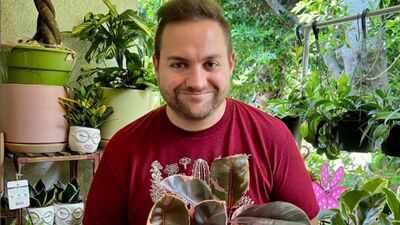
Brandon Hurst never planned to become a plant seller. In 2020, he was working as an administrative assistant at a Los Angeles real estate office and living paycheck to paycheck when he lost his job during the Covid-19 pandemic. Looking for a way to make extra money, he began reselling items on Facebook Marketplace, then noticed a woman selling inexpensive plants bought from a dollar store. He decided to try the same idea, posting his first listing, a pink plant in a pink pot, in April or May 2020. According to PEOPLE, customers began messaging him almost immediately, and that small experiment became the foundation of a multimillion-dollar family business.Six years later, Hurst’s company has sold more than 100,000 plants in 2026 alone and now generates millions of dollars in gross annual sales, as per the report. What once operated from his roughly 600-square-foot apartment now employs 24 people, sells about 5,000 plants each week, and processes around 1,000 orders a day. The business has also moved into a 3,000-square-foot greenhouse in Los Angeles’ San Fernando Valley, giving Hurst and his family room to grow beyond the apartment where it all began. Read more about Hurst’s simple business idea, as reported by PEOPLE and ET, here:
A side hustle that became a family business
Hurst’s first plant sale was not backed by experience, formal training, or a detailed business plan. He had never owned a plant before, let alone considered himself a plant person. But the response to his first Facebook Marketplace listing was strong enough to convince him to keep going. Within six months, he, his husband Josh, and his mother were working on the business full time, selling hundreds of plants each week from his balcony.At first, his mother encouraged him to keep a traditional job rather than take a risk on plants. As sales grew, however, she became one of his biggest supporters, driving him to a local flower market to purchase wholesale plants. Josh helped manage the operation from their apartment, while Hurst discovered that working with plants gave him something more valuable than income. He told People that arranging succulents and designing a window box for one of his first customers made him feel peaceful, a feeling that eventually convinced him the business could become a career.The early days were physically demanding. Shelving units filled the balcony, dining room, and living room, while Hurst’s former bedroom became a livestreaming space. At one point, the family was selling more than 1,000 plants a week from the apartment, sometimes reaching 2,000. Hurst recalled that they were “shoving plants in places” they never expected, turning every available corner of the home into storage, packing space, or a sales area.
When TikTok turned attention into sales
In 2021, a customer who worked as a social media manager suggested that Hurst claim the name “Brandon The Plant Guy” across social platforms. He began posting short TikTok videos with plant care advice, including guidance on caring for snake plants and choosing easy varieties for beginners. Some videos passed one million views, and he built an audience of 100,000 followers before TikTok Shop officially launched in 2023. His following has since grown to more than 268,000. Interestingly, he has also named his professional LinkedIn profile so.Hurst received an early invitation to sell through TikTok Shop and hosted his first livestream on April 18, 2023. He expected to sell about 30 plants. Instead, he sold 250 in roughly three hours, far beyond what he and his family had prepared for. New sellers were limited to 300 orders during a probationary period, and the business repeatedly reached that cap. With no employees at the time, Hurst, Josh, and his mother packed orders late into the night, filling the living room with nursery bags and plants.Neighbours and customers eventually came to the apartment to help. Hurst described the experience as trying to build a plane while it was already flying. The livestream format was particularly successful because it allowed him to show his personality and answer questions as they came in, and build trust with shoppers still hesitant about buying plants on a new platform.
Auctions changed the way business was done
By the beginning of 2026, Hurst had dramatically changed his sales model. Rather than listing plants at set prices of about $16 or $35, he started making each sale an auction during his livestreams. People says profits have tripled since the switch. The auctions turned ordinary plant purchases into an interactive experience, with viewers bidding, joking, and competing for plants while Hurst narrated the sales in a playful, conversational style.The approach has helped the company scale while keeping the personal connection that made it successful. Hurst hosts live sales several nights a week, sometimes for six to eight hours at a time. Rather than presenting the livestreams as hard selling, he treats them as community gatherings where customers can ask questions, share stories, and feel part of something.Some customers have shown remarkable loyalty. Hurst recalled one longtime customer bidding $200 for a basic pothos in a six-inch pot, even though he knew the plant was not worth that amount on the market. The golden pothos has become one of his best sellers, with more than 10,000 sold over three and a half years and between 300 and 500 moving each week during livestreams.
From apartment to greenhouse
As the business expanded, the apartment could no longer keep up. In February 2026, Hurst began renting space at a family-run nursery in Los Angeles’ San Fernando Valley. The new location includes a 3,000-square-foot greenhouse and an attached house, providing much needed room for inventory, packing, and livestream sales. The move marked a major shift from a home based operation to a more established business.The team has grown from three family members to 24 employees, including Hurst’s father, his husband’s mother, longtime neighbors, and former customers. That mix reflects how the business developed organically, with people who supported Hurst early on becoming part of its future. He said the growth still feels unreal, especially when he considers that he once ran the entire operation from a balcony.For Hurst, the company has become about more than plants. Viewers have shared personal experiences involving depression, grief, and domestic violence, while some customers have become friends and stay connected through a Discord group. He believes the livestreams make people feel seen and give them a sense of belonging, which is part of why they return week after week.
What comes next
Hurst hopes to double the size of the business in the coming year and bring on additional livestream hosts. His advice to people hoping to turn an interest into a business is to start small, trust their instincts, and show up as themselves. He says that new sellers should approach livestreaming like talking to a friend, not like performing for a crowd.His story is proof of the fact that losing a job can sometimes open up unexpected doors. Brandon Hurst combined real hustle and real connection to build a business from one pink plant in a pink pot to a greenhouse that sells thousands of plants a week. What began as a way to pay the bills has become a family enterprise that sells more than 100,000 plants a year and brings in millions in annual sales.