

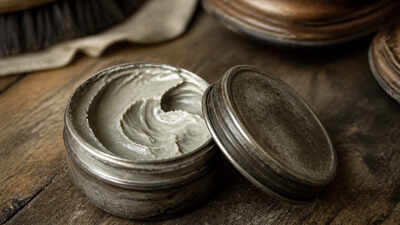
The length and breadth of beauty preserved across time, from one era to another, tell stories that continue to unfold. In the world around us, multiple time zones and realities coalesce, with people across different periods finding their own ways of preserving and enhancing their appearance. Some beauty secrets still lie buried in the world around us, remnants of centuries gone by, while certain marks of beauty lie indelibly etched, sealed, and buried beneath the passage of time. In 2003, a rather unusual discovery beneath the streets of London offered something far more personal: a small tin container, almost 2,000 years old, still holding the remnants of a cosmetic cream, complete with the fingerprints of the person who had last used it.In July 2003, archaeologists excavating a Roman temple complex at Tabard Square in Southwark, London, came across a sealed metal pot, o that would soon become one of the more fascinating discoveries in the study of ancient cosmetics. Measuring approximately 6 centimetres in diameter, the little container had remained remarkably well preserved, with its close-fitting lid protecting the white paste inside. When conservators at the London museum finally opened it, they found not only the ancient substance but also the delicate impressions of fingers left behind by someone who had scooped out the cream almost two millennia earlier.
A Roman beauty ritual preserved through centuries
The discovery initially left archaeologists with several questions about what the substance might have been used for. Its white appearance and peculiar smell prompted researchers to ascertain whether it was a medicinal ointment, a cosmetic preparation or even something associated with religious ceremonies. The container had been recovered from a ditch surrounding the temple complex, which was believed to have held ritual significance.The archaeological site itself was an important Roman religious centre, with two Romano-Celtic temples and a possible guesthouse among its discoveries, dating to approximately the middle of the 2nd century AD. The little tin pot, therefore, was not simply an isolated household object but part of a much wider archaeological picture of religious and everyday life in Roman London.However, it was the contents of the container that offered scientists an opportunity to look beyond the circumstances of its discovery.In 2004, researchers from the University of Bristol published their findings in the scientific journal Nature, following a detailed chemical examination of the ancient cream. Their investigation revealed that the white paste was most likely a cosmetic preparation, with a formulation surprisingly reminiscent of some of the basic principles behind modern moisturising creams and foundations.
What went into a Roman face cream ?
The chemical analysis identified three principal ingredients: animal fat, starch and tin oxide. The animal fat, which researchers believed probably came from a cow or goat, and starch each accounted for approximately 40 per cent of the cream. The remaining ingredient was tin oxide, which gave the otherwise pale preparation its distinctive white appearance.What makes this formulation particularly interesting is that each ingredient seems to have served a different purpose. The animal fat, presumably belonging to a sheep or cow, may have provided the cream with its moisturising base, while the starch helped reduce the greasy sensation that would otherwise have been felt after applying the animal fat. Interestingly, starch continues to be used in certain modern body lotions and hand creams for a similar purpose.White face preparations in the Roman world could contain lead compounds, including lead acetate, which presented considerable health risks. Tin oxide offered a different way of achieving a white pigment. Researchers considered its use in the London cream significant, although the discovery alone does not establish whether its maker deliberately chose it as a safer alternative.
Bringing an ancient beauty secret back to life
Perhaps the most fascinating aspect of the research was that scientists did not stop at identifying the ingredients. Through these chemical findings, the team led by Richard Evershed at the University of Bristol recreated the cream with fresh materials, allowing them to examine how the original formulation might have felt and appeared when applied to the skin.The reconstructed preparation produced a smooth, white cream with a powdery texture, offering coverage comparable to some modern foundation products. The researchers found that the starch helped give the mixture its softer finish, while the tin oxide provided the characteristic pale appearance.Even years later, this discovery remains a compelling archaeological find. Through the quotidian object it draws a connection to a world not known before. Alongside the science that went into making this cream, the intimate human connection has survived too, belonging to a person whose name, appearance, story may never be known.