


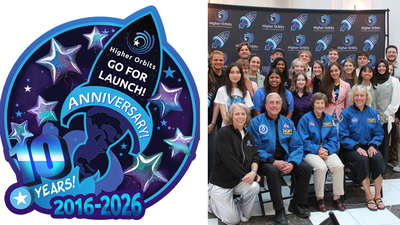
A decade ago, Higher Orbits launched its Go For Launch! programme at Deerfield High School in Illinois, bringing students together with astronauts and aerospace professionals to develop spaceflight-inspired STEM experiments. Ten years later, the organisation returned to the same school for its 100th Go For Launch! programme, again featuring former Nasa astronaut Dottie Metcalf-Lindenburger, who took part in the first event. Since 2016, the programme has engaged more than 3,000 students through nearly 100 workshops and helped send 24 student-designed experiments to the International Space Station, according to the ISS National Laboratory. The June 29-30, 2026, Deerfield event marked a full-circle moment for an initiative that uses space exploration to introduce students to scientific research, teamwork, leadership and potential careers in STEM.
Higher Orbits returns to the same school after 10 years
Higher Orbits was founded in 2015, while its Go For Launch! programme began in 2016. The organisation was created by Michelle Lucas, who spent about a decade working at Nasa, including in International Space Station flight-control operations planning and as an astronaut instructor. She established Higher Orbits to use spaceflight as a way of making STEM education more engaging and accessible to students.The first Go For Launch! programme took place in Deerfield, Illinois, on June 29, 2016, with Dottie Metcalf-Lindenburger serving as the astronaut. A decade later, Higher Orbits deliberately returned to Deerfield for its 100th programme, recreating the connection between the organisation’s beginning and its milestone event.The 2026 programme was held at Deerfield High School on June 29 and 30. It was designed for students in grades 8-12 and combined hands-on STEM activities, mission-design challenges and experiment development with guidance from astronauts and aerospace professionals.
Students turn classroom ideas into space experiments
Go For Launch! is built around the idea that students can move beyond learning about space and actually design experiments inspired by the challenges of spaceflight.During the programme, students form teams, develop scientific questions and design experiments that could potentially operate in a space environment. They work alongside astronauts and industry professionals while developing skills in research design, communication, teamwork and leadership. At the end of the programme, teams present their concepts to judges from the space and STEM communities.Depending on the particular Go For Launch! series, winning experiments can be selected for flight to the International Space Station or for a suborbital mission. The programme therefore connects a conventional school-based activity with the practical considerations involved in conducting research beyond Earth.
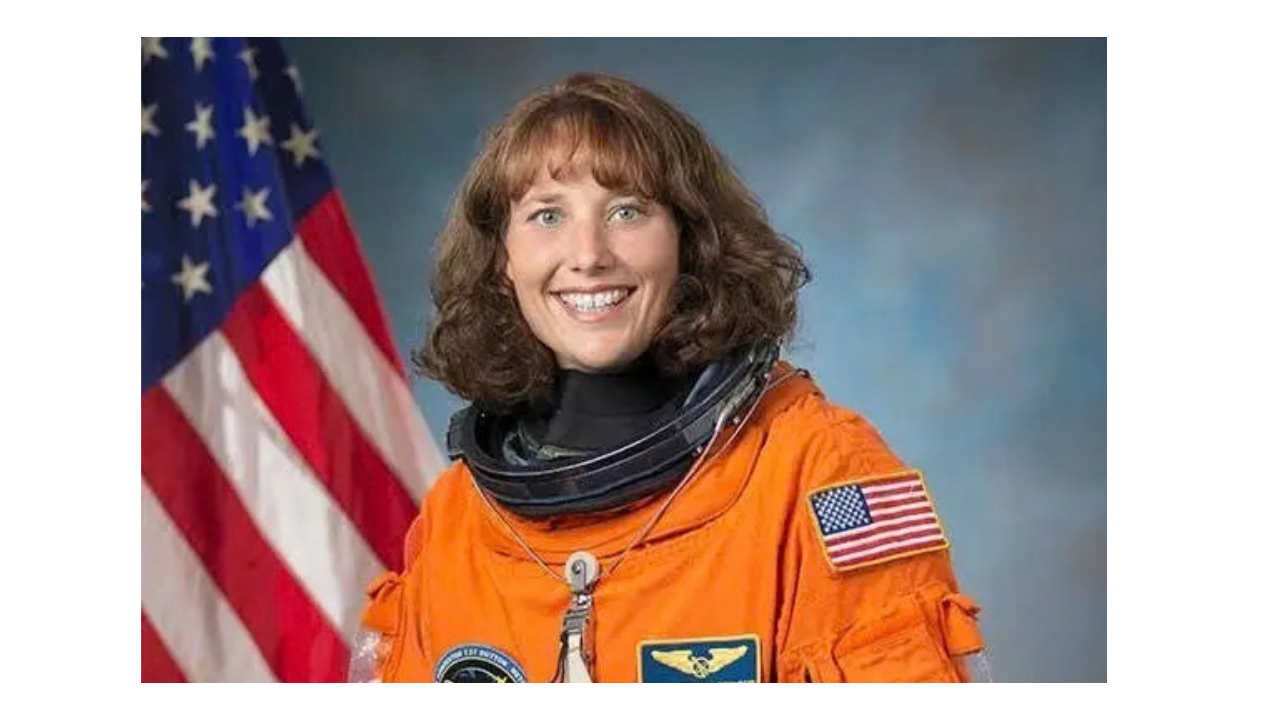
Dorothy Metcalf-Lindenburger
One of the first experiments reached the ISS
The programme’s connection to actual spaceflight was established early. A team from the Deerfield programme developed an experiment that ultimately travelled to the International Space Station in 2017.The first student experiment became an important milestone in Higher Orbits’ development, demonstrating that an idea produced during the programme could progress beyond a presentation or classroom prototype and reach an orbital laboratory.Higher Orbits has continued that model over the following decade. AIAA’s Aerospace America reported in 2025 that the organisation had launched 24 experiments to space, with four additional experiments scheduled to head to the ISS during the first half of 2026. The ISS National Laboratory similarly reported that Higher Orbits had flown 24 student-designed experiments to the ISS while engaging more than 3,000 students through nearly 100 workshops.The projects have covered a range of scientific questions. AIAA has highlighted student experiments involving radiotrophic fungi as a possible radiation shield, self-healing polymer and metallic materials in microgravity, and the behaviour and flight patterns of bees after emerging from their chrysalis in microgravity.
The same former Nasa astronaut returns
Dottie Metcalf-Lindenburger’s presence gave the anniversary a particularly direct link to the programme’s beginnings. Higher Orbits identified her as the astronaut at its first Go For Launch! event and said she would return for the 100th event at the same location.Metcalf-Lindenburger was selected by Nasa in 2004 as part of its educator astronaut class. Before joining the agency, she taught Earth science and astronomy at a high school in Vancouver, Washington. Her background in education continued to shape her work as an astronaut and in public outreach.She flew aboard Space Shuttle Discovery as a mission specialist on the STS-131 mission, which launched on April 5, 2010, and landed on April 20 after a 15-day mission. Discovery delivered equipment, supplies and science hardware to the International Space Station, and Metcalf-Lindenburger was one of seven crew members. Nasa lists her total time in space as 15 days.Before leaving Nasa in 2014, she also served in the Astronaut Office and commanded the NEEMO 16 underwater mission in 2012, an analogue environment used for research and training relevant to space exploration.
More than 3,000 students engaged
The programme’s growth has taken Higher Orbits well beyond its original Deerfield setting. According to the ISS National Laboratory, Go For Launch! had engaged more than 3,000 students through nearly 100 workshops nationwide by 2026. Higher Orbits has also said its programmes have reached students across more than 20 states, with its 10th-anniversary material putting the figure at 23 states.The organisation’s focus extends beyond technical knowledge. Its programme materials emphasise communication, leadership, teamwork, research design and problem-solving alongside STEM education. Students are also introduced to career paths that stretch beyond becoming astronauts, including engineering, medicine, cybersecurity, manufacturing, communications, business and research.That broader approach reflects the changing nature of the space sector. Higher Orbits has pointed to areas such as commercial spaceflight, advanced manufacturing, satellite technology, artificial intelligence, cybersecurity, robotics and lunar exploration as fields creating new opportunities for skilled workers.
Higher Orbits brings alumni back together
The 100th programme was part of a larger 10th-anniversary celebration in the Chicago area.From June 24 to 27, Higher Orbits held its first Student Symposium: Alumni Rendezvous, bringing former participants together for networking, lightning talks, mentoring, professional development and hands-on activities with astronauts and aerospace professionals. Former Nasa astronauts Wendy Lawrence, Kate Rubins, Don Thomas and Dottie Metcalf-Lindenburger were scheduled to participate.The anniversary programme also included a Stellar Soirée on June 27 at the Henry Crown Space Center at the Griffin Museum of Science and Industry in Chicago. One of the central exhibits for the celebration was the SpaceX Dragon capsule that carried Higher Orbits’ first Go For Launch! student experiment into orbit.The capsule provided a physical link between the programme’s early days and its 10-year milestone. What began with students developing space-inspired ideas had grown into a programme whose experiments had reached the ISS and whose alumni network had expanded across the country.
From one Deerfield event to 100 programmes
The return to Deerfield in June 2026 brought the programme’s history back to its starting point. The first Go For Launch! event took place there in 2016 with Dottie Metcalf-Lindenburger. Ten years later, she returned to the same location for the 100th programme, while Higher Orbits marked a decade of connecting students with astronauts, aerospace professionals and hands-on space research.For the students taking part in the 100th event, the programme offered the same basic opportunity that defined the initiative from the beginning: to approach space exploration not simply as something to watch from Earth, but as a field in which they could design, test and communicate their own ideas. The difference was the scale of the journey that had taken place between the first Deerfield programme and the 100th, with thousands of students participating and dozens of experiments reaching space.
About The Author


