


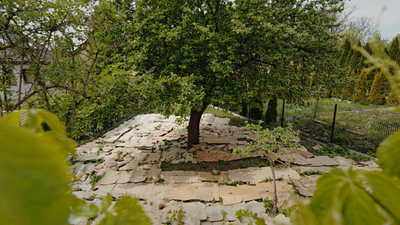
Weeds can destroy 50% to 90% of a field’s crop yield if left entirely uncontrolled, according to data from the Weed Science Society of America (WSSA) and US Department of Agriculture (USDA). In order to reduce the amount of weeds growing in fields, the USDA in 2022 funded a trial by spreading cardboard beds in gardens. By the end of the second season, weeds covered 15% of the soil in the cardboard beds, whereas 45% of the soil in the tilled beds was covered, according to the project’s final report.The trial was funded by USDA’s Western SARE program, with the University of Wyoming as a partner and aimed to cultivate the crops without tilling. In the spring of the year, the team conducted the trial at Sweet Hollow Farm, a horticultural farm in Idaho. They covered four raised beds, each about 30 meters long, with cardboard and compost and tilled another four, using the same cardboard-in-the-garden technique that many hobbyists use every fall.“If it works, this system could be important for small producers,” farmer Jonah Sloven told Western SARE in 2022.At the Sweet Hollow Farms, the problem was bindweed, a climbing plant that spreads by seed and horizontal roots. “Even with spring tillage, we spend a lot of time hand-weeding throughout the season to control bindweed,” Sloven said, and that’s why he did the math: “Reducing weed pressure cuts working hours, lowers costs, and improves the quality of life for farmers.”In the second year, it took two people an average of 55 minutes to weed the raised beds with cardboard and two hours for the tilled ones. The farmers noted in the report that “weeding the raised beds with cardboard was much more pleasant, because the weeds came out with much less effort,” and almost no bindweed appeared, except in the holes they dug to take samples.Harvest results were mixed. In 2022, kabocha squash yielded 28% more in raised beds and spaghetti squash 40% more when grown on cardboard, but five delicata squash plants had to be replaced because they didn’t grow through the cardboard. In 2023, the four varieties of onion and shallot produced more when grown on cardboard, between 3% and 97% more.
Cardboard blocks light from reaching the weeds
The technique is called sheet mulching, where the soil is covered with cardboard or thick paper and organic matter is then added in a layer on top. A July 2025 guide from Oregon State University states that this barrier suffocates weeds and seeds in the soil, “denying them access to the sunlight they need for photosynthesis and growth.”With perennials, things change. The Oregon guide recommends pulling up blackberries, bindweed, or couch grass first, because layered or lasagna composting “may not smother these weeds,” and advises overlapping the edges by at least 20 centimetres, because “weeds will find any gap, wherever it is and however small it may be.”Iowa State University estimates that it takes numerous months to completely kill the plants underneath and thus it is better to start in the fall to plant in the spring. “Fall is an excellent time because the material decomposes slowly over the winter and is ready for planting in the spring,” said the guide by Oregon.
Not all that good?
A 2019 study from Washington State University made a serious concerns about the method. Khurram Shahzad and Markus Flury’s team filled test containers in a greenhouse with soil and compost, covered them with wood chips, cardboard, weed barrier fabric, or plastic, and left others with bare soil for comparison. For 16 days, they measured carbon dioxide and oxygen at depths of 6.5 and 13.5 centimetres because, as Chalker-Scott explained, the soil contains organisms—”from microbes to earthworms, moles, and roots”—that use that oxygen, and “anything that interferes with that exchange is going to be detrimental to the health and life of the soil.““A single sheet of cardboard was ten times worse than ten centimetres of wood chips,” said horticulturist Linda Chalker-Scott one of the study authors in a talk for the International Society of Arboriculture in 2023.Thus, it is better to work with one of two layers of cardboard and not more. The Oregon guide suggested brown corrugated cardboard, without gloss or printing, with all tapes and staples removed and thoroughly soaked before covering. It then recommends adding three to four inches of leaves or compost on top.Once the vegetation has died underneath, Iowa advises removing or tearing up the cardboard so it doesn’t hinder new plants, because if it remains, “soil health can also be compromised.”
About The Author


