


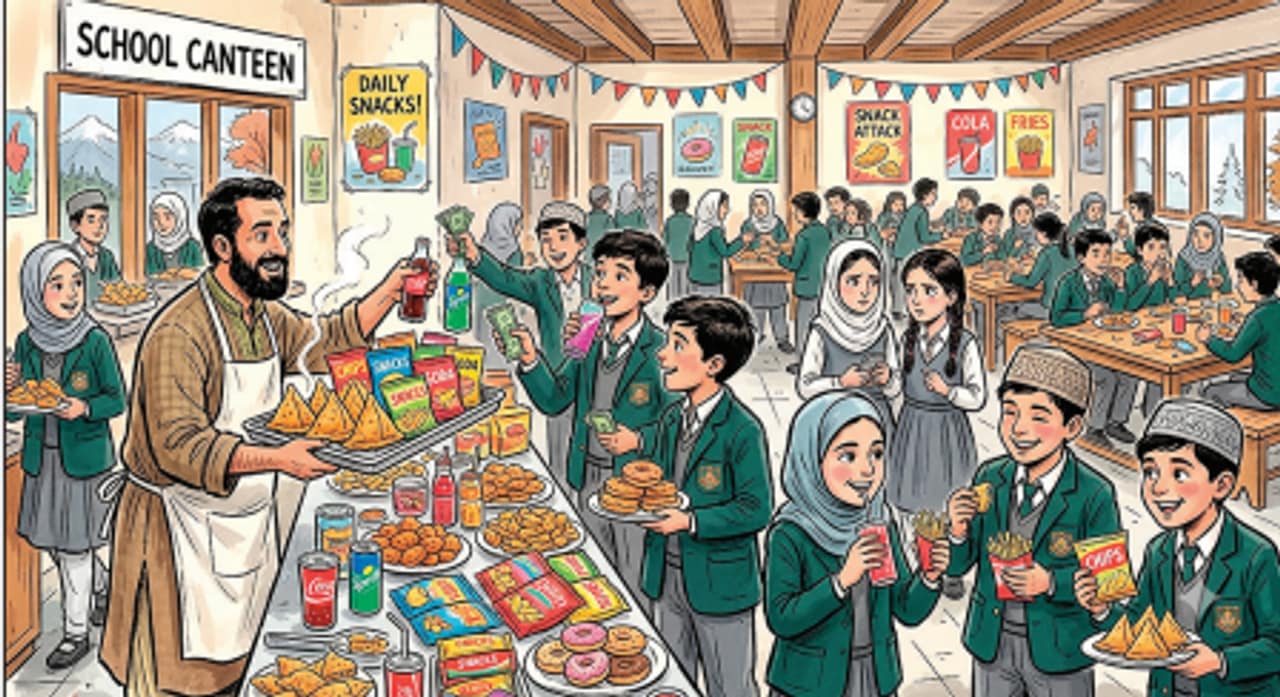

The widespread sale of junk food in school canteens across Kashmir is emerging as a major public health concern, with parents and health experts warning that unhealthy eating habits are increasingly affecting children’s nutrition, fitness and overall well-being despite guidelines discouraging such foods on school premises.
The Food Safety and Standards Authority of India (FSSAI) has proposed strict restrictions on the sale and advertisement of foods high in fat, salt and sugar (HFSS) in school canteens and within a 50-metre radius of school campuses.
The proposed restrictions cover chips, crisps, chocolates, ice creams, carbonated soft drinks and instant noodles.
However, most school canteens continue to stock and sell potato chips, instant noodles, soft drinks, chocolates, packaged snacks and ice creams.
These items have become the preferred choice for many students, often replacing healthier homemade meals.
Parents say easy access to junk food is encouraging children to consume calorie-dense, nutrient-poor foods almost every day.
Many complain that their children return home with little appetite after spending money on snacks during school hours.
“Most of the time our children don’t feel hungry after returning from school because they have already consumed chips, noodles and other junk food during school hours. This is gradually affecting their eating habits and health,” said Mohsin Sheikh, a resident of Baramulla town.
Medical experts warn that regular consumption of junk food can have serious long-term health consequences.
Diets high in saturated fats, sugar and salt but low in essential nutrients have been linked to rising cases of childhood obesity, type-2 diabetes, cardiovascular diseases, non-alcoholic fatty liver disease and other lifestyle-related illnesses.
Doctors also say excessive consumption of processed foods can affect children’s concentration, energy levels and academic performance.
FSSAI has categorised these products as foods high in fat, salt and sugar and proposed that they should neither be sold nor advertised within school premises or within a 50-metre radius of educational institutions.
The regulator has also recommended that schools transform their campuses into “Eat Right Schools” by promoting safe, nutritious and balanced diets in line with guidelines issued by the National Institute of Nutrition.
The draft regulations also call for nutritionists and dietitians to help schools prepare healthy menus, regular inspections of school canteens, and strict compliance with hygiene and food safety standards.
Food business operators supplying meals to schools are expected to comply with licensing norms and avoid promoting unhealthy foods through branding, posters or other promotional material on school campuses.
Educationists and parents believe stricter enforcement of these guidelines is essential in Kashmir, where junk food consumption among schoolchildren is steadily increasing.
Concerned parents have urged school managements, education authorities and food safety officials to intensify inspections and ensure canteens prioritise healthy, locally prepared food over packaged snacks.
Director School Education Kashmir, Naseer Ahmad Wani, told Greater Kashmir that the department would look into the issue.
“I have not received any complaint regarding this issue so far. However, I will look into the matter,” Wani said.
With childhood obesity and other lifestyle-related disorders emerging as growing concerns, stakeholders say schools must play a greater role in promoting healthy eating habits and ensure that canteens serve as a source of nutrition rather than a gateway to unhealthy food choices.
About The Author


