


Baramulla, Sep 26: The Centre has put on hold two key railway expansion proposals in Jammu and Kashmir— the Baramulla-Uri new line and the Qazigund-Srinagar-Budgam doubling project— with the Railway Board informing Northern Railway that the projects have been returned by the Cabinet Secretariat and are “no longer under consideration.”
The development comes months after the completion of the Udhampur-Srinagar-Baramulla Rail Link (USBRL), which established direct railway connectivity between Kashmir and the national railway network, and is likely to delay plans for further expansion and capacity augmentation of the Valley’s rail infrastructure.
In a communication dated September 10, 2026, addressed to the General Manager, Northern Railway, the Railway Board said the two proposals had been returned by the Cabinet Secretariat.
The communication, issued by the Joint Director (Works), Railway Board, refers to Cabinet Secretariat memoranda dated August 27, 2026, and identifies the proposals as the Baramulla-Uri new line and the Qazigund-Srinagar-Budgam doubling project.
The Baramulla-Uri line was proposed as an extension of the existing railway network from Baramulla towards Uri, close to the Line of Control (LoC), while the doubling project was aimed at augmenting capacity on the existing Kashmir railway corridor.
The latest development is significant as both projects had reached the Detailed Project Report (DPR) stage but had not received final sanction.
In February this year, the Ministry of Railways informed Parliament that DPRs had been prepared for both projects.
The official parliamentary record put the proposed Baramulla-Uri new line at 40 km and the Qazigund-Srinagar-Budgam doubling project at 118 km.
The Ministry had, however, clarified that preparation of DPRs did not amount to final approval.
It said implementation of such projects required consultations with stakeholders and clearances, including appraisal by NITI Aayog and the Ministry of Finance.
The latest Railway Board communication now states that the proposals have been returned and are “no longer under consideration.”
A senior Railway official said preparation of DPRs was only one stage in the process and did not constitute final sanction.
“The DPR preparation does not mean final approval. There are several other requirements and clearances before a project receives final approval,” the official said.
The official said the proposals could have been returned on account of factors including utility or availability of funds, but added that they could be considered again in future subject to the required approvals and other factors.
The Baramulla-Uri proposal had been seen as a potential extension of rail connectivity towards one of north Kashmir’s strategically important border areas.
The proposed doubling project, meanwhile, was intended to strengthen the existing Valley railway corridor as passenger and freight movement increases following the opening of the USBRL.
The move comes against the backdrop of the completion of the 272-km USBRL project, one of India’s most challenging railway infrastructure projects.
The project was completed and fully commissioned in 2025, linking Kashmir with the Jammu region and the wider Indian Railways network.
Prime Minister Narendra Modi inaugurated the completed project, including the Chenab and Anji bridges, in June 2025.
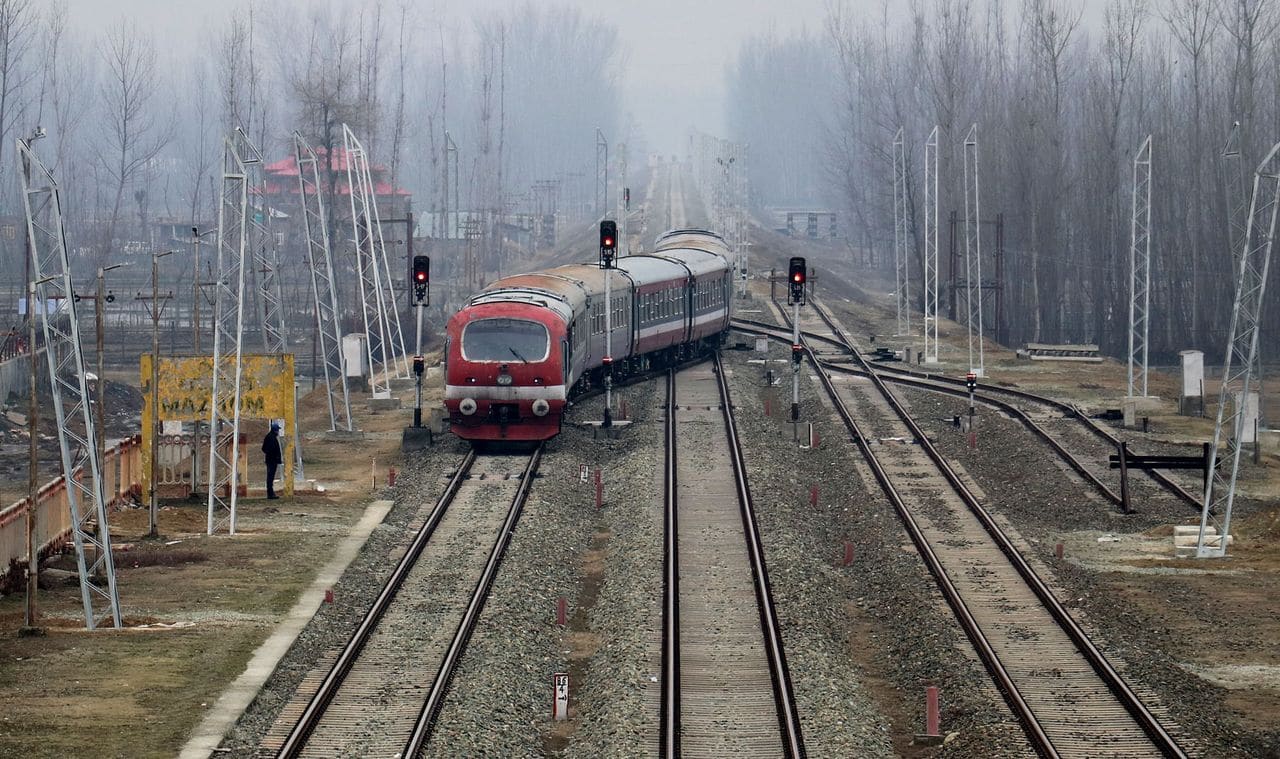
The Valley railway network had previously operated as a largely self-contained corridor. The 119-km Qazigund-Baramulla section was fully commissioned in 2009, while the Banihal-Qazigund section, including the Pir Panjal railway tunnel, became operational in 2013.
The completion of USBRL subsequently removed the major rail gap between the Valley and the rest of the country.
The Railways has since expanded services on the route, including the Vande Bharat service connecting Srinagar with Jammu and Katra, while also highlighting the potential of the railway network to facilitate tourism, passenger movement and transportation of agricultural produce from Kashmir to markets outside the Valley.
For now, however, the proposed next phase of expansion towards Uri and capacity augmentation along Kashmir corridor has been put on the back burner.
About The Author