



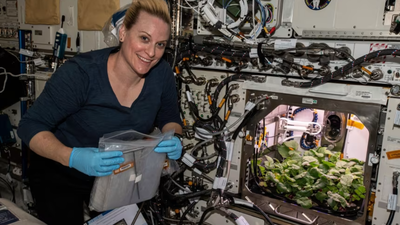
Researchers from Nasa Kennedy Space Centre and partner institutions Noetic Strategies, Amentum, Bennett Aerospace and Sierra Space have published the first microbial analysis of crops grown in a substrate-free system aboard the International Space Station. The study, ‘Microbial community characterisation of multi-crop growouts in the XROOTS aeroponic-hydroponic system on the International Space Station,’ led by Christina L. M. Khodadad and colleagues, examined lettuce, mizuna mustard, wheat, radish, tomato and pea plants grown in the eXposed Root On-Orbit Test System (XROOTS). Here’s what they found about the microbes living on and in these space-grown crops.
Testing an aeroponic-hydroponic system ‘XROOTS’ on the ISS
XROOTS is an aeroponic-hydroponic nutrient delivery system developed by Sierra Space to test whether crops could be grown without soil or other solid media, a method that could reduce the cargo mass needed for long-duration missions to the Moon and Mars. Launched to the ISS in February 2022, the system used a combination of aerosol misting and nutrient-solution flow to deliver water directly to plant roots across four growouts between June and October 2022. Researchers harvested mature tissue from mizuna mustard, radish and lettuce in growout two, wheat and lettuce in growout three, and pea and tomato plants that were grown through to fruiting by growout four.
What the microbial counts revealed across these six crops
Bacterial counts in the nutrient solution ranged from 65 to 3,800 colony-forming units per millilitre, and counts were consistently lower in the upper leaf sections than in the lower leaves, wick material and roots across every plant type tested. Tomato fruit and pea pods had the lowest average microbial counts of all the tissue types sampled. Crucially, all screening tests for foodborne pathogens, including E. coli, Salmonella and Staphylococcus aureus, came back negative, and the bacterial counts detected on the edible portions of the ISS-grown crops fell within the ranges typically reported for the same produce grown on Earth.
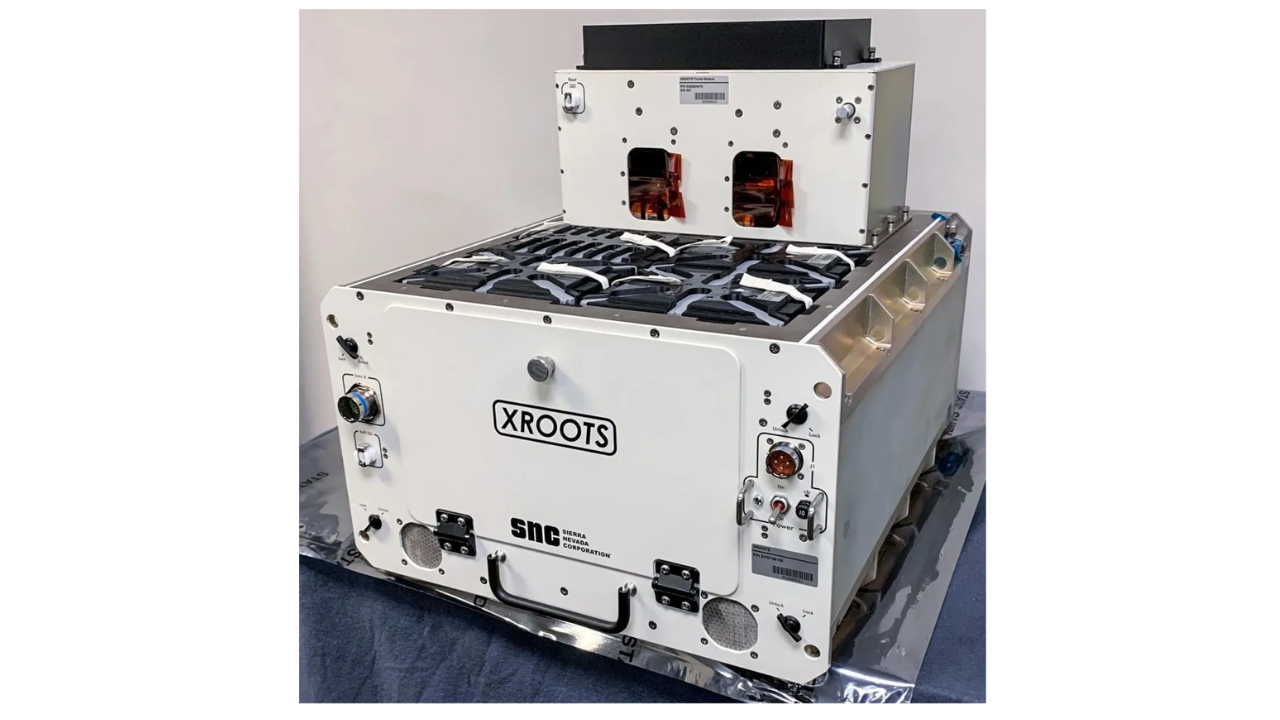
A preflight view of the XROOTS hardware. The eXposed Root On-Orbit Test System (XROOTS) investigation uses hydroponic and aeroponic techniques to grow plants without soil or other growth media (Image: Nasa)
Comparing microbial diversity with past ISS experiments
Genetic sequencing of the 16S rRNA gene and fungal ITS region showed that microbial diversity was consistently lower in leaf tissue than in root tissue, a pattern also seen in terrestrial agriculture. Pseudomonas emerged as the most abundant bacterial genus across the majority of samples. Compared with earlier Veggie system growouts conducted on the ISS between 2017 and 2018, the XROOTS crops carried a notably higher number of unique bacterial genera, 65 in leaf tissue and 87 in root tissue, compared with just 5 and 26 genera shared with those earlier missions, a difference the researchers linked partly to the XROOTS seeds not having been surface-sanitised before launch.
Food safety and what it means for future space missions
Among the fungi identified, researchers flagged two potential plant pathogens; Fusarium, an opportunistic fungus already known to affect ISS-grown crops, and Blumeria graminis, a fungus causing powdery mildew that had not been previously detected on the station and was found on wheat, tomato and pea plants grown together during the same growout. Despite these findings, no visible plant disease was observed, and researchers noted the presence of naturally occurring microbes, such as Pseudomonas and Trichoderma, known to compete against and suppress pathogens like Fusarium. The authors concluded that XROOTS performed well in microgravity and that understanding these plant-microbe relationships will be key to enabling reliable, Earth-independent food production on future lunar and Mars missions.
About The Author


