


Srinagar, Mar 13: The Department of Fisheries, Government of India, will organise the first-of-its-kind National Conference on Cold Water Fisheries at the Sher-e-Kashmir International Conference Centre (SKICC) in Srinagar on March 14.
The conference will be held under the guidance of Union Minister for Fisheries, Animal Husbandry and Dairying and Panchayati Raj Rajiv Ranjan Singh and will be attended by Lieutenant Governor Manoj Sinha, Chief Minister Omar Abdullah, Minister of State for Fisheries S.P. Singh Baghel, MoS George Kurian, and Jammu and Kashmir Agriculture Production Minister Javid Ahmad Dar.
The event aims to initiate a national dialogue on sustainably harnessing the potential of India’s cold-water fisheries for economic growth and livelihood generation.
Cold-water fisheries in India are primarily found in the Himalayan region and parts of the Northeast and Western Ghats, spanning states and Union Territories including Jammu and Kashmir, Ladakh, Himachal Pradesh, Uttarakhand, Arunachal Pradesh and Sikkim. Spread across more than 5.33 lakh sq km of mountainous terrain, these regions host pristine rivers, streams, lakes and reservoirs suitable for cold-water fish species. India has identified over 278 species of cold-water fish, offering significant potential for aquaculture, biodiversity conservation and nutrition security.
Under the Pradhan Mantri Matsya Sampada Yojana (PMMSY), the Centre has sanctioned Rs 2,299.56 crore for cold-water states to strengthen infrastructure, expand hatcheries, develop raceways, improve seed and feed systems, and enhance transport and cold-chain networks.
During the conference, Union Minister Rajiv Ranjan Singh will release the “Model Guidelines for the Development of Cold Water Fisheries”. Scheme benefits will also be distributed among traditional and progressive fishers, fisheries cooperatives under PM-MKSSY, and Kisan Credit Card beneficiaries. Awards will be presented to the best fisheries farmer producer organisations and fisheries start-ups from Jammu and Kashmir.
The technical sessions will focus on research and innovation, technology adoption, infrastructure development, institutional convergence and entrepreneurship in the fisheries sector.
Participants will include policymakers, researchers, experts and stakeholders from several states including Jammu and Kashmir, Ladakh, Himachal Pradesh, Uttarakhand, Sikkim, Arunachal Pradesh, Nagaland, Manipur, Meghalaya, Tamil Nadu, Maharashtra, Karnataka and Kerala.
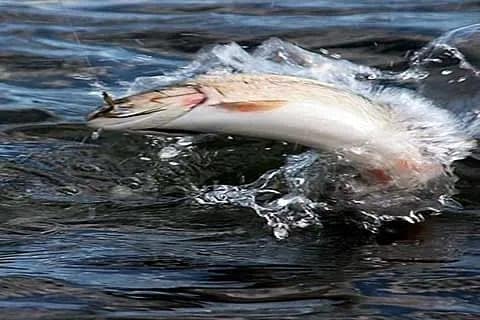
Premium cold-water species such as rainbow trout, brown trout and mahseer are considered high-value segments with strong growth potential. Trout production in India has increased nearly 1.8 times over the past decade, though the country continues to import salmon and premium trout varieties.
The Government of India has also outlined a National Vision for Cold Water Fisheries 2030, aiming to double production of species such as trout and mahseer while expanding livelihood opportunities in hill and remote regions.
Officials said the conference will serve as a platform to develop a roadmap for sustainable growth of cold-water fisheries while strengthening livelihoods and nutritional security in mountainous regions.
Over the past decade, the Centre has invested heavily in fisheries development through initiatives such as the Blue Revolution, Fisheries and Aquaculture Infrastructure Development Fund (FIDF), PMMSY and PMMKSSY, envisaging investments of over ₹39,272 crore, with projects worth ₹34,266 crore already approved.
Under PMMSY, the government has approved 5,600 raceways, 54 hatcheries, 5,600 trout rearing units, 293 cold storages, 8,044 transport vehicles and 260 feed mills, significantly improving production and distribution networks. Insurance support has also been extended to 33.78 lakh fishermen, while livelihood and nutritional assistance has reached 23.51 lakh families.
Among the 12 Integrated Aqua Parks approved nationwide, four — including Anantnag in Kashmir — are focused on cold-water fisheries. The Centre has also notified cold-water fisheries clusters in Jammu and Kashmir, Uttarakhand and Himachal Pradesh.
The Department of Fisheries is also exploring the use of drone technology to transport fish and aquaculture inputs to remote high-altitude areas, a pilot initiative aimed at reducing spoilage and improving market access for fish farmers.
About The Author


