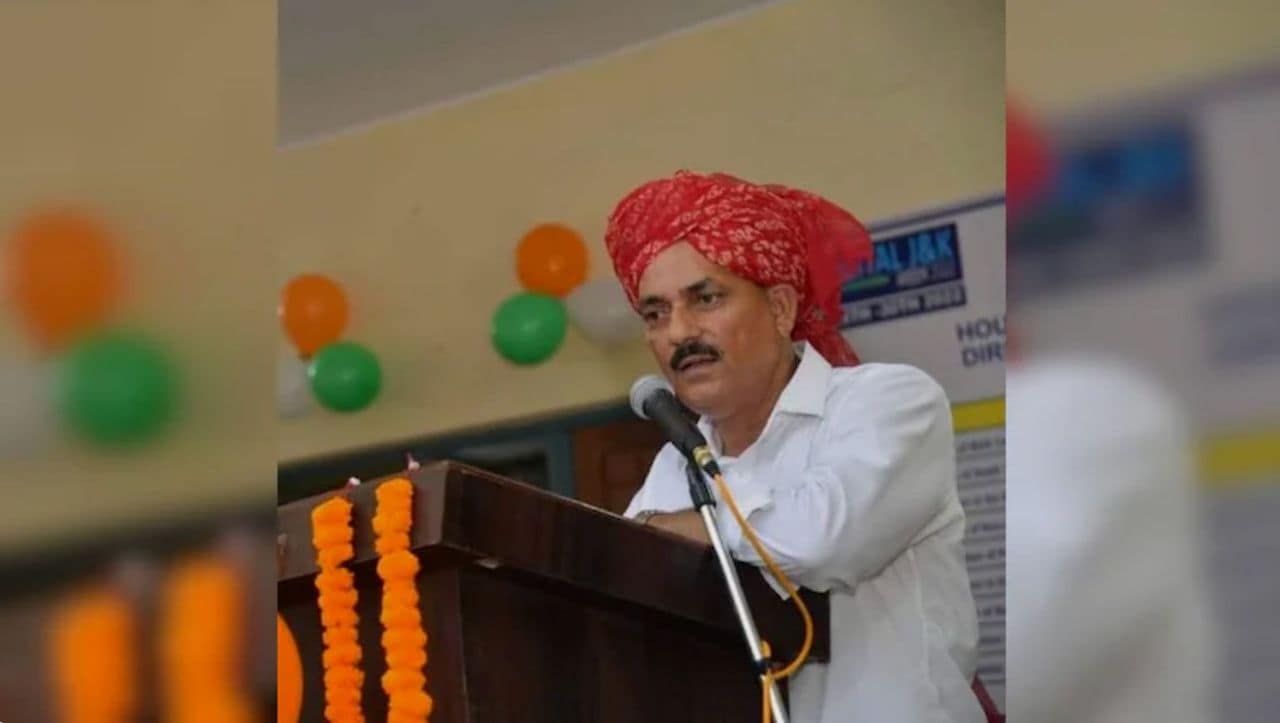
New Delhi, Sep 23: More than 23,000 promotions of government employees have been cleared in the last 12 years, Union minister Jitendra Singh said on Wednesday.
Advertisements
During a meeting with a delegation of the Central Secretariat Group-C Employees’ Association, Singh also said that timely career progression is important for keeping employees motivated and ensuring effective functioning of the administration.
Referring to sustained efforts by the Department of Personnel and Training (DoPT) to address promotion-related issues, Singh, the minister of state for personnel, said that more than 23,000 promotions have been cleared during the past 12 years.
The government is keen to provide a work-friendly environment to its employees so that they remain motivated and discharge their responsibilities effectively, Singh said.
The minister said that while employees may have a range of demands, their genuine issues should be looked into through the appropriate mechanism.
Inputs received from employees on service and cadre-related matters are important and should continue to be brought before the concerned authorities, he said.
The Central Secretariat Group-C Employees’ Association represents more than 8,000 employees working across 135 ministries/departments/organisations under the central secretariat.
The delegation placed before the minister a detailed set of concerns relating to service conditions and career progression of its members, a statement issued by the personnel ministry said.
The representatives placed their inputs on cadre review and the existing cadre structure, seeking consideration of issues affecting promotional avenues and career progression.
Singh said that such genuine inputs would be considered through the appropriate institutional mechanism.
The government’s objective is to ensure that legitimate issues are considered while creating a conducive working environment in which employees can remain motivated and perform their responsibilities effectively, Singh said.
The minister’s emphasis on employee motivation and timely career progression comes in the context of the government’s efforts to address stagnation in central secretariat services.
The government has, in recent years, undertaken large-scale promotion exercises across central secretariat services.
More than 8,000 promotions were effected on June 30, 2022, alone, while over 16,200 promotion orders had been issued between 2022 and 2024 across various grades, an official statement said.
The interaction concluded with the minister assuring the representatives that the genuine issues raised by them would be looked into, while encouraging continued constructive engagement between employee representatives and the concerned authorities.
Jammu and Kashmir Bank has appointed Chartered Accountant Rajeev Gupta as an Additional Director in the category of Rotational Directors on its Board, effective September 23, 2026.
The appointment was approved by the bank’s Board of Directors at its meeting held on September 22, subject to approval by the shareholders. The bank disclosed the appointment to the stock exchanges under the applicable SEBI regulations.
Gupta is a Chartered Accountant with more than 33 years of professional experience in accounting, auditing, financial reporting, taxation and regulatory compliance.
He qualified as a Chartered Accountant from the Institute of Chartered Accountants of India in May 1993 and holds a Bachelor of Commerce degree from SPMR College of Commerce, Jammu. He is associated with Rajeev Kuldip & Co., Chartered Accountants, Jammu, established in June 1993, and has also served as an Executive Director in other companies.
According to the bank, his professional experience includes management and execution of audits, preparation and review of financial reports, budgeting and cash-flow analysis, taxation matters including Income Tax and GST, and regulatory compliance.
He has also worked with non-profit and other organisations on financial records and compliance and has been involved in the implementation of the Industrial Policy of Jammu and Kashmir.
All India Institute of Medical Sciences (AIIMS), Jammu is currently recording an average daily Outpatient Department (OPD) footfall of 1,000 to 2,000 patients- averaging around 1,500 daily – catering not only to residents across Jammu and Kashmir, Punjab, and Himachal Pradesh, but also drawing patients from New Delhi.
This was maintained by Prof (Dr) Sanjeev Sinha, Director and Chief Executive Officer (CEO), AIIMS Vijaypur of Samba district in Jammu region during an extensive interactive session with the visiting media representatives from Bhopal.
The delegation of media persons from Bhopal, as part of an exposure and media tour organised by the Press Information Bureau (PIB), was in AIIMS Jammu on Wednesday, September 23, 2026, to gain first-hand insight into the premier institute’s infrastructure, clinical advancements, academic programmes and patient-centric innovations.
Prof (Dr) Sanjeev Sinha, during interaction, provided an overview of the hospital’s expanding clinical footprint and highlighted that the institute was structured with a 750-bed capacity, including 650 fixed beds, modern modular operation theatres, a fully equipped emergency medicine block and an integrated AYUSH Centre.
Emphasising self-reliance and comprehensive clinical care, he underscored that 30 broad specialties and 14 super-specialties, including Cardiology, Neurosurgery, and Plastic Surgery, were fully operational, ensuring patients receive end-to-end management locally without transfers, while specialised teams from AIIMS New Delhi were mobilized to assist on-site whenever necessary.
He also highlighted that the institute achieved prestigious milestones by becoming the first hospital in the region to earn NABH accreditation, alongside bagging the “Best Infrastructure Award” and the “National Patient Safety Award” at Nagpur, while clearance for advanced robotic surgery was expected shortly.
Throwing light on the research ecosystem, cutting-edge oncological advancements, and academic growth, Prof (Dr) Shabab Lalit Angurana, Professor, Dean of Research and Head of the Department of Radiotherapy and Oncology, stated that translational clinical research remained a key institutional pillar, driven by energetic young faculty actively working on approximately 12 high-impact research projects valued at Rs 8 to Rs 9 Cr. Prof Angurana also pointed out that the institute was fostering student scientific inquiry with around 23 short-term research projects supported by the Indian Council of Medical Research (ICMR) under faculty mentorship.
On future therapeutic capabilities, he elaborated on the upcoming establishment of a dedicated Nuclear Medicine facility equipped with state-of-the-art PET-CT scan infrastructure to drastically elevate diagnostic and cancer-care services in the coming years. Highlighting institutional academics, he noted that after commencing with an initial intake of 50 MBBS seats, the institute was admitting 125 MBBS students in the current batch, while concurrently operating comprehensive MD programmes and 50 super-specialty seats—including M Ch in Pediatric Surgery and DM in Endocrinology—with Ph D programmes scheduled to roll out soon.
The delegation was also briefed on the deployment of smart hospital technologies, including intelligent patient navigation kiosks currently supporting three languages and scaling up to incorporate 30 to 31 regional languages, assisted camera navigation networks and a digital footprint generating 15,000 to 24,000 ABHA IDs every month under the Ayushman Bharat Digital Mission, alongside specialised clinical methodologies designed to prolong longevity and improve care for HIV patients.
Prof (Dr) Vijay Kundal, Dr Amit Chaudhary, Assistant Professor, Department of Hospital Administration, along with other senior administrative and clinical officers of the institute, were also present on the occasion.
Later, the delegation visited the aquarium-cum-awareness centre at Bahu Fort, Jammu, where Joint Director, Department of Fisheries, Masood Hussain, briefed the members on developmental initiatives and achievements in the sector.
Spread over an expanse of 30 kanals, the facility was established under its state-sponsored phase I at an initial cost of Rs 8.40 Cr.
The existing setup houses the country’s largest freshwater aquarium, showcasing over 100 fish species alongside newly introduced ornamental varieties. Operating year-round, the centre serves as a prime public awareness and eco-tourism hub, catering to an overall footfall of over one crore tourists to the area and generating Rs 5 to 6 lakh in annual revenue.
The media delegation was informed about the ongoing execution of phase II, which entails setting up North India’s first and the country’s third marine aquarium. Scheduled to open this November, the upcoming marine wing features 50 mm acrylic glass boasting 98 percent transparency, a 4-lakh-litre marine water system, and 18,000 kg of specialized salt to sustain the marine ecosystem.
Briefing on the broader regional sector, the Joint Director highlighted that fisheries has emerged as a significant employment generator across Jammu & Kashmir, with targets set to achieve 28,000 metric tonnes of trout production alongside an annual revenue target of Rs 10 Cr through commercial trout production and angling tourism.
Awantipora, Sep 23: The HabbaKhatoon Centre for Kashmiri Language and Literature at the Islamic University of Science and Technology (IUST) organised an academic outreach visit to the ancient archaeological site of Burzahama on September 17.
The programme aimed to deepen students’ understanding of Kashmir’s history, culture and archaeological heritage through field-based learning and direct engagement with the site.
Students, faculty members and research scholars explored the historical significance of Burzahama and its place in Kashmir’s civilisational history. The visit also encouraged discussions on heritage conservation and the importance of studying and preserving archaeological resources.
The programme was coordinated by Dr Afshana, Head of the HabbaKhatoon Centre.
The Centre said the field visit provided students an opportunity to connect classroom learning with the region’s historical and cultural landscape, while developing a greater appreciation of Kashmir’s heritage and community history.
Climate activist Sonam Wangchuk led a symbolic padyatra in Leh on Wednesday to mark the first anniversary of the September 24, 2025 violence during protests seeking statehood and Sixth Schedule safeguards for Ladakh, in which four people were killed.
The march — organised ahead of Thursday’s Shaheed Diwas and joined by representatives of the Leh Apex Body (LAB) — was shortened because of changing weather conditions. Activists were likely to reach the Shaheed Memorial Park in Leh by Wednesday evening.
The padyatra, however, saw limited participation from local people of Ladakh. The organisers said they deliberately refrained from a large-scale appeal outside the region, as several people in Ladakh wanted locals to lead the commemorative programme.
Wangchuk, who is part of the LAB and engaged in dialogue with the Centre along with the Kargil Democratic Alliance (KDA), said the march was held to remember those who lost their lives and demanded justice for those killed and injured during last year’s protests.
“We organised the padyatra today and will observe Shaheed Diwas tomorrow in memory of those who were killed in the indiscriminate firing on September 24 last year. The day will be observed as Shaheed Diwas, with people expected to offer prayers at temples, mosques, churches and other religious places,” Wangchuk told reporters.
He demanded early submission of the report of the judicial enquiry constituted into the September 24 incident and said a year had passed without the report being made public.
The inquiry, he said, should establish why the firing took place, whether there was a firing order, how automatic weapons were allegedly used against protesters and how the violence began.
Wangchuk also sought adequate compensation for those killed and injured during the incident. He said September was being observed as “martyrs’ month” in memory of those who died, were injured or jailed while seeking safeguards for Ladakh’s land and culture and restoration of democracy.
Wangchuk also raised concerns over policy changes relating to land, industrial development, tourism and local governance. He said such decisions should be taken through a democratic process and in consultation with the people.
“If all these things are decided beforehand, what will be the meaning of the assembly and democracy?” he said, calling for restoration of democratic processes before major policy decisions are taken.
Referring to the Centre’s meetings with Ladakh representatives, Wangchuk said they had welcomed the May 22 meeting and expected “something new” at the September 9 meeting after four months of deliberations.
“On September 9, we found that there was nothing new to say and the earlier proposals were repeated. The earlier proposal was good, but nothing new came,” he said.
The activist said the next meeting is scheduled for October and urged the Centre to address the issues with “an open heart, a clear mind and honesty.”
The September 24, 2025 protests in Leh had turned violent, leaving four people dead and several others injured. The UT administration subsequently ordered a judicial enquiry.
Aqua Kashmir Avengers FC booked their place in the final of the Khyber Kashmir Super League (KKSL) Season 2 after beating New JK United FC 3-2 in a thrilling Qualifier 2 on Wednesday.
The high-intensity encounter, as per a statement, saw both sides produce an attacking display, but Aqua Kashmir Avengers held their nerve to secure a narrow victory and seal their place in the title clash.
New JK United FC fought hard throughout the contest and managed to find the net twice, but Aqua Kashmir Avengers scored three goals to finish the match 3-2 in their favour with Ahteeb receiving the man of the match award for his outstanding performance.
With the victory, Aqua Kashmir Avengers FC will now face Athwas India XI FC in the KKSL Season 2 final on Friday 25th. Athwas India XI had already secured their place in the summit clash after defeating their opponents in Qualifier 1.
The final is set to bring together two of the tournament’s strongest sides, with Aqua Kashmir Avengers entering the title clash on the back of their impressive knockout-stage victory.
The Khyber Kashmir Super League Season 2, powered by Athwas Retail and Athwas Hyundai, has brought together talented footballers from across Kashmir and provided a competitive platform for players to showcase their skills.
The organisers congratulated both teams for their spirited performances and expressed appreciation for the players, officials, supporters and partners whose contribution has helped make the second season of the league a success.
Mohali, Sep 23: CGC University, Mohali, hosted the maiden Industry-Integrated Board (IIB) Executive Leadership Dialogue 2026, bringing together university leadership and representatives of more than 50 leading organisations to discuss emerging workforce trends and industry-aligned education.
The dialogue was attended by CGC University Founder and Chancellor S Rashpal Singh Dhaliwal, Managing Director Arsh Dhaliwal and Executive Vice President Sushil Prashar.
Representatives from companies including Google, TCS, Accenture, IBM, EY India, Salesforce, SAP, HCLTech, Capgemini, Maruti Suzuki, KPMG, Ericsson, eBay and others participated in the discussions.
The deliberations focused on evolving skill requirements, curriculum enhancement, experiential learning, emerging technologies and capability gaps, besides strengthening industry-academia collaboration.
Participants also discussed opportunities for internships, live projects, professional certifications, mentorship, Centres of Excellence, research, innovation, and placements.
The university said inputs from the dialogue would contribute to an IIB Strategic Action Agenda aimed at translating industry requirements into academic initiatives. The event marked the beginning of a structured mechanism for continued engagement between industry and academia, with the university emphasising the need to keep curricula and learning experiences aligned with the changing demands of the workplace.
The Kashmir Trade Alliance (KTA) has expressed serious concern over the commencement of unscheduled power cuts across Kashmir, stating that the sudden interruptions are causing inconvenience to traders, businesses and the general public.
KTA President Aijaz Ahmad Shahdhar said the return of unscheduled power cuts was a matter of concern, particularly for commercial establishments that depend heavily on uninterrupted electricity for their day-to-day operations.
“Unscheduled power cuts have started again in Kashmir, causing inconvenience to traders and disrupting business activity. The government and the concerned power authorities must ensure that consumers are provided a reliable and uninterrupted power supply, particularly during business hours,” Shahdhar said.
He said frequent power interruptions affect shops, markets, commercial establishments and small businesses, increasing operational difficulties and causing losses to traders.
Shahdhar urged the concerned authorities to strictly adhere to the announced power curtailment schedule and ensure that any unavoidable interruption is properly communicated to consumers in advance.
“The business community is already facing several challenges. Frequent and unscheduled power cuts add to the difficulties faced by traders and affect the smooth functioning of markets. There should be transparency in the curtailment schedule and consumers should not be subjected to arbitrary power cuts,” he said.
The KTA President called upon the Power Development Department/KPDCL to take immediate measures to streamline the power supply and ensure that the announced schedule is followed in letter and spirit.
The Chief of Air Staff (CAS), Air Chief Marshal A P Singh on Wednesday visited the strategically vital Northern Command theatre to review prevailing operational environment and preparedness.
During the visit, the Chief of Air Staff was briefed by Lieutenant General Pratik Sharma, General Officer Commanding-in-Chief (GOC-in-C), Northern Command at Headquarter Northern Command on key operational dynamics and the ongoing inter service synergy initiatives for the effective execution of multi domain operations.
“Expressing full confidence in the operational capabilities of the forces, the Chief of the Air Staff highlighted that the exemplary synergy and jointness displayed between Western Air Command and Northern Command, at each echelon, ranging from strategic to tactical level, serves as a beacon for future operations,” PRO Defence Jammu Lt Col Suneel Bartwal said.
Lt Col Bartwal said that Air Chief Marshal A P Singh complimented all ranks for their unwavering commitment towards safeguarding national interests.
Srinagar, Sep 23: A 650-year-old Chinar tree at Chattergam in Budgam, described by the government as the oldest Chinar tree in Asia, is still green and alive.
There has been natural loss of some of its older and dried branches, the remaining portion is being protected and preserved, the government said.
The government accepted that the chinar numbers in J&K have declined and attributed it to various factors, including cutting down of trees for “development activities, shrinking land and burgeoning population”.
In addition, natural ageing, disease and pests have also contributed to decrease in tree numbers.
The information was furnished by the Forest, Ecology and Environment Department in response to a question raised by MLA Budgam Aga Syed Muntazir Mehdi in the Legislative Assembly.
Responding specifically about the Chinar at Chattergam, the department said, “The chinar tree at Chattergam Budgam is the Asia’s oldest chinar tree (650-years-old).”
It said that some of the older and dried branches of the tree had naturally fallen, while “the remaining portion of the chinar is green.”
The department has also said that protection measures have been instituted around the tree. This includes installation of iron fencing around the critical root zone (buffer zone) of the Chinar.Measures intended to prevent soil compaction and root suffocation have also been put in place.
“This will help to avoid any traffic in root zone,” the reply stated.
The government said that protection measures are in place for Chinars across Kashmir.
Around 30,000 Chinar trees have been surveyed in Kashmir, excluding those located in security campuses and installations, it said.
Moreover, the Government has said that no Chinar branch can be cut without permission from the local administration.
“Nobody is allowed to cut down even a branch of chinar with the prior permission from the local administration as per the standing rules thereof,” the reply said.
In addition, carving nails, hammering signboards, and damaging the bark or roots of Chinar trees is also an offence.
The Department of Floriculture, the reply states, has planted 709 Chinar saplings in gardens and parks during the last three years.
An extra of 7134 saplings were distributed free of cost to the general public, educational institutions, and security establishments in the Kashmir Division.
In Budgam specifically, replying to the question of the MLA, the government said that 161 representations seeking permission for pruning dried or hazardous Chinar branches were received during the last three years.
Daimler India Commercial Vehicles (DICV), manufacturer of BharatBenz trucks and buses, on Wednesday inaugurated a new service centre operated by PPS Trucking in Phey village of Leh district, Ladakh.
Located at an altitude of approximately 11,550 feet above sea level, the facility is being positioned by the company as India’s highest-altitude commercial vehicle service facility.
Spread over 20,000 square feet along NH-1 on the Leh-Srinagar-Uri Highway, the workshop will cater to commercial vehicles engaged in stone-crusher operations, road construction in border areas by the Border Roads Organisation (BRO), and transportation of communication tower infrastructure.
The strategically located facility is expected to serve customers across a wide area, including Kargil, Drass and areas near the India-China border.
DICV said customers operating in Ladakh and adjoining regions previously had to travel long distances to access authorised service facilities and genuine spare parts, often resulting in longer vehicle downtime and higher operating costs.
The new facility is equipped with advanced diagnostic systems, modern tools and genuine BharatBenz spare parts. It will also provide 24×7 roadside assistance and has three fully equipped service bays, with an annual servicing capacity of more than 1,400 vehicles.
Rajiv Chaturvedi, President and Chief Business Officer, Daimler India Commercial Vehicles, said the facility would strengthen aftersales support for customers operating in the challenging terrain and weather conditions of Ladakh and adjoining border regions.
“With the inauguration of this new service and spare parts facility, we are bringing world-class aftersales support closer to our customers, ensuring faster repairs, easy access to genuine parts, and expert technical assistance,” he said.
Rajiv Sanghvi, Managing Director, PPS Trucking, said the new facility would provide timely and reliable service to customers operating in one of the country’s most difficult terrains.
The company said the expansion was aimed at reducing vehicle downtime, improving access to technical support and spare parts, and enhancing vehicle productivity in the region.
The Jammu & Kashmir Sports Council (JKSC) on Wednesday conducted UT-level trials for Sub-Junior Boys (Football) at the TRC Synthetic Football Turf, Srinagar, to finalise the J&K team for the NFC National Football Championship 2026.
As per a statement, promising young footballers from across the Union Territory participated to showcase their talent. An expert selection panel meticulously evaluated players on technical proficiency, game awareness, and overall fitness, with assessments supported by the accompanying physiotherapy team.
Secretary, J&K Sports Council, Tazayun Mukhtar Kawos (JKAS), was also present during the proceedings.
The Sports Council reiterated its dedication towards discovering and nurturing grassroot sporting talent across Jammu and Kashmir, maintaining a transparent, merit-driven selection process anchored in the values of fair competition.
In 2013, astronomers discovered two narrow rings around Chariklo, a 250-kilometre-wide minor planet orbiting between Saturn and Uranus, marking the first time rings had been found around such a small body. Nine years later, the James Webb Space Telescope observed the same system during a rare stellar occultation and found that the inner ring had become noticeably more opaque while the outer ring appeared weaker and more transparent. This opposite evolution suggests that Chariklo’s rings are far more dynamic than previously thought, changing on timescales of just a few years rather than remaining stable over centuries, according to a study led by the Institute of Astrophysics of Andalusia and reported by EurekAlert.
A tiny world with giant-planet features
Chariklo, formally known as 10199 Chariklo, is classified as a centaur, a type of icy minor planet that orbits in the outer Solar System between the giant planets. With a diameter of only about 250 kilometres, it is tiny compared to Saturn or Uranus, yet it hosts a ring system that rivals those worlds in complexity. The two rings, designated C1R and C2R, are extremely narrow and lie close to the body, at distances of roughly 390 and 405 kilometres from Chariklo’s centre.Before 2013, ring systems were considered a feature reserved for the four giant planets: Jupiter, Saturn, Uranus and Neptune. The discovery that a small, distant object like Chariklo could sustain dense rings upended that assumption and raised new questions about how such delicate structures form and survive. Were they the result of a recent collision, the breakup of a small moon, or material lifted from Chariklo’s surface by some unknown process? And how could they remain stable in an environment where gravitational tugs from nearby giants and passing objects might be expected to tear them apart?
How astronomers study invisible rings
Chariklo’s rings are too narrow and too far away to be photographed directly, even by the James Webb Space Telescope or the largest ground-based observatories. Instead, they rely on a technique called stellar occultation. When Chariklo passes in front of a background star, the starlight is briefly blocked by the body and its rings as they cross in front of the star. Using fast and precise instruments to measure these tiny drops in brightness, scientists can deduce the width, spacing and opacity of the rings.The 2022 observation marked a major milestone. It was the first stellar occultation specifically predicted and planned for the James Webb Space Telescope. Achieving this required extraordinarily precise knowledge of Chariklo’s orbit, the position of the target star, thanks to data from the European Space Agency’s Gaia mission, and the exact trajectory of JWST as it orbits the L2 Lagrange point about 1.5 million kilometres beyond Earth. At the time of the occultation, Chariklo was moving relative to JWST at just 2.5 kilometres per second, giving the team unprecedented spatial resolution for probing the ring structure.
Opposite changes in the two rings
When the team compared the 2022 JWST data with earlier occultation measurements from the past decade, they found that the two rings were evolving in opposite directions. The inner ring, C1R, was much more opaque, blocking more starlight and probably containing more material or more tightly packed particles than previously. The outer ring, C2R, displayed lower opacity, suggesting it had become more tenuous or less dense over the same period.These changes occurred over less than a decade, a very short time in planetary terms. Until now, scientists had generally assumed that rings around small bodies were relatively stable, persisting with little change over long periods. Chariklo’s behaviour challenges that view and implies that these systems can be surprisingly active, responding to internal dynamics or external influences on human-observable timescales.
What might be driving the changes
The physical origin of the detected changes remains an open question. One possibility is that the rings are undergoing genuine temporal evolution. Collisions between ring particles, gravitational interactions with invisible shepherd moons, or perturbations from Chariklo ’s irregular shape could redistribute material between the two rings or within each ring. Over time, such processes could make one ring denser and another more diffuse.Another possible reason may be the different filters and observation set-ups used in the various occultation campaigns . The JWST observations were taken in specific infrared filters, while the previous ground-based campaigns were in visible or near-infrared wavelengths. If the particles that make up the rings are of different sizes, then the rings can appear to have different opacities when viewed with different wavelengths of light. The study authors note that the observed changes could reflect a combination of real evolution and observational differences, and they call for further monitoring to disentangle these effects.
A new window on ring dynamics
The ability to detect changes in Chariklo’s rings over just a few years opens a new window for understanding how ring systems evolve. If small bodies can host dynamic rings that shift on short timescales, similar behaviour might be found in other minor-planet systems yet to be discovered. This could reshape models of how rings form, how long they last and what mechanisms keep them confined and stable in the face of disruptive forces.For planetary scientists, Chariklo has become a natural laboratory. Its rings are close enough to the central body and narrow enough that subtle changes can be measured with current technology, yet distant enough that they exist in a different gravitational and collisional environment than the rings of Saturn or Uranus. By watching how C1R and C2R change over time, researchers can test theories about particle collisions, wave propagation, confinement by small moons and the role of radiation and micrometeoroid impacts in shaping ring architecture.
A technical and collaborative achievement
The studytitled ‘JWST stellar occultation reveals unexpected changes in Chariklo’s ring system’, published in Science Advances, was led by researchers at the Institute of Astrophysics of Andalusia, part of the Spanish National Research Council. The team designed the project, predicted the occultation, coordinated the JWST observation, analysed the data and interpreted the results. Collaborators from Spain, Brazil, France, Hungary and the United States contributed to ring modelling, statistical analysis and the broader scientific context.Achieving the observation required more than just telescope time. It depended on precise orbital mechanics, accurate star positions from Gaia, and careful planning of JWST’s movements around L2, including station-keeping maneuvers that keep the telescope in its intended orbit. The success of the campaign shows how space-based observatories, in combination with ground-based networks and high-precision astrometry, can probe fine details of distant, faint systems that would otherwise be invisible.
Why Chariklo matters beyond rings
Chariklo’s story is part of a larger shift in how astronomers view the outer Solar System. Once seen as a relatively quiet region populated by static, unchanging bodies, the trans-Saturnian zone is now recognised as dynamic and complex. Centaurs like Chariklo migrate over time, sometimes evolving into short-period comets, sometimes being ejected from the Solar System entirely. Their surfaces can be altered by impacts, outgassing and radiation, and now their ring systems appear capable of changing on observable timescales.As telescopes and techniques improve, more ringed minor planets may be discovered, and existing ones may be monitored more closely. Each new system will add data points to a growing picture of how common rings are, how long they survive and what conditions allow them to persist. Chariklo, once a curiosity, has become a benchmark object for this emerging field.
Looking ahead
The authors emphasise that their results force a rethink of how small-body ring systems form, evolve and maintain stability. Future occultations, ideally with JWST and large ground-based facilities working together, could track further changes in Chariklo’s rings and search for similar behaviour in other objects. Over time, these observations may reveal whether the opposite trends seen in C1R and C2R are part of a cyclical process, a one-time redistribution of material or something more complex.For now, Chariklo stands as a reminder that even in a Solar System that has been studied for centuries, surprises remain. A 250-kilometre-wide world, billions of kilometres from Earth, is hosting a pair of rings that are changing before our eyes, inviting astronomers to watch, measure and refine their understanding of how such delicate structures can exist and evolve in the cold darkness beyond the giant planets.
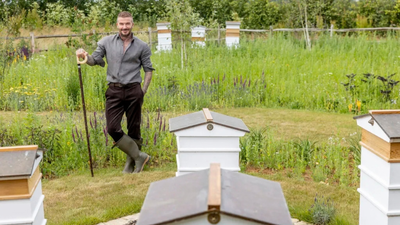
David Beckham took up beekeeping during lockdown, inspired by his son Cruz.Image credit: Millie Pilkington / Country Life
David Beckham, the football icon who took up beekeeping during the Covid-19 lockdowns, now produces his own honey at his Cotswolds home, according to The Standard. His hobby comes as experts discuss the potential effects of managed honeybee colonies on wild pollinators. Wildlife filmmaker and National Geographic Explorer Bertie Gregory has suggested that people who want to help bees should consider planting wildflowers instead of keeping honeybee colonies. He explained that cities can have too many beehives, potentially increasing competition for food. His comments highlight concerns about how managed hives may affect wild bees in areas with limited floral resources.
David Beckham’s interest in beekeeping began during lockdown
According to The Standard, David Beckham began keeping bees during the Covid-19 lockdowns and developed the hobby at his Cotswolds property, where he now produces honey.Other celebrities, including Stacey Solomon, Rod Stewart and Ed Sheeran, have also been associated with beekeeping. The growing interest has brought greater public attention to honeybees and the process of producing honey.Honeybees are just one type of bee. Wild bees, including bumblebees and solitary bees, help plants reproduce by carrying pollen between flowers. They have different nesting habits and food requirements.
Bertie Gregory raises concerns about managed beehives
Bertie Gregory, who hosts and narrates Secrets of the Bees, has questioned whether keeping honeybees is always the best way to support wild pollinators.In an interview with The Standard, Gregory encouraged people to plant wildflowers rather than automatically purchasing honeybee colonies. He explained that cities can have too many beehives, putting pressure on food sources that wild bees depend on.Gregory compared buying domesticated honeybees to purchasing chickens to save wild birds. His comments focus on the broader beekeeping trend, rather than establishing that David Beckham’s hives have harmed wild bees.
Honeybees and wild bees compete for food
Honeybees collect nectar and pollen to feed their colonies, while wild bees rely on many of the same resources. When large numbers of honeybees forage in a small area, they may compete with other pollinators for food.The level of competition depends on hive numbers, flower availability and the species living nearby. Areas with abundant flowers may support both managed honeybees and wild bees, while limited food supplies can increase competition.A 2016 study published in Basic and Applied Ecology examined competition between managed honeybees and wild bumblebees. Researchers compared sites with and without added honeybee hives and found that the effects varied according to the surrounding landscape. In landscapes with fewer flower-rich habitats, honeybees could reduce bumblebee densities in some areas.
Research highlights the role of hive density
A 2021 study published in Oecologia examined honeybee and wild bee visits to flowers in Munich, Germany. Researchers found that higher honeybee densities were associated with a shift in flower visits from wild bees to honeybees. The study also reported evidence of competition at several types of flowers.Another study published in Scientific Reports in 2018 examined honeybees and wild bees in a protected Mediterranean scrubland in southern France. Researchers reported that high-density beekeeping was linked to reduced wild bee occurrence and lower nectar foraging success. The effects extended several hundred metres around apiaries.These findings show that large concentrations of managed colonies can affect wild bees in certain environments. The results depend on local conditions and should not be applied to every beekeeping operation.
Why planting wildflowers can help bees
Gregory recommended planting wildflowers to provide food for a wider range of pollinators. Wildflowers produce nectar and pollen, while planting different species that bloom at different times can help provide food throughout the season.Flower planting is one part of pollinator conservation. Bees also need suitable nesting sites, and threats such as pesticides, habitat loss and disease can affect wild populations.Creating flower-rich habitats and protecting nesting areas can help support wild bees and other insects.
What David Beckham’s hobby tells us about bee conservation
David Beckham’s beekeeping hobby has brought attention to the relationship between honey production and pollinator conservation. Honeybees play an important role in agriculture, while wild bees support natural ecosystems and plant reproduction.Gregory’s comments highlight the importance of considering wild pollinators when people decide to keep honeybees. Research from different locations shows that managed colonies can affect wild bees in some circumstances, while other studies have found no direct effect on wild bee diversity.The evidence suggests that local conditions matter when assessing the impact of beekeeping. Planting wildflowers, protecting nesting habitats and supporting native pollinators are practical ways to help a wider range of bee species.
Representative Image of a pair of white dwarfs orbiting closely, surrounded by a cosmic background and X-ray emissions (AI Generated Image)
An international team led by Indian astronomers has identified a pair of white dwarfs locked in an extraordinarily tight orbit that is shrinking faster than that of two other well-known systems of the same type. The binary, known as eRASSU J060839.5–704014 or eRASSU J0608, completes an orbit in just 374.15 seconds, or about 6.2 minutes. Researchers tracked the system’s orbital motion for three and a half years using observations from NASA’s NICER telescope and the Chinese-led Einstein Probe mission, together with archival data from the European Space Agency’s XMM-Newton observatory. Their findings, published in The Astrophysical Journal Letters titled Rapid Orbital Decay in the Ultracompact Double-degenerate Binary eRASSU J060839.5–704014 on August 10, 2026, show that the system is among the most rapidly evolving ultracompact double-white-dwarf binaries currently known. The researchers say its predictable gravitational-wave signal could also make it a promising verification source for future space-based observatories such as the planned Laser Interferometer Space Antenna, or LISA.
The two white dwarfs orbit each other in just 374 seconds
White dwarfs are the dense stellar remnants left behind when stars such as the Sun exhaust their nuclear fuel and shed their outer layers. In an ultracompact binary, two such remnants can orbit one another at an extremely small separation, producing orbital periods measured in minutes rather than days or years. eRASSU J0608 completes one orbit every 374.15013 seconds, equivalent to about 6.24 minutes. The system was first identified as a supersoft X-ray source in observations from eROSITA, the X-ray instrument aboard the Spektrum-Roentgen-Gamma mission. Follow-up observations established that the source was consistent with a double-degenerate ultracompact binary in the foreground of the Large Magellanic Cloud. The short orbital period is accompanied by a strongly modulated X-ray signal. Earlier observations found pulsations at roughly 374 seconds, while the new study used the timing of those X-ray pulses to follow changes in the binary’s orbit over time.
Material from one white dwarf may be striking the other directly
The system belongs to a rare class of ultracompact binaries in which material transferred from one white dwarf can reach its companion without first forming a conventional accretion disc. This configuration is known as direct-impact accretion. The researchers’ X-ray observations support this interpretation. The system produces a supersoft X-ray spectrum, with the new study measuring thermal components corresponding to temperatures of about 126 and 144 electronvolts. Those temperatures are equivalent to roughly 1.5 million and 1.7 million kelvin. The direct-impact interpretation also provides an explanation for the system’s strong X-ray modulation. As material from the donor white dwarf reaches the surface of its companion, the impact region can become extremely hot and emit X-rays. The bright phase changes in temperature during the orbit, which the researchers interpreted as evidence for a structured emitting region with significant temperature differences across it.
Its orbit is shrinking faster than those of HM Cnc and V407 Vul
To measure how the binary is evolving, the researchers combined X-ray timing observations from NICER and Einstein Probe with archival XMM-Newton observations. By connecting these observations over a baseline of about three and a half years, they obtained a coherent timing solution for the system. The measured orbital period is decreasing at a rate of approximately 4.7 × 10⁻¹¹ seconds per second. That may sound tiny, but over astronomical timescales it represents an unusually rapid change for a binary system. The researchers found that the measured orbital decay is greater than that observed in HM Cnc and V407 Vul, two other well-studied ultracompact double-degenerate binaries. The rapid decay is consistent with the system losing orbital energy and angular momentum through gravitational radiation. In their analysis, the researchers assume that gravitational-wave angular-momentum loss is the primary driver of the observed orbital evolution. Under that assumption, they infer a chirp mass of about 0.43 times the mass of the Sun.
The system may be among the most massive of its class
The chirp mass is a parameter that describes a binary’s component masses and plays an important role in determining the evolution and gravitational-wave signal of an inspiralling system. For eRASSU J0608, the inferred value of about 0.43 solar masses places it among the most massive known systems in this particular class, according to the researchers. The authors describe eRASSU J0608 as one of the most rapidly evolving ultracompact double-degenerate binaries currently known. Its unusually fast orbital evolution makes it useful for studying the short-lived stages through which extremely compact stellar binaries evolve. The system is also potentially important for gravitational-wave astronomy. Its orbital period is short enough to place its expected gravitational-wave emission in the low-frequency regime targeted by future space-based detectors rather than the frequency range of today’s ground-based observatories.
eRASSU J0608 could become a verification source for LISA
The researchers say eRASSU J0608 is a promising verification source for future low-frequency gravitational-wave observations. A verification source is a binary whose gravitational-wave signal can be predicted from independent observations, allowing researchers to compare that prediction with what a future gravitational-wave detector actually measures. One mission designed to study low-frequency gravitational waves is ESA’s Laser Interferometer Space Antenna (LISA). The mission will use three spacecraft separated by millions of kilometres to measure tiny changes produced by passing gravitational waves. ESA currently plans LISA for launch in 2035.For eRASSU J0608, however, an important uncertainty remains: its distance has not yet been firmly established. The earlier discovery study placed the system in the direction of the Large Magellanic Cloud and concluded that it lies in the foreground of the galaxy, but determining its distance more precisely would improve estimates of the system’s physical properties and expected gravitational-wave signal. The IUCAA-led team plans to continue observing the binary with X-ray telescopes and search for a visible-light counterpart. Those observations could help researchers determine its distance and component masses more precisely, allowing them to refine predictions for the gravitational-wave signal that future space observatories could measure.
Srinagar, Sep 22: Chief Minister Omar Abdullah on Tuesday said the government cannot replicate the Gulmarg model at every tourist destination across Jammu and Kashmir, saying there was a need to develop each destination according to its distinct attractions and tourism potential.
Replying to a question raised by MLA Saifuddn Bhat during the ongoing autumn session of the J&K Legislative Assembly, CM Omar, who is the minister incharge of Tourism Department said merely installing gondolas at different destinations would not automatically boost tourism.
“Every tourist destination has its own identity. We cannot make every tourist destination Gulmarg,” he informed the House.
The CM said the success of the Gulmarg Gondola could not be taken as a guarantee that similar projects would achieve the same results elsewhere.
“We have two gondolas operating in J&K. One is at Gulmarg and another at Patnitop. But if you look at the ridership, the number of people using the Patnitop Gondola is lower compared to Gulmarg,” he said.
CM Omar said repeated demands for cable car projects as a means of reviving tourism at different destinations were not necessarily justified.
“Just because the Gulmarg Gondola is successful does not mean gondolas will be equally successful everywhere,” he said, adding that the government needed to identify “something unique” for each destination and promote it accordingly.
On the proposed cable car project at Doodhpathri, the CM said the proposal was currently under consideration and would be taken up subject to approval by the competent authority, completion of requisite formalities, and availability of funds.
He said Doodhpathri had its own tourism potential, particularly in winter adventure tourism, and the government was working to build a distinct identity for the destination rather than replicate the tourism model of Gulmarg, Pahalgam, or Sonamarg.
“Doodhpathri may have something different from Gulmarg, Pahalgam, and Sonamarg. We have to focus on that,” CM Omar said.
He informed the House that the government would undertake measures to promote Doodhpathri and establish its own identity.
The CM said skiing was introduced at Doodhpathri by the Tourism Department in 2023 and it continued during subsequent winter seasons.
“A drag lift was also constructed and made operational in 2026 to facilitate skiing training and other winter adventure activities,” he told the House.
CM Omar said the Tourism Department had identified State land at five locations along the Arigam-ReyarIch stretch for developing wayside facilities for visitors and local vendors.
“Administrative approval for the facilities has been accorded at an estimated cost of Rs 50 lakh and the works are currently at the tendering stage,” he said.
The CM said the government has also identified around 25 kanal of state land near the sheep farm at Kralpathri for a proposed tourist transit hub and 400-car parking facility at Doodhpathri.
“A Detailed Project Report for the Rs 75-crore facility under the SwadeshDarshan Scheme 2.0 has been submitted to the Union Ministry of Tourism for consideration and approval. The facility is aimed at regulating vehicular movement and reducing traffic pressure at the destination,” he said.
On tourism development in Khan Sahab, CM Omar said the Tourism Department had begun identifying and assessing areas with tourism potential for future development.
He said site visits were conducted, in consultation with local stakeholders besides the Revenue and Forest Department officials, to Pushker, Shoplian, Nowgam, Drung, Habber, Banglapathri, and Palmasidan to assess their tourism potential and the feasibility of creating tourism infrastructure.
“Suitable sites would be considered for inclusion in future tourism development plans subject to tourism potential, availability of land and fulfilment of statutory and administrative requirements,” the CM informed the House.
He said the government was pursuing a multi-pronged strategy to diversify tourism in Jammu division by developing existing destinations, opening up new and emerging destinations, and promoting Jammu as a year-round tourism destination.
CM Omar said the strategy covered pilgrimage, heritage, adventure, eco, nature, rural, cultural, wellness, and leisure tourism.
He said that major destinations where interventions have been initiated include Suchetgarh, Shiv Khori, Sudhmahadev, Patnitop, Basholi, Bhaderwah and Gatha, Mansar, Baradari, Kesari Hills and Behra and Qasab.
“The government is also focusing on pilgrimage circuits, with five circuits sanctioned under the 2020-21 Capex Plan. These include Mansar, Shiv Khori, Utterbehni, Purmandal and Sukrala circuits,” the CM said.
He said the Tourism Department has also stepped up promotional activities, participating in national and international tourism events and festivals to widen the reach of Jammu and Kashmir’s tourism products.
“The approved budget for tourism-related development activities in Jammu division increased from Rs 56.50 crore in 2023-24 to Rs 61.15 crore in 2024-25 and Rs 62.85 crore in 2025-26,” CM Omar informed the House.
He said the broader objective was to develop diverse tourism products, decongest established destinations, and ensure that tourism-generated economic activity reached newer destinations and local communities.
Representative Image of a subalpine meadow shifting from herbaceous plants to shrub-dominated vegetation due to climate warming (AI-generated image)
For 29 years, researchers artificially warmed a subalpine meadow at the Rocky Mountain Biological Laboratory in Gothic, Colorado, to examine how sustained temperature increases affect ecosystems above and below ground. The results, published in the Proceedings of the National Academy of Sciences in February 2026 in a study titled Experimental warming decouples plant-fungal symbiont interactions and leads to a more conservative ecosystem, showed that warming shifted the vegetation from a forb- and graminoid-dominated community towards one dominated by shrubs, while changing the fungal communities associated with plants and soil. Shrubs increased by 150% in warmed plots, while both forbs and grasses declined by about 28%. At the same time, arbuscular mycorrhizal fungal abundance and root colonisation declined, while saprotrophic fungi increased. The researchers concluded that warming had decoupled plant and fungal communities and moved the ecosystem towards a more conservative, shrub-dominated state.
Warming changed the meadow from herbaceous to shrub-dominated
The experiment began in the early 1990s at the Rocky Mountain Biological Laboratory, where researchers used heaters to maintain warmer conditions in experimental plots. Over the 29-year experiment, the warmed plots experienced soils approximately 2°C warmer than ambient plots, while snowmelt occurred 10 to 14 days earlier. When the researchers harvested the experiment in 2019, they found that warming had substantially altered the plant community. Shrubs increased by 150% in warmed plots, while the abundance of forbs and graminoids declined by approximately 28%.Aboveground plant biomass also increased by 64% under warming, while belowground plant biomass did not show a corresponding increase. The researchers interpreted this as a shift in resource allocation towards shoots rather than roots. The study described the resulting community as moving from a forb- and graminoid-dominated ecosystem towards an Artemisia-dominated shrub ecosystem.
The plants also became more conservative in how they used resources
The change in plant composition was accompanied by a shift in plant functional traits. The researchers found that the traits of the warmed plant community moved by about 20% towards more conservative values, rather than the more acquisitive strategy associated with the original herbaceous community. In ecological terms, acquisitive plants tend to invest in rapid resource acquisition and growth, while conservative strategies are associated with retaining resources and using them more slowly. The researchers interpreted the shift as evidence that warming was moving the meadow towards a more conservative resource-use strategy.The change was also reflected in the soil. Plant-available phosphorus increased under warming, while bulk soil enzyme activity decreased by 10%. The researchers suggested that the lower enzyme activity was likely related to the more resistant plant material produced by the increasingly shrub-dominated community. Importantly, 29 years of warming did not change the amount of soil organic matter measured in the experiment.
Mycorrhizal fungi declined as the plant community changed
The biggest belowground change involved fungi that normally form beneficial associations with plant roots. Arbuscular mycorrhizal fungi help plants obtain nutrients from soil in exchange for carbon from their hosts. The researchers found that the relative abundance of arbuscular mycorrhizal fungal sequence reads in soil was 48% lower in warmed plots. Microscopic measurements of individual plant roots showed a separate 17% decline in AM fungal colonisation.Septate root colonisation also declined, with the study reporting an overall reduction of 17% to 20% in the root-associated fungal measures examined under warming. At the same time, soil saprotrophic fungi, which are involved in decomposition, increased by approximately 10%. The researchers found that plant and mycorrhizal fungal communities were strongly associated under ambient conditions but became decoupled under warming. By contrast, the relationship between plants and saprotrophic fungi became stronger.
The researchers linked the fungal changes to the changing plant community
The study found that warming changed plant composition most strongly, followed by changes in fungal composition. The researchers therefore examined whether the underground changes were occurring alongside the transformation of the vegetation above ground. They found that the decline in forbs and graminoids was associated with the reduction in arbuscular mycorrhizal fungi. However, the authors explicitly noted that the experiment’s single sampling point could not establish whether the plant changes caused the fungal changes or whether the relationship worked in the opposite direction.What the researchers could show was that the two communities had become less closely coordinated under long-term warming. They described this as a decoupling of above- and belowground communities. The resulting ecosystem had higher plant-available phosphorus, lower mycorrhizal association and greater connections between plants and saprotrophic fungi. The authors interpreted these changes as evidence of a shift towards a more conservative nutrient and carbon economy.
Earlier snowmelt may add another layer to the problem
The 29-year warming experiment also produced earlier snowmelt, with warmed plots melting 10 to 14 days earlier than ambient plots. Separately, the research team has been studying how the timing of snowmelt affects plant-fungal interactions. In a 2023 experiment at the same research site, researchers advanced snowmelt by about two weeks in 5 plots. They found that mycorrhizal fungal growth advanced by about 1 week, while they did not observe a corresponding change in plant-root growth.
Srinagar, Sep 22: Lieutenant Governor Manoj Sinha on Tuesday said Jammu and Kashmir could lead the way in strengthening farmers and empowering women and youth.
Addressing the concluding session of the Millets Mission programme at LokBhavan, Srinagar, LG Sinha congratulated all the participating institutions for creating a platform that highlighted the nutritional, ecological and economic significance of millets.
He emphasised that millets such as jowar, bajra, ragi, kodo, kangni and kutki have nourished human civilisation for centuries, and their reintroduction into daily diets is both a health imperative and a civilisational responsibility.
The LG noted increasing soil degradation, water stress and loss of biodiversity in recent years. Millets, he said, offer an opportunity to correct this imbalance.
“Several research studies show that millets require minimal water, thrive on rain-fed lands, need little or no chemical inputs and they are highly nutritious, rich in fibre, iron, calcium and protein, with a low glycaemic index that helps combat lifestyle diseases such as diabetes,” he said. Highlighting the potential impact of millets in Jammu and Kashmir, LG Sinha outlined three key benefits- addressing malnutrition, providing solutions to lifestyle-related diseases, and ensuring prosperity for marginal farmers.
He called for the creation of a complete ecosystem- from seed diversity and farmer training to processing, value addition, chef training and millet-based cuisine campaigns, so that millets become a people’s movement.
“All stakeholders should focus on seeds and crop diversification so that we can revive the diversity of our rich agricultural heritage. Now, we must move beyond seminars to the field and the market. Initiatives such as processing, value addition, chef training, ‘from grain to plate’ programmes, and women’s home-based millet-cuisine campaigns must be transformed into a people’s movement, only then will we achieve success,” the LG said.
He stressed that millets are climate-smart crops, offering resilience against increasing weather uncertainties and changing monsoon patterns.LG Sinha underlined that a sustainable food system is essential for public health, workforce productivity and environmental conservation.
He urged all stakeholders including officials, experts, and media to continuously promote millets as part of everyday life and language.The LG reiterated that farmers’ prosperity and nature’s conservation can go hand in hand, and that millets represent a pathway towards sustainable, inclusive and future-ready agriculture in Jammu and Kashmir.
The event, organised in collaboration with KhetiVirasat Mission, brought together farmers, scientists, chefs, doctors, students and policymakers from across the country for a meaningful dialogue on the revival and promotion of millets.
Justice Pushpendra Singh Bhati, Chief Justice, High Court of Jammu Kashmir and Ladakh; Chief Minister Omar Abdullah; Padma Shri KhadarVeli, Millet and Independent Food Scientist; AtalDulloo, Chief Secretary; NalinPrabhat, DGP; UmendraDutt, Executive Director, KhetiVirasat Mission; A Rambabu, Millet and Traditional Food Crusader; Judges of the High Court; Ministers; Members of Legislative Assembly; Padma Shri Awardees, Heads of various Educational institutions, social activists, civil society members, senior officials and prominent citizens in large number were present. Following the event, a millet-based dinner was served, showcasing the diversity, taste and health benefits of these traditional grains.
A device that can detect particles arriving from space does not necessarily require a multimillion-dollar laboratory. A compact detector developed by physicist Spencer Axani began as a low-cost student project and has since grown into a tool used for particle-physics research, education and high-altitude experiments. The University of Delaware detailed its latest developments in September, while earlier accounts in Physics Today and Fermilab/SLAC’s Symmetry documented how the project evolved from Axani’s work at MIT into the CosmicWatch programme.The device, called CosmicWatch, detects muons, short-lived subatomic particles produced when high-energy cosmic rays collide with atoms in Earth’s atmosphere. Those collisions generate cascades of secondary particles, some of which reach the ground and pass through buildings, rock and even the human body. Muons travel extremely close to the speed of light, making them useful messengers of what happens when cosmic radiation interacts with Earth’s atmosphere. Unlike ordinary light, however, they cannot be seen directly. A detector such as CosmicWatch converts their passage into measurable electrical signals.
How a $100 device detects particles from space
CosmicWatch is small enough to be handheld and costs about $100 in components. Its design combines a plastic scintillator with a silicon photomultiplier, electronics that process the tiny flashes of light produced when a muon deposits energy in the detector. The latest v3X design can record events to a microSD card or stream measurements through USB, while also logging information such as temperature, pressure and acceleration.The affordability is significant because traditional particle detectors can involve much larger and more expensive equipment. The original CosmicWatch research paper described the detector as a self-contained, portable instrument that students could build and use themselves, with a first build taking a novice roughly four hours.That approach also makes the detector useful outside conventional laboratories. Students can assemble one, collect measurements and then investigate how the number of detected muons changes with altitude, shielding or other environmental conditions.From an MIT project to a research toolAxani started developing the detector while he was a graduate student at MIT. The initial motivation was more closely tied to large-scale neutrino research, where detecting atmospheric muons can help researchers distinguish them from the neutrinos they are actually trying to study.The idea gradually moved in a different direction: instead of building another expensive instrument for a specialised facility, Axani and his collaborators developed a version that could be made cheaply enough for students and small research projects.The project became CosmicWatch and has continued to evolve. Its current v3X version adds environmental sensors, improved data collection and coincidence capabilities, allowing multiple detectors to be used together to reduce background events.
Why scientists care about muons
Muons are more than proof that cosmic radiation is passing overhead. Because they are energetic and highly penetrating, researchers can use them to investigate both cosmic-ray processes and structures on Earth.Muon measurements can help scientists study the showers produced by cosmic rays and understand the properties of the particles that initiated them. The same basic principle has also been used in muography, a technique that creates images by measuring how many muons pass through an object.That has applications ranging from archaeology to geology. The ability of muons to travel through substantial amounts of material makes them particularly useful when conventional imaging methods cannot easily penetrate a structure.
The detector can go where laboratories cannot
One of CosmicWatch’s most interesting advantages is its portability. Similar detectors have already been incorporated into high-altitude balloon experiments, where researchers can observe how cosmic-ray activity changes as the payload climbs through the atmosphere. Independent balloon experiments have previously carried CosmicWatch detectors to altitudes exceeding 60,000 feet.The University of Delaware has also described a more recent balloon experiment in which a modified detector was taken to around 100,000 feet. At those altitudes, the changing atmospheric environment provides an opportunity to study how cosmic-ray particle rates vary with elevation.The technology is also being used in research settings, including detector experiments studying rare particles and dark matter. A future version is being explored for measuring primary cosmic rays in rockets and spacecraft.
A pocket detector with a much bigger ambition
The project has also opened the possibility of creating a distributed network of inexpensive cosmic-ray detectors. Instead of measurements coming from a handful of specialised facilities, detectors placed in different locations could potentially contribute observations to a shared database.That would turn what began as an inexpensive teaching instrument into something closer to a citizen-science network, allowing students and researchers in different parts of the world to compare cosmic-ray measurements.CosmicWatch’s significance, then, is not simply that it makes particle detection cheaper. Its compact design lowers the barrier to experimenting with a part of physics that normally feels inaccessible, giving students a way to detect particles from cosmic-ray interactions with equipment small enough to sit on a desk.
Jammu, Sep 22: Amid renewed upsurge of speculations about its expansion during the second week of October, J&K cabinet on Tuesday cleared residential land lease rules, proposing amendment to J&K Land Grant Rules, 2022.
Besides, the cabinet also approved the bills proposing amendments to J&K Jan Vishwas (Amendment of Provisions) Act and J&K Water Resources and Management Act.
In case of Jan Vishwas bill, it will be the third amendment as “The Jammu and Kashmir Jan Vishwas Second (Amendment of Provisions) Bill, 2026” was passed earlier this year during the budget session.
Sources stated that the cabinet deliberated on the specific agenda related to government business to be transacted during the ongoing autumn session of J&K Legislative Assembly in Srinagar.
Following the cabinet meeting, an official spokesperson said that the Chief Minister chaired the 12th meeting of the Council of Ministers in Srinagar today (September 22, 2026), reviewing key development initiatives and governance priorities aimed at advancing inclusive and balanced development across Jammu and Kashmir.
Among the key bills proposed for introduction in the session included the bill seeking amendments in J&K Goods and Services Tax (GST) Act, 2017 to bring it at par with the Central Act; Jammu and Kashmir Municipal (Amendment) Bill, 2026 to remove operational inconsistencies in the J&K Municipal Act, 2000 and the bill related to Ease of Doing Business aimed at facilitating businesses to run by providing them with major concessions.
Earlier during its meeting on September 10, the cabinet had cleared four bills for seeking LG’s approval for introduction in the Legislative Assembly during its current autumn session yet had decided to put on hold its ambitious “Mission Skill” and “Home Stay” policies for further deliberations.
Following the cabinet approval, all important cleared agenda items are sent for the Lieutenant Governor’s nod.
Of the four bills cleared by the cabinet on September 10 and sent for LG’s approval also included the bill seeking amendment in J&K Cooperative Societies Act, 1989 to repeal J&K Self Reliant Cooperative Act, 1999 and provide transitional arrangement of self-reliant cooperatives under the J&K Cooperative Societies Act, 1989.
This bill, which was introduced on the opening day of the session i.e., September 21, was passed by the House on Tuesday, September 22, 2026.
Solar farms can provide renewable electricity while also supporting wildlife when managed carefully. A study of six solar farms in the East Anglian Fens found that bird abundance and species richness varied with site management. Researchers surveyed 23.2 km of transects across the solar farms and 15.2 km across arable farmland, recording birds seen or heard within 100 m. Mixed-habitat solar farms, where grass was cut or grazed less often, and wildflowers, hedgerows, or trees were present, supported more birds and species than simple-habitat solar farms and arable land. According to the research published by the University of Cambridge and The Royal Society for the Protection of Birds (RSPB) in Bird Study, titled ‘Solar farm management influences breeding bird responses in an arable-dominated landscape’, bird populations varied depending on how the solar farms were managed.
How did researchers survey birds across solar farms and nearby arable land
Researchers surveyed six solar farms in the East Anglian Fens and compared them with nearby arable land. The survey covered 23.2 km of solar farm transects and 15.2 km of arable farmland. Solar farms were divided into two types. Simple habitat solar farms were intensively managed, with grass around panels cut or grazed so the grass cover stayed short during summer. Mixed habitat solar farms had less frequent cutting or grazing, allowing taller grass and wildflowers, while hedgerows or trees occurred along boundary fences. Researchers surveyed arable land located 0.95 to 1.6 km from each solar site.
PC: Ben Andrew/University of Cambridge
Mixed-habitat solar farms supported more birds and species
Across all sites, researchers recorded 830 individual birds from 44 species. Wood Pigeon was the most common species, with 152 individuals recorded across arable land and solar farms. Mean abundance was highest in mixed-habitat solar farms for 34 of the 44 species. As per the study results, predicted abundance was 35.1 birds per 4 hectares in mixed-habitat solar farms, compared with 17 birds per 4 hectares in simple-habitat solar farms and 11.9 birds per 4 hectares on arable land.Species richness followed a similar pattern. Mixed-habitat solar farms had 13.5 species per 4 hectares, compared with 5.3 in simple-habitat solar farms and 5.5 on arable land. The overall difference in bird abundance across the three categories was statistically significant.
How habitat structure influenced bird communities
The study found that differences in management were linked to differences in bird abundance and species richness. Mixed-habitat solar farms appeared to provide greater structural diversity than nearby arable land, with taller grass, wildflowers and woody boundary features creating a more varied habitat.By contrast, simple-habitat solar farms had only marginally greater structural diversity than arable fields and showed similar levels of bird abundance and species richness.Researchers also recorded more woodland generalist species in mixed-habitat solar farms than in arable land and simple-habitat solar farms, which they associated with hedgerows and boundary trees.
Why management matters for solar farm biodiversity
The researchers indicate that solar farms in nature-depleted, arable-dominated landscapes can increase bird abundance and diversity when they are managed with biodiversity in mind, especially through mixed habitat management.They note that careful planning is still needed when deciding where solar farms should be located because field-scale solar is generally incompatible with continued crop production.Within suitable locations, mixed habitat management can create additional habitat compared with intensively managed farmland. The study also places these findings in the context of continued solar expansion in Britain and growing public concern about effects on biodiversity. Its results indicate that management choices, including less frequent cutting or grazing and maintaining diverse habitats, can influence how solar farms function for birds in agricultural landscapes.
Concerns over the safety of drinking water have resurfaced in parts of Uri area of north Kashmir’s Baramulla district after residents of Gawalta village found a dead snake inside a pipeline supplying water to the locality, raising questions over the maintenance and monitoring of the public water supply network.
The incident comes weeks after a similar complaint from Karkroo Mohalla in Nambla, where residents had reported finding dead rats inside a water storage tank and supply pipelines.
Both incidents have generated severe resentment among the local population, who accused the Jal Shakti Department of not taking care of the water tanks, pipelines and other components of the supply network.
In the fresh incident, the residents said the Sokad-Gowlta Water Supply Scheme had remained non-functional for several days, leaving the village without regular drinking water.
They said that despite repeated requests to employees of the Jal Shakti Department, the problem was not addressed promptly.
“With the supply remaining disrupted, the local residents inspected the pipeline themselves on Monday and found a dead snake lodged inside it,” said Arif Hussain, a local resident.
The presence of the snake triggered concern among residents over the possibility of contamination and the overall hygiene of the water distribution system.
The residents of Gowlta have now urged the department to conduct an immediate inspection of the entire supply network, clean and disinfect the pipeline and ensure that only safe water is supplied to households.
They have also sought an inquiry into how the reptile entered the pipeline and demanded preventive measures, including regular inspection and sanitation of water infrastructure.
Residents said repeated complaints involving contamination or poor maintenance were a major issue in the area and the concerned authority should ensure monitoring of drinking-water schemes in the Uri area.
High in California’s Sierra Nevada, a conservation project changed the future of a disappearing amphibian. In 2001, staff at Sequoia and Kings Canyon National Parks began removing non-native trout from selected lakes and streams, restoring water bodies that had historically been home to mountain yellow-legged frogs but were naturally fishless. By 2011, nearly 44,000 trout had been removed from 19 lakes, including complete removal from nine. The results were striking: surveys in three restoration lakes recorded an increase from nearly 190 frogs and tadpoles to more than 18,800. The National Park Service says the project helped restore ecological balance and placed the frog population in a stronger position to face other threats, including deadly fungal disease.
A fish introduced into fishless lakes
The mountain yellow-legged frog is native to the high country of the Sierra Nevada. These frogs evolved in lakes, ponds and streams where fish were naturally absent.That detail is important. For thousands of years, the frogs’ life cycle developed without the pressure of predatory trout. Tadpoles could grow in shallow water, young frogs could move around the edges of lakes and adults could reproduce without constantly avoiding fish.The situation began to change when people introduced trout into high-elevation water bodies. From 1870 to 1988, several non-native trout species were stocked in lakes, ponds, marshes and streams across Sequoia and Kings Canyon National Parks. The National Park Service says these included golden, rainbow, golden-rainbow hybrid, brook and brown trout.The fish were introduced partly to create recreational fishing opportunities and attract visitors. But the stocking programs altered ecosystems that had developed without fish.Trout did not simply become another species in the food web. They became powerful new predators in places where mountain yellow-legged frogs had few natural defences against them.
Why the frogs declined
Trout affect mountain yellow-legged frogs in several ways. They eat tadpoles and small frogs, compete with frogs for insects and force the amphibians into smaller, lower-quality areas.The presence of fish can also separate frog populations. When trout occupy lakes and connecting streams, frogs may be pushed into isolated ponds or narrow areas where they have fewer options for feeding, breeding and escaping environmental stress.The National Park Service reports that mountain yellow-legged frogs have disappeared from 92 per cent of their historic range in the Sierra Nevada. Both recognised species—the mountain yellow-legged frog, Rana muscosa, and the Sierra Nevada yellow-legged frog, Rana sierrae, have faced severe declines.Non-native trout were not the only danger. Chytridiomycosis, a fungal disease that attacks the skin of amphibians, also affected frog populations. Infected frogs can die because the disease interferes with essential skin functions.The combination was especially damaging. Trout reduced frog numbers and restricted their habitat, while disease threatened the populations that remained. By 2014, both species had been listed as endangered under the federal Endangered Species Act.
The restoration effort begins
In 2001, park staff began removing trout from selected waters. The work used large nets and electrofishing equipment.Gill nets could capture fish in lakes, while electrofishers temporarily stunned fish so that crews could collect them. These methods allowed conservation teams to target specific water bodies without applying the same treatment across every lake in the parks.The objective was not to eliminate trout from the entire Sierra Nevada. Instead, the project focused on restoring selected ecosystems where removing non-native fish could provide immediate benefits for native species.By 2011, nearly 44,000 fish had been removed from 19 lakes. Trout were completely removed from nine of those lakes, according to the National Park Service.The work was demanding. High-elevation lakes are often remote, and crews had to transport equipment across rugged terrain. The process also required repeated visits because even a small number of remaining fish could eventually reproduce and rebuild a population.Removing the first wave of fish was only one part of the project. Conservation workers continued targeting the remaining trout to prevent the restored lakes from being recolonised.
A remarkable frog rebound
The clearest sign of success came from Upper LeConte Canyon, a remote area containing lakes and streams where mountain yellow-legged frogs once lived.Park staff conducted summer surveys in three restoration lakes. In 2001, when fish removal began, the surveys recorded nearly 190 frogs and tadpoles. By 2004, after most of the trout had been removed, the number had risen to more than 18,800.That represents an increase of roughly 10,000 per cent, according to the National Park Service.The figure includes both adult frogs and tadpoles, making it a measure of the wider frog population rather than only breeding adults. Even so, the change was dramatic. In just a few years, the lakes went from supporting a small and vulnerable amphibian population to holding thousands of frogs and tadpoles.From 2005 to 2011, as staff removed the last few fish, the frog population stabilised. Numbers varied, but surveys continued to show increases ranging from 1,900 to 6,000 per cent compared with the earlier period.More than 2,000 frogs also moved into two nearby lakes. That movement suggested the restored habitat was doing more than supporting survival. It was helping the frogs expand into areas where they had previously been absent or severely reduced.
Restoring an entire ecosystem
The project was designed to help frogs, but its benefits extended across the aquatic ecosystem.Trout are efficient hunters. They eat aquatic insects, zooplankton and other amphibians, as well as frog tadpoles and young frogs. When trout are removed, more food becomes available to native species.A lake without introduced fish can support a different balance of organisms. Insects and small aquatic animals can increase, creating more feeding opportunities. Tadpoles may have a better chance of reaching adulthood, and frogs can occupy a wider range of habitat.The changes can also affect animals higher in the food chain. Frogs are an important link between small organisms and larger predators. They eat insects and other small prey, while snakes, birds and mammals may feed on frogs.The National Park Service uses the food chain to explain why the decline of frogs can affect the wider natural system. Removing one important species can reduce food availability for other animals and disrupt ecological relationships.In this sense, trout removal was not simply a fish-management project. It was an attempt to restore the natural functioning of high-elevation lakes.
A careful, selective approach
The restoration effort did not mean that every trout in the national parks would be removed.The National Park Service’s final restoration plan proposed treatments in selected water bodies where non-native fish had caused significant harm to native species and ecosystems. Physical methods included gill netting, electrofishing, trapping and disturbing trout spawning areas. In places where physical treatment was not practical, the plan also considered the use of rotenone, a fish-control chemical.The plan identified a maximum of approximately 52 water bodies and 15 miles of streams for physical treatment, along with additional water bodies and stream sections for possible piscicide treatment.At the same time, non-native trout populations would continue to exist in hundreds of other water bodies and many miles of streams in the parks. The plan stated that self-sustaining trout populations would remain in 465 water bodies after the planned treatments.This distinction matters. The goal was not to remove recreational fishing opportunities everywhere. It was to protect selected native ecosystems and species in places where introduced fish had caused severe ecological damage.
Why long-term monitoring matters
Removing trout produced a rapid increase in frogs, but researchers still needed to monitor what happened next.A population can grow quickly after a major threat is reduced, but disease, drought, habitat changes and food shortages can still affect its future. Surveys help scientists determine whether the recovery is stable and whether frogs are reproducing successfully over multiple years.Regular monitoring also helps identify whether fish have returned. A single undetected trout can potentially reproduce, especially if it reaches a suitable spawning stream or shoreline.Park staff conduct surveys during the summer season, when frogs, eggs and tadpoles are easier to observe. Visitors hiking in Upper LeConte Canyon may hear frogs splashing into lakes and streams, see adults laying eggs or observe thousands of tadpoles in warming water.These observations connect scientific work with public awareness. A restored ecosystem becomes easier to value when visitors can see evidence of recovery for themselves.
Recovery amid continuing threats
The frog rebound was significant, but it did not remove every danger.Chytridiomycosis remains a serious threat to mountain yellow-legged frogs. The disease can devastate populations even in lakes where trout are absent. Climate conditions may also affect shallow ponds and lakes, particularly when drought causes breeding habitat to shrink or disappear.By reducing predation and competition from trout, conservation workers gave frogs a better chance of coping with these other pressures. A larger, more widely distributed population is generally less vulnerable than a small group confined to one or two isolated sites.The National Park Service says the restored population is now in a much stronger position to face threats such as disease.That does not mean the frogs are safe. It means the conservation action improved their starting point. Instead of trying to recover from the edge of disappearance, the population has more individuals, more occupied habitat and greater potential to withstand future challenges.
A lesson from the Sierra Nevada
The mountain yellow-legged frog project demonstrates how human actions can damage an ecosystem—and how carefully targeted intervention can help repair it.Trout were introduced with the intention of creating recreational fishing opportunities. But in naturally fishless lakes, the fish altered relationships that had developed over thousands of years. Frogs declined, insects and other aquatic organisms faced new pressures, and the wider food web changed.The response required research, difficult fieldwork and years of monitoring. Between 2001 and 2011, nearly 44,000 trout were removed from 19 lakes. In three restoration lakes, frogs and tadpoles increased from about 190 to more than 18,800.The recovery is a reminder that conservation is not always about protecting nature from outside. Sometimes, it involves undoing a well-intentioned change that created an imbalance.High in the Sierra Nevada, removing non-native trout allowed an endangered native amphibian to reclaim part of its former world. The return of thousands of frogs shows what can happen when a damaged ecosystem is given the right conditions to heal.
A court in Shopian on Tuesday sentenced a man to life imprisonment for the murder of a person in 2019, observing that the case did not fall within the “rarest of rare” category warranting the death penalty.
Principal Sessions Judge Shopian Mehmood Ahmed Chowdhary awarded life imprisonment and a fine of Rs 1 lakh to Bilal Ahmad Seh, who was convicted under Section 302 of the Ranbir Penal Code (RPC).
The court said the convict had been in custody since his arrest on April 21, 2019, and had spent nearly seven years in custody during the trial.
The case, registered as FIR No. 19/2019 at Police Station Zainapora, initially involved charges under Sections 302, 307, 147, 148, 506, 109, 341 and 34 of the RPC.
While deciding the quantum of sentence, the court considered the mitigating and aggravating circumstances and referred to the Supreme Court’s guidelines on awarding the death penalty.
The court noted that the case was based on four eyewitnesses as well as circumstantial evidence. It also took into account that the convict was a first-time offender, was a farmer by profession and had been supporting his family.
The court observed that there were no aggravating circumstances of such an exceptional nature as to warrant capital punishment.
“Life imprisonment is the appropriate punishment to be awarded to the convict for commission of murder of the deceased,” the court said.
The court also noted that other accused named in the case, including the convict’s brother and two sisters, had been acquitted, while proceedings against another accused had abated following his death. A juvenile accused in the case is facing separate proceedings before the Juvenile Justice Board, according to the case record.
Since the sentence is one of life imprisonment, the court directed that the case file and judgment be submitted to the High Court of Jammu and Kashmir and Ladakh for confirmation of the sentence as required under law.
The convict was directed to be sent to Special Jail Pulwama to undergo the sentence. The court also informed him of his right to appeal against the judgment and sentence before the High Court within 15 days.
Carbon dioxide is abundant but chemically inert, which makes it difficult to turn into useful polymers. A study describes a closed-loop platform that uses carbon dioxide with bicycloalkanes to make high-performance, recyclable polyesters. They used bicyclic butane, or BCB, and bicyclic pentane, or BCP, monomers in a direct alternating copolymerization. A simple organic catalyst initiated the process, producing high-molar-mass polyesters with up to 50 mol% carbon dioxide incorporation. The resulting materials have defined backbones and tailorable thermal and mechanical properties. The study published by Colorado State University, as well as collaborators from Northwestern University, in Nature titled ‘Alternating CO2 and bicycloalkane copolymerization to circular polyesters‘ demonstrates selective depolymerisation and repolymerization, allowing the materials to undergo circular lifecycles.
How researchers used carbon dioxide to make new polyesters
Researchers developed the polyester platform to address a difficulty in using carbon dioxide for polymer production. Previous approaches have generally relied on copolymerization with reactive comonomers and catalysts, but making polyesters from carbon dioxide has remained challenging. The study uses bicycloalkanes instead, specifically bicyclic butane and pentane. These monomers undergo direct alternating copolymerization with carbon dioxide.The reaction is initiated by a simple organic catalyst and proceeds in a perfectly alternating manner. This produces high-molar-mass polyesters with a maximum of 50 mol% carbon dioxide incorporation. Their backbones are architecturally defined, while the in-chain ring structure allows the thermal and mechanical properties to be adjusted through monomer design. This design addresses the difficulty of incorporating carbon dioxide into polyester backbones.
PC: Wikipedia
How the new polyesters can be broken down for recycling
The resulting polyesters combine defined molecular structures with different material properties. According to the study, the in-chain ring structure enables tailorable thermal and mechanical properties, allowing the polyester structures to be varied through the bicycloalkane monomers used. The BCB-CO2 polyesters showed exceptional thermal and hydrolytic stability across the full pH range. The researchers also examined their end-of-life behaviour through selective depolymerisation.Under bulk and base-catalysed conditions, the BCB-CO2 polyesters could be depolymerised to regenerate pure BCB monomers in more than 90% isolated yield. The BCP-CO2 polyesters could also be selectively depolymerised, producing bicyclolactones rather than the original BCP monomers. The products reflect the distinct chemistry of the two monomers during recycling in practice.
The polyesters can be repeatedly recycled into reusable building blocks
A key part of the study was showing that the materials could move through repeated production and recovery steps. The researchers carried out sequential depolymerisation–repolymerization cycles to establish circular lifecycles for BCB/BCP-CO2 high-performance polyesters. For the BCB system, selective depolymerisation regenerated the BCB monomer and carbon dioxide. The study also describes the proposed depolymerisation mechanism for this process. For the BCP system, selective depolymerisation generated bicyclolactone monomers.Those bicyclolactones were then re-polymerised to reform polyester, followed by another depolymerisation step. These experiments demonstrate chemical circularity through repeated conversion between polymer and recoverable molecular building blocks, rather than treating the polyester as a material with only one use.
What makes carbon dioxide-based polyesters suitable for chemical recycling
The researchers describe the work as a closed-loop carbon dioxide-based polyester platform that combines material performance with chemical recycling. The copolymerization reaches high molar masses while incorporating as much as 50 mol% carbon dioxide into the polyester. The study reports especially high thermal and hydrolytic stability for BCB-CO2 polyesters, alongside selective recovery of BCB monomers at more than 90% isolated yield.BCP-CO2 polyesters follow a different recycling pathway and produce bicyclolactones during depolymerisation. Together, the polymerisation and recovery steps establish circular lifecycles for these high-performance polyesters. The platform connects carbon dioxide incorporation with polymer properties and recovery.
Srinagar, Sep 23: Chief Minister Omar Abdullah on Wednesday said education and healthcare must remain the top priorities of the Jammu and Kashmir Government to enable children from the Union Territory to compete at national and international levels.
Addressing students at the ALOHA National Level Competition (NLC)-2026 at the Sher-i-Kashmir International Convention Centre (SKICC) in Srinagar, the Chief Minister, as per the news agency—Kashmir News Observer (KNO), praised the performance of participating children, particularly their ability to solve complex arithmetic problems mentally.
“Today, these children have really made me feel ashamed. If you had given me a calculator, I would not have been able to find the answers as quickly as they did,” Omar said.
Recalling his own school days, the Chief Minister said mathematics had been a difficult subject for him and that merely passing it had been a significant achievement. “I know how many times I had to study it. What I saw from these children today makes me feel that whatever they choose to do, they will succeed in it. May Allah give them more success,” he said.
Omar said children today face far greater distractions than previous generations, with multiple television channels, mobile phones and other digital platforms competing for their attention.
“In our time, we did not have so much competition for the attention of children. We had hardly one channel on television. Today, when you have 30, 40 or 50 channels and then a phone to turn to, keeping a child interested in one thing is very difficult,” he said.
He credited parents and teachers for helping children reach a level where they could compete successfully at national-level events.
The Chief Minister said education and healthcare form the foundation of development, stressing that other investments would have limited value without progress in these two sectors.
“The biggest responsibility for the government is to pay attention to these two things and how we improve the education system and how we improve the health system. Only then can our children compete not just at the national level but at the international level,” he said.
Omar also highlighted the need to improve student retention in Jammu and Kashmir, saying the region performs well at the primary and middle-school levels but witnesses a decline in retention as students move to high and higher secondary classes.
He said strengthening retention was essential to safeguarding the future of children in J&K.
The Chief Minister also called for greater cooperation between government and private schools, saying children should not be viewed differently on the basis of the institution they attend.
“This is not a competition between a private school and a government school. The children are ours, whether they study in a government school or a private school, and they are the future of Jammu and Kashmir,” he said.
He said the government is working to simplify procedures for private schools, particularly by reducing hurdles and delays related to permissions and approvals.
He said efforts are also underway to simplify processes in school and higher education, adding that the government had passed a bill for private universities to provide students with greater opportunities to pursue higher education within Jammu and Kashmir.
The Chief Minister stressed the need to prepare students for emerging fields, including artificial intelligence, by incorporating new developments into the curriculum and syllabus.
Referring to the ALOHA competition, Omar said the participation of children from different parts of Jammu and Kashmir, other states and abroad was encouraging.
“Children from remote areas of Jammu and Kashmir, along with participants from Karnataka, Rajasthan and other parts of the world, have travelled to Kashmir to be part of this competition. It gives us a lot of hope,” he said.
He said the participation and performance of students demonstrated the potential for stronger collaboration between schools, students and ALOHA in the coming years.
Omar also praised the enthusiasm of the participants, saying he had rarely seen the SKICC hall filled with so many young awardees.
“You are all winners, whether you took back a trophy from here or not. Just being here and being able to compete is a victory,” he said, congratulating the students, parents and teachers.
The Chief Minister further said the government would examine the possibility of introducing mental arithmetic and similar initiatives in government schools to provide students with a level playing field. “Today, what I saw makes me believe that the future of Jammu and Kashmir will be very bright,” Omar said.
Astronomers have reported the first direct detection of radio emission from an exoplanet, tracing the signals to the young gas giant β Pictoris b, located approximately 64 light-years from Earth. Using South Africa’s MeerKAT radio telescope, researchers identified recurring radio bursts and localised their source to the planet rather than its host star. The emission is believed to be linked to auroral activity generated by the planet’s magnetic field. The observations also helped scientists estimate the magnetic field strength in the region producing the radio waves. The discovery offers a new method for studying magnetic fields beyond the Solar System and could provide insights into the internal processes of young, massive gas giants.
Astronomers trace radio signals to a distant exoplanet
A research team led by Kevin Ortiz Ceballos at the Center for Astrophysics Harvard & Smithsonian observed the β Pictoris planetary system during four observing sessions across two frequency bands. They detected faint, repeating radio bursts but initially could not determine whether the signals originated from the host star or one of its planets. To identify the source, the researchers compared their radio images with the precise positions of distant quasars, which served as fixed reference points. The resulting analysis showed that the radio emission aligned with β Pictoris b, supporting its identification as the source.Two of the radio bursts occurred approximately eight hours apart. This interval is close to the planet’s estimated rotation period of around eight to nine hours, providing additional evidence that the emission could be connected to its rotating magnetosphere.
Auroras may be producing the radio signals
The researchers linked the emission to auroral activity associated with β Pictoris b’s magnetic field. Auroras occur when energetic charged particles move along magnetic field lines and interact with a planet’s upper atmosphere. On Earth, this process produces the northern and southern lights. At β Pictoris b, the team believes that energetic electrons moving through the magnetic field generate radio waves through a process called electron cyclotron maser emission. This mechanism is also associated with radio emissions detected from planets in our Solar System.
Radio frequencies reveal the magnetic field
The frequency of electron cyclotron maser emission is related to the magnetic field strength in the region where the radiation originates. Based on the observed radio signals, the researchers estimated that the magnetic field at the emission site is at least 1,250 gauss, or 1.25 kilogauss. This is considerably stronger than Jupiter’s overall magnetic field. The estimate applies to the area producing the radio waves and does not represent a direct measurement of the magnetic field across the entire planet.
Discovery offers clues about young gas giants
β Pictoris b is a young, massive gas giant, making it a valuable target for studying how planetary magnetic fields develop. These fields are generated by processes inside planets and influence their interactions with charged particles and stellar winds. The researchers said their findings are consistent with theoretical predictions for the magnetic fields of young giant planets. Studying the planet’s radio emission could help scientists test these models and learn more about its internal structure.
A new method for studying distant planets
Radio observations can provide information that is difficult to obtain through conventional imaging. By examining the frequency, polarisation and location of radio emission, astronomers can investigate magnetic conditions around distant planets. The localisation of the signals to β Pictoris b offers a way to distinguish planetary emission from radio activity produced by the host star. Future observations could determine whether similar auroral radio signals occur around other exoplanets.
Findings follow earlier radio searches
Astronomers have previously searched for radio emission from exoplanetary systems, but identifying the precise source has remained a challenge. Signals detected from a planetary system may originate from the host star instead of a planet. Earlier observations of β Pictoris b, including a 2024 search using the upgraded Giant Metrewave Radio Telescope, did not report a detection from the planet. The latest research uses positional measurements to associate the radio emission with β Pictoris b.The research paper was posted on the arXiv preprint server on September 15, 2026, and has not yet undergone formal peer review. The findings represent the research team’s reported results and could be examined further through independent observations. Additional data may help confirm the radio source, clarify the relationship between the bursts and the planet’s rotation, and refine the estimate of its magnetic field.
Srinagar, Sep 23: Jammu and Kashmir Chief Minister Omar Abdullah on Wednesday said reported differences within the Election Commission of India raised “a lot of questions”, calling for corrective action to restore public confidence in the electoral process.
Reacting to The Indian Express report that two Election Commissioners had raised objections to poll panel decisions, Omar complimented the newspaper for its investigative reporting.
“I think first I compliment The Indian Express. This was a very good piece of investigative journalism,” he said.
Omar said the reported divisions within the Election Commission were concerning.
“Given what has been shown, the internal sort of divisions within the Election Commission, clearly, as they say, there is something wrong,” he said.
He added that the commissioners’ statement acknowledging differences made the matter more serious.
“It proves that things are not right there and somewhere there is a need to take corrective action,” Omar said.
Warning against erosion of public trust in elections, he said: “The foundation of democracy is elections. And if people lose faith in elections, then why would people participate in elections at all?”
On Congress leader Rahul Gandhi’s claim that voter deletions amounted to an attack on the Constitution, Omar said: “What Rahul said is absolutely right.”
“If you are stopping somebody from voting where voting is their right and they want to vote… if this is not an attack on the Constitution, then what is?” he said.
Omar also criticised BJP remarks on Sheikh Mohammad Abdullah at an event marking Maharaja Hari Singh’s birth anniversary, saying the BJP was trying to present history “in a new way”.
“What lesson will those who did not participate in the freedom struggle teach us?” he said.
“The BJP has now developed a habit. When they do not like something, they try to present history in a new way,” Omar added.
New Delhi, Sep 23: Congress president Mallikarjun Kharge on Wednesday said the party stood firmly with the demand of the people of Ladakh for meaningful constitutional safeguards, including the Sixth Schedule, to protect Ladakh’s land, employment, fragile environment, culture and identity.
He also demanded that the judicial probe into the deaths of four people during statehood protests must ensure accountability and bring out the truth.
On September 24, 2025, police in Leh shot and killed four people during violent protests demanding statehood and constitutional protections for Ladakh.
In a post on X, Kharge said that a year ago, four young people were shot in Leh during the agitation for the democratic and constitutional rights of the people of Ladakh.
“On Martyrs’ Day, we pay our solemn homage to them and stand in complete solidarity with their families.
“The judicial inquiry into the tragic events of September 24 must establish the full truth, ensure accountability and deliver justice without fear or favour. The people of Ladakh have waited long enough for their legitimate aspirations to be addressed,” he said.
“The Congress party stands firmly with their demand for meaningful Constitutional safeguards, including the Sixth Schedule, to protect Ladakh’s land, employment, fragile environment, culture and identity,” the Congress chief said.
Democracy and representative institutions must be fully restored, and the people of Ladakh must have an effective voice in determining their own future, he asserted.
The people of Ladakh have been demanding statehood, which led to violent clashes last year.
Pet cats may spend much of their time close to home, but their hunting can have a large local effect on wildlife. Researchers worked with citizen scientists to track 925 pet cats from six countries and examined where the animals moved and what types of prey the cats kill. The cats had remarkably small home ranges, with an average of 3.6 hectares, and most used mainly disturbed habitats. Owners reported that their pets killed an average of 3.5 prey each month. According to the research published in Animal Conservation titled ‘The small home ranges and large local ecological impacts of pet cats’, the ecological impact was 14.2 to 38.9 prey per hectare per year for each cat. The study found that these effects were concentrated within about 100 metres of cats’ homes.
How did researchers track the movement of 925 pet cats using GPS
The study tracked 925 pet cats from six countries using GPS data collected with the help of citizen scientists. Researchers combined information on the cats’ movements with reports from owners about prey that their pets killed. The tracked cats had remarkably small home ranges, averaging 3.6 ± 5.6 hectares. Only three cats had home ranges larger than 1 square kilometre. The researchers also found no relationship between home range size and the presence of larger native predators, including coyotes. Most cats used primarily disturbed habitats, with 75% of the cats using these areas for 90% of their activity. These results showed that the cats generally stayed close to the places where they lived across the landscapes they occupied during tracking.
PC: Wikipedia
How much wildlife did pet cats kill near their homes
The researchers found that pet cats’ hunting was concentrated close to their homes rather than spread across large areas. Their ecological impact was estimated at 14.2 to 38.9 prey per hectare per year for each cat. Owners reported that their cats killed an average of 3.5 prey items each month. The study notes that cats do not always bring their prey back home, so the researchers adjusted the prey counts to estimate the total number killed.Although pet cats kill fewer prey per day than wild predators because they receive food from people, their small home ranges concentrate their hunting in a limited area.
Pet cats spent most of their time near homes and neighbourhoods
Most of the tracked cats spent their time in disturbed habitats rather than natural areas. The study reported that 75% of the cats used primarily disturbed habitats, and these areas accounted for 90% of their habitat use. This pattern matters because pet cats are common around homes and neighbourhoods, where their hunting activity is concentrated. The researchers found that the ecological effect of pet cats was greater than that of native predators when considered across the areas where cats are densely distributed. The study described this as a result of the high density of pet cats in neighbourhoods. Their movements remained small, but many cats could be hunting within the same local landscape.
How can pet cats affect wildlife more than native predators
The study indicated that pet cats can have a large local ecological impact even though individual cats usually occupy small areas. Their home ranges were generally small, and most hunting occurred near their homes. The researchers estimated that the combined effect of pet cats around the world was greater than that of native predators, with the impact that concentrated around residential areas. The study also noted that only three tracked cats ranged over more than 1 square kilometre, showing how uncommon large home ranges were among the tracked animals.
Srinagar, Sep 23: Kashmir’s chief cleric Mirwaiz Umar Farooq on Wednesday said the withdrawal of 4,249 books from colleges and libraries across Jammu and Kashmir, over objectionable content is “disturbing and unfortunate”.
Questioning the government on what exactly made these books objectionable, the Mirwaiz demanded that the titles and reasons for their removal must be made public.
“The disclosure by the Government in the Legislative Assembly that the Higher Education Department has withdrawn 4,249 ‘objectionable’ books from colleges and libraries across J&K, with almost 4000 of them from Kashmir alone, is both disturbing and unfortunate,” Mirwaiz said in a post on X.
“Academic freedom in universities and colleges and access to diverse perspectives are fundamental to education and evolution of society,” he added.
The Mirwaiz said attempts to ideologically regulate what students can and cannot read “impoverish learning and critical thought”.
“By withdrawing these books whose agenda is the elected government implementing, its own or someone else’s..? People deserve clarity on that,” Mirwaiz asked.
The Jammu and Kashmir government has withdrawn over 4,700 books, including 518 banned ones, containing objectionable content from colleges across the Union territory after scanning nearly 2.2 million publications.
In a written reply to a question in the assembly by Awami Ittehad Party (AIP) MLA from Langate, Khursheed Ahmad Sheikh, the government said it has examined 21,81,582 books/publications to date.
Srinagar, Sep 23: In a major push toward restoring complete peace and trust in the region, the Union Territory Administration of Ladakh, with the approval of Lieutenant Governor Vinai Kumar Saxena, today announced the withdrawal of criminal cases against twenty persons booked in connection with the tragic violence that erupted in Leh on September 24 last year.
The Lieutenant Governor Ladakh said that the decision has been taken in the larger interest of peace and social harmony in Ladakh.
“In the larger interest of peace, public tranquility, and social harmony in Ladakh, I have approved the withdrawal of criminal cases against 20 individuals, related to the unfortunate violence that erupted in Leh on September 24 last year. Following a comprehensive review, the Ladakh police recommended a closure report for 20 individuals, in FIR no. 144/2005, registered at PS – Leh, under section 360 of the BNSS” the LG Saxena said.
This decision ensures that these 20 individuals move forward positively with their lives and careers. By prioritizing justice and healing over protracted litigation, the decision aims at fostering a more peaceful, united, and harmonious society in Ladakh, he said.
The LG Ladakh extended his sincere gratitude to Union Home Minister Amit Shah for his constant guidance and sympathetic approach, in matters pertaining to the victims and their families.
Meanwhile, the move comes alongside a series of key confidence-building initiatives recently sanctioned by the UT administration to address long-standing local grievances. Earlier this month, the Lieutenant Governor sanctioned an ex-gratia relief package totaling ₹1.52 crore for the families of the four victims killed and the dozens injured in the clash.
Incendiamoeba cascadensis can reproduce at 145°F, setting a heat-tolerance record for complex life. Image: NPR/Felix Mikus.
Scientists have discovered a previously unknown amoeba in the geothermal streams of California’s Lassen Volcanic National Park that can reproduce at temperatures reaching 145°F (63°C). Named Incendiamoeba cascadensis, the organism has set a new heat-tolerance record for known eukaryotic life. It can remain mobile at approximately 147°F (64°C) and survive brief exposure to even higher temperatures. Published in Cell on September 22, 2026, the study explores how complex cells adapt to extreme heat and offers new insights into the environmental limits of life.
Fire amoeba discovered in California
Researchers collected water and sediment samples from geothermal streams in Lassen Volcanic National Park between 2023 and 2025. They cultivated the microorganisms in a laboratory and examined them under a microscope. Beryl Rappaport, a microbiologist at Syracuse University and the study’s lead researcher, identified an unfamiliar organism displaying characteristic amoeba movement. Further testing established that it was a new species, which the team named Incendiamoeba cascadensis. The name refers to the organism’s heat tolerance and its discovery in the Cascade mountain range region.
Amoeba sets new heat-tolerance record
The researchers observed the amoeba reproducing at temperatures reaching 145°F (63°C). It divides through mitosis, the process in which one eukaryotic cell produces two daughter cells. The discovery extends the known temperature limit for eukaryotic growth, previously estimated at approximately 140°F (60°C). Eukaryotes include organisms such as animals, plants, fungi and many single-celled species whose cells contain a nucleus and specialised internal structures. The amoeba can remain mobile at around 147°F (64°C) and recover after brief exposure to temperatures of approximately 158°F (70°C), although it does not reproduce normally at that temperature.
How the amoeba survives extreme heat
Extreme heat can damage proteins and destabilise cell membranes. To understand how the amoeba withstands these conditions, researchers studied its genome and examined its behaviour at different temperatures. The findings suggest that the organism has adaptations that help protect its proteins and membranes. It can also change its shape and movement patterns in response to rising temperatures. At higher temperatures, the amoeba forms a protective structure that helps it withstand short periods of extreme heat. However, scientists have not yet identified the precise mechanisms responsible for its heat tolerance. Further research will be needed to understand how its cellular components remain stable.
Why bacteria and archaea tolerate higher temperatures
The fire amoeba is the most heat-tolerant known organism among complex life, but some bacteria and archaea can survive at much higher temperatures. These organisms generally have simpler cellular structures and lack a membrane-bound nucleus. Certain archaea found in extreme environments, including deep-sea hydrothermal vents, can grow at temperatures above 100°C (212°F). Comparing these organisms with Incendiamoeba cascadensis could help scientists understand the different ways cells adapt to extreme heat. The amoeba demonstrates that eukaryotic organisms can also develop adaptations that allow them to survive in unusually hot environments.
Discovery may expand research into life’s limits
The discovery could help researchers investigate the limits of life on Earth and guide studies of potential life beyond our planet. Organisms that thrive in extreme conditions are known as extremophiles. Angela Oliverio, a microbiologist at Syracuse University and an author of the study, said the finding highlights the importance of exploring unusual environments. The researchers believe other heat-tolerant organisms may remain undiscovered in geothermal habitats. The amoeba could also provide insights into biotechnology, particularly in the study of heat-stable proteins and enzymes. However, any practical applications would require further research. The team plans to compare the fire amoeba with related species to investigate how its heat tolerance evolved.
Srinagar, Sep 23: Inspector General of Police (IGP) Kashmir Zone Sujit Kumar today visited District Bandipora and reviewed the security situation, counter-terrorism grid, law & order preparedness, crime scenario and operational readiness of the district. IGP Kashmir was accompanied by DIG North Kashmir Range, Dr. Vinod Kumar.
Police spokesperson said the review meeting was held at Conference Hall, DPL Bandipora, wherein SSP Bandipora, Ajaz Ahmed Zargar, briefed the IGP Kashmir on the overall security scenario, counter-terrorism measures, intelligence inputs, area domination, security of vulnerable locations, law & order preparedness and crime situation in the district. The meeting was attended by Addl. SP Bandipora and all DySPs of the district.
During the meeting, IGP Kashmir emphasized upon strengthening public-friendly policing, improving crime disposal and enhancing operational preparedness in accordance with field requirements. IGP Kumar called upon all ranks to remain vigilant and ensure a prompt and effective response to emerging security and law & order challenges.
IGP Kashmir appreciated the dedication and professionalism of the police personnel and exhorted them to continue performing their duties with commitment to ensure the safety and security of the public.
Srinagar, Sep 23: The BJP on Wednesday announced new state in-charges and co-in-charges as part of a nationwide organisational reshuffle, naming senior leader Satish Poonia as the party’s in-charge for Jammu and Kashmir and Reena Kashyap of Himachal Pradesh as co-in-charge.
For the Union Territory of Ladakh, the BJP, accordinfg to the news agency—Kashmir News Observer (KNO), appointed Rajkumar Bhatia, a leader from Delhi, as its in-charge.
The appointments were announced by BJP president Nitin Nabin.
The party designated in-charges and co-in-charges for all 28 states and eight Union territories.
Hoteliers in Sonamarg have urged the Kashmir Power Distribution Corporation Limited (KPDCL) to restore uninterrupted 24×7 electricity supply to hotels in the tourist destination, saying frequent interruptions and restricted power supply are affecting their operations and inconveniencing visitors.
In a letter addressed to the Superintending Engineer, KPDCL Ganderbal, the Beopar Mandal Association Sonamarg said continuous electricity was essential for maintaining basic hotel services, including lighting, heating and cooling, kitchen operations and water supply.
The association said the disruptions were also affecting guest safety and comfort and were having a negative impact on business operations and the reputation of Sonamarg as a tourist destination.
“We are writing on behalf of hoteliers located in Sonamarg District Ganderbal to request the restoration of uninterrupted 24×7 electricity supply to our establishment,” the association said.
The traders’ body stated that all dues related to electricity consumption had been cleared and that the hoteliers were compliant with the regulations set by the department.
It requested KPDCL to restore and ensure uninterrupted power supply at the earliest.
Nasa astronaut and flight engineer Kate Rubins checks out radish plants growing on the space station as part of an experiment to evaluate nutrition and taste of the plants (Image: Nasa)
Researchers from Nasa Kennedy Space Centre and partner institutions Noetic Strategies, Amentum, Bennett Aerospace and Sierra Space have published the first microbial analysis of crops grown in a substrate-free system aboard the International Space Station. The study, ‘Microbial community characterisation of multi-crop growouts in the XROOTS aeroponic-hydroponic system on the International Space Station,’ led by Christina L. M. Khodadad and colleagues, examined lettuce, mizuna mustard, wheat, radish, tomato and pea plants grown in the eXposed Root On-Orbit Test System (XROOTS). Here’s what they found about the microbes living on and in these space-grown crops.
Testing an aeroponic-hydroponic system ‘XROOTS’ on the ISS
XROOTS is an aeroponic-hydroponic nutrient delivery system developed by Sierra Space to test whether crops could be grown without soil or other solid media, a method that could reduce the cargo mass needed for long-duration missions to the Moon and Mars. Launched to the ISS in February 2022, the system used a combination of aerosol misting and nutrient-solution flow to deliver water directly to plant roots across four growouts between June and October 2022. Researchers harvested mature tissue from mizuna mustard, radish and lettuce in growout two, wheat and lettuce in growout three, and pea and tomato plants that were grown through to fruiting by growout four.
What the microbial counts revealed across these six crops
Bacterial counts in the nutrient solution ranged from 65 to 3,800 colony-forming units per millilitre, and counts were consistently lower in the upper leaf sections than in the lower leaves, wick material and roots across every plant type tested. Tomato fruit and pea pods had the lowest average microbial counts of all the tissue types sampled. Crucially, all screening tests for foodborne pathogens, including E. coli, Salmonella and Staphylococcus aureus, came back negative, and the bacterial counts detected on the edible portions of the ISS-grown crops fell within the ranges typically reported for the same produce grown on Earth.
A preflight view of the XROOTS hardware. The eXposed Root On-Orbit Test System (XROOTS) investigation uses hydroponic and aeroponic techniques to grow plants without soil or other growth media (Image: Nasa)
Comparing microbial diversity with past ISS experiments
Genetic sequencing of the 16S rRNA gene and fungal ITS region showed that microbial diversity was consistently lower in leaf tissue than in root tissue, a pattern also seen in terrestrial agriculture. Pseudomonas emerged as the most abundant bacterial genus across the majority of samples. Compared with earlier Veggie system growouts conducted on the ISS between 2017 and 2018, the XROOTS crops carried a notably higher number of unique bacterial genera, 65 in leaf tissue and 87 in root tissue, compared with just 5 and 26 genera shared with those earlier missions, a difference the researchers linked partly to the XROOTS seeds not having been surface-sanitised before launch.
Food safety and what it means for future space missions
Among the fungi identified, researchers flagged two potential plant pathogens; Fusarium, an opportunistic fungus already known to affect ISS-grown crops, and Blumeria graminis, a fungus causing powdery mildew that had not been previously detected on the station and was found on wheat, tomato and pea plants grown together during the same growout. Despite these findings, no visible plant disease was observed, and researchers noted the presence of naturally occurring microbes, such as Pseudomonas and Trichoderma, known to compete against and suppress pathogens like Fusarium. The authors concluded that XROOTS performed well in microgravity and that understanding these plant-microbe relationships will be key to enabling reliable, Earth-independent food production on future lunar and Mars missions.
Srinagar, Sep 23: People’s Democratic Party (PDP) president and former chief minister Jammu and Kashmir Mehbooba Mufti on Wednesday expressed grave concern over detention of former Pakistan Prime Minister Imran Khan’s sisters for standing up for their brother’s freedom, and urged the saner voices in the establishment to speak out against such “arbitrary use of power”.
She said though Pakistan is the chief mediator of peace between war-torn Iran and America, is showing little tolerance for dissent at home.
“It is deeply distressing that Pakistan, which is the chief mediator of peace between war torn Iran and America, is showing such little tolerance for dissent at home. Detaining Imran Khan’s sisters for standing up for their brother’s freedom is deeply troubling. I hope the saner voices in the establishment will speak out against such arbitrary use of power and that the sisters will be released soon,” former chief minister Mehbooba Mufti said on X.
New Delhi, Sep 23: India on Wednesday categorically rejected what it described as “unwarranted and factually incorrect” references to the country in the Joint Communiqué of the Organisation of Islamic Cooperation (OIC) Contact Group on Jammu and Kashmir.
In a statement, the Ministry of External Affairs (MEA) said the OIC had “no locus standi” to comment on matters that are strictly internal to India.
“The entire Union Territories of Jammu & Kashmir and Ladakh are integral and inalienable part of India, and no amount of repetition of politically motivated propaganda can change this reality,” the MEA said.
India also questioned the credibility of the OIC, saying that its repeated endorsement of what New Delhi called “motivated narratives” raised “serious questions” about the organisation.
The statement came after the OIC Contact Group on Jammu and Kashmir held a ministerial meeting in New York on the sidelines of the 81st session of the United Nations General Assembly.
According to Pakistan’s official account, the Contact Group, comprising Azerbaijan, Pakistan, Türkiye, Saudi Arabia and Niger, reaffirmed the OIC’s longstanding position on Jammu and Kashmir and called for measures concerning the human rights situation and political prisoners in J&K.
Responding to the communiqué, India accused the OIC of providing Pakistan a platform to raise what it termed “fabricated and motivated propaganda”.
“Instead of offering a platform to Pakistan to peddle its fabricated and motivated propaganda, OIC will be better advised to counsel Pakistan, which has a well-documented record of supporting and sponsoring terrorism, to look inwards and address the continuing threat of terrorism emanating from territories under its control,” the MEA said.
The OIC has repeatedly adopted communiqués on Jammu and Kashmir. Its 2025 Contact Group meeting also resulted in a joint communiqué reaffirming the organisation’s position on the dispute.
India has consistently rejected the OIC’s interventions on Jammu and Kashmir, maintaining that the issue falls within its internal jurisdiction.
Jammu, Sep 23: The Special Operations Group (SOG) Jammu has arrested three alleged members of the Khauf gang from Delhi, including its key member wanted in 13 FIRs.
Officials said that Karanjit Singh alias “Gugga,” son of Arjun Singh, resident of Dablehar, Tehsil R.S. Pura, was apprehended from Delhi. He had 13 FIRs pending against him and is an accused in the Gataroo murder case and several other cases involving attempt to murder, assault, rioting, criminal intimidation and possession of illegal weapons.
Police said Karanjit Singh had earlier escaped from the R.S. Pura Observation Home along with two Pakistani inmates. During the escape, police personnel on duty were allegedly assaulted and injured in firing inside Observation Home. Accordingly, FIR No. 39/2026 was registered at R.S. Pura.
During the same operation, two other alleged associates of the gang were also arrested from Delhi. They have been identified as Naresh Kumar alias “Major,” son of Kamal Kumar, resident of Arnia, who is stated to be a close associate of absconder Sunil Kumar alias “Gokul” and is involved in cases relating to violent assault, rioting and illegal possession of weapons; and Rahul Kumar alias “Sundi,” son of Bishan Dass, resident of Makhanpur, Bishnah, involved in a case relating to alleged smuggling of narcotics into jail premises and booked under NDPS Act and Prisons Act.
Police said arrests are part of ongoing efforts of Jammu Police and SOG to trace absconders and investigate activities of organised criminal networks. Further investigation is underway and additional arrests may follow.(GNS)
What started as piles of concrete blocks on the seafloor off Prince Edward Island soon became a magnet for marine life. Researchers began installing the artificial oyster reefs in 2021 to test whether they could provide some of the ecological functions lost from areas where eelgrass no longer grew. Within two years, the structures had been colonised by 45 taxa, while biomass was about 45 times higher on two-year-old reefs than on newly installed ones. The findings, published in Ecosphere, show how a simple structure can provide a new foothold for marine life in a fragmented coastal habitat.
Turning bare seabed into new habitat
The work took place on the eastern end of Lennox Island, Prince Edward Island, where eelgrass (Zostera marina) meadows are broken up by patches of bare sediment. Instead of trying to plant eelgrass directly into those empty areas, researchers tested another idea. They built small artificial reefs from ordinary concrete blocks and placed them in the bare patches.The first 18 reefs went into the water in July 2021. Another 16 were added in 2022, followed by eight more in 2023. Each reef was made from eight to 10 concrete blocks arranged into a mound, creating several levels and surfaces above the seabed. The blocks gave oysters and other organisms something that bare sediment could not: a hard surface to settle on and grow. That was important because oyster reefs are more than collections of oysters. As they develop, they can create three-dimensional habitat that other marine organisms can use for shelter, feeding and attachment.
Life quickly began to gather
The structures did not remain bare for long. Researchers recorded 45 taxa across 11 phyla on the artificial reefs. They included plants, invertebrates and fish, with 29 of the taxa identified to species level. Oyster spat, or newly settled oysters, were among the first organisms to establish themselves. As the reefs aged, the community became more developed. The difference in biomass was particularly striking. Reefs that were less than a year old had an average biomass of about 35 grams. That increased to roughly 318 grams on one-year-old reefs.By the time the reefs were two years old, average biomass had reached about 1,577 grams. That was around five times the biomass recorded on one-year-old reefs and roughly 45 times the amount found on the newly installed structures. Much of that increase came from oysters growing on the reefs. The number of different taxa also changed as the structures matured. One-year-old reefs had an average of about 19 taxa, compared with roughly seven on the newest reefs.
Fish began using the reefs too
The structures were not simply places for oysters and other organisms to attach themselves. Researchers also observed fish using the older reefs for feeding and shelter. Fish diversity and evenness generally increased with reef age, although the fish observations were analysed descriptively because sample sizes were limited. Measurements also showed differences in several water-quality conditions around the reefs compared with nearby bare areas. Compared with nearby bare areas, the reef sites had lower temperatures and turbidity, higher dissolved oxygen and lower pH in the measurements recorded by the researchers. In other words, the reefs were beginning to affect their surroundings as well as provide a physical surface for marine life. That matters because one of the problems with fragmented coastal habitats is that losing a habitat-forming species can affect many other organisms that depend on it. Creating another type of structure may help fill at least some of that gap.
The reefs are not a replacement for eelgrass
The researchers do not suggest that concrete oyster reefs can simply replace eelgrass meadows. The project explored whether artificial reefs could provide some of the ecological functions of eelgrass habitat in areas where eelgrass was already absent. That distinction is important. Restoring eelgrass can be difficult when the environmental conditions responsible for its decline have not changed. Simply planting more eelgrass may not solve the underlying problem.An oyster reef offers a different approach. Rather than recreating the lost habitat exactly, it introduces another type of habitat that can support marine life under the existing conditions. The researchers describe this as ecological facilitation, with different habitat-forming species potentially providing complementary benefits.
Connecting restoration with the local community
The project was carried out in collaboration with the Lennox Island First Nation. The researchers note that oyster beds have historical ecological, cultural and food-security importance in the area and that many have since disappeared.The artificial reefs therefore offered a way to create new habitat while also supporting the return of oysters and other organisms. The researchers recorded species including lobster and forage fish using the developing structures. The approach is relatively simple, too. Concrete blocks are inexpensive, readily available and can be placed using a small boat, making the method potentially useful for smaller restoration projects.
What happens next
The results are encouraging, but the researchers point out that the reefs will need to be watched for longer to understand how their communities develop and how they interact with nearby eelgrass. A two-year-old reef is still relatively young, and the ecological effects could change as oysters continue to grow and more organisms arrive. Still, the experiment offers an interesting lesson in habitat restoration. Sometimes restoring a damaged ecosystem may not mean trying to recreate exactly what was there before. In fragmented coastal areas, creating new structures that give marine life somewhere to settle, feed and shelter could provide another way to rebuild some of the functions that have been lost.On Prince Edward Island, a collection of concrete blocks has already become a small but growing marine community, showing how quickly life can make use of a new piece of habitat.
Bringing laurels to Green Valley Educational Institute (GVEI), Ellahi Bagh, its Class 8 student Shah Mashal secured first position at the state level in the Universal Postal Union 2026 International Letter-Writing Competition.
Shah Mashal showcased her creativity, imagination and strong writing skills in the competition. In recognition of her achievement, she was awarded a cash prize of Rs 25,000.
Her achievement has brought pride to the school and encouraged other students to explore their interests and take part in literary and creative competitions. It is a reminder of the talent and potential that young students can demonstrate when given the right opportunities.
The management, Principal, teachers and students of GVEI congratulated Shah Mashal on her success and wished her the very best in her future academic and creative pursuits.
The school remains committed to providing students with opportunities to develop their skills, express their ideas and participate in competitions that help them learn and grow beyond the classroom.
New Delhi, Sep 23: Congress president Mallikarjun Kharge on Wednesday said the party stood firmly with the demand of the people of Ladakh for meaningful constitutional safeguards, including the Sixth Schedule, to protect Ladakh’s land, employment, fragile environment, culture and identity.
He also demanded that the judicial probe into the deaths of four people during statehood protests must ensure accountability and bring out the truth.
On September 24, 2025, police in Leh shot and killed four people during violent protests demanding statehood and constitutional protections for Ladakh.
In a post on X, Kharge said that a year ago, four young people were shot in Leh during the agitation for the democratic and constitutional rights of the people of Ladakh.
“On Martyrs’ Day, we pay our solemn homage to them and stand in complete solidarity with their families.
“The judicial inquiry into the tragic events of September 24 must establish the full truth, ensure accountability and deliver justice without fear or favour. The people of Ladakh have waited long enough for their legitimate aspirations to be addressed,” he said.
“The Congress party stands firmly with their demand for meaningful Constitutional safeguards, including the Sixth Schedule, to protect Ladakh’s land, employment, fragile environment, culture and identity,” the Congress chief said.
Democracy and representative institutions must be fully restored, and the people of Ladakh must have an effective voice in determining their own future, he asserted.
The people of Ladakh have been demanding statehood, which led to violent clashes last year.
All Public Sector Banks and Regional Rural Banks will remain open and function normally on Sunday, September 27, 2026, in view of the proposed three-day nationwide bank strike from September 28 to 30.
The strike has been called by the United Forum of Bank Unions (UFBU) and comes after the weekend holidays on September 26 and 27.
The move has been taken to ensure that banking services remain available to customers and that their genuine banking needs are not affected over an extended period.
The Reserve Bank of India has approved the opening of all bank branches, offices, ATM-link branches and Currency Chests on September 27.
The government and bank managements have appealed to the unions to defer the proposed strike and said measures have been taken to ensure uninterrupted delivery of essential banking services.
The Department said the welfare and convenience of bank customers remains a priority.
Sixty-three per cent of the 3,253 Water Supply Schemes (WSS) taken up under the Jal Jeevan Mission (JJM) in Jammu and Kashmir are non-operational despite expenditure of around Rs 7,000 crore, a House Committee of the Jammu and Kashmir Legislative Assembly has found, raising serious questions over planning, execution, procurement, quality control and monitoring of the flagship rural drinking-water programme.
The findings are contained in the voluminous 1253-page report of the House Committee constituted to examine alleged irregularities in the implementation of JJM in the Union Territory. The report was laid before the Legislative Assembly on September 21 by committee chairman Justice (Retd) Hasnain Masoodi. The committee was constituted on April 9, 2025, to examine alleged irregularities in implementation of the Mission.
“The result is that 63 per cent of 3253 WSS involving an expenditure of Rs. 7000.00 crore are non-operational,” the report states. It adds that even the 37 percent of schemes claimed by the Jal Shakti Department to be functional were “not fully operational”.
The committee said the institutional mechanism established to oversee JJM had failed to discharge its responsibilities effectively, resulting in inadequate planning, supervision and monitoring.
“The House Committee is of the considered view that there has been complete abdication of authority,” the report said, referring to the Apex Level Committee, Executive Committee and District Level Committees.
The panel attributed the failure to achieve the Mission’s objectives within the stipulated timeframe to what it described as “gross negligence” on the part of these committees and the officers who manned them.
According to the report, 37 per cent of schemes claimed by the Jal Shakti Department to be functional were also “not fully operational” in several cases.
The committee also questioned official figures relating to Functional Household Tap Connections (FHTCs), saying discrepancies emerged between departmental records and ground conditions during field inspections.
The panel said records supplied to it contained what it described as “false claims” regarding the number of FHTCs provided in habitations and the number of habitations covered.
“On spot visits, the House Committee came to know that far less than the number of FHTC indicated in the record, have actually been provided benefit of the Safe and Adequate Drinking Water of the prescribed quality,” the report said.
The committee also questioned the department’s claim that 81 per cent of rural households in J&K had tap-water connections as of March 2025, saying the figures required physical verification.
The House Committee was headed by Justice (Retd) Hasnain Masoodi. Its 13 members were Mohammad Yousuf Tarigami, Ali Mohammad Dar, Altaf Ahmad Wani, Aijaz Ahmad Jan, Rajiv Jasrotia, Ranbir Singh Pathania, Tanvir Sadiq, Javaid Riyaz Bedar, Muzaffar Iqbal Khan, Rafiq Ahmad Naik, Arjun Singh Raju and Iftikar Ahmad.
The committee subsequently undertook field inspections to assess the implementation of JJM works. It inspected schemes in Rajouri and Poonch, among other areas, before finalising its findings.
One of the major concerns highlighted by the committee was the failure to establish the sustainability and adequacy of water sources before executing schemes.
The panel found instances where expenditure had been incurred on pumping systems, storage facilities, transmission networks and distribution infrastructure without adequately establishing the viability of the underlying water source.
In WSS Shirpora Bangil, the committee found high sulphur and iron content in the source and said this had rendered the scheme useless. It termed the expenditure “unfruitful” and directed fresh testing of the source.
“Providing of FHTC is immaterial in absence of safe and viable source,” the committee observed.
The report also cited schemes affected by land and source disputes. These included WSS Dachnipora in Pahalgam, WSS Lelhara, WSS Syed Mantaqi Khrew and WSS Greenland Wuyan. In WSS Bugam Dooniwari, the committee said Rs 10 crore had been spent without benefiting the targeted population because of a source dispute.
The committee has also scrutinised the decision to shift from GI pipes to HDPE pipes during JJM implementation.
It noted that the Jal Shakti Department, Jammu, authorised Executive Engineers in April 2023 to use HDPE pipes instead of GI pipes depending on site feasibility. However, an earlier technical committee had recommended modification of DPRs before the change.
The panel said the national-level communications cited in support of the shift did not mandate compulsory replacement of GI pipes with HDPE pipes and questioned why the decision was taken several years after the Mission’s launch.
It said the decision had significant financial and operational implications and “ought to have been taken by the Apex Level Committee”.
The report also records allegations made by retired IAS officer Ashok Parmar concerning procurement orders and changes in pipe specifications. Parmar alleged that procurement orders worth Rs 4,000 crore were placed without approval and that HDPE pipes were ordered in violation of approved DPRs. The committee recorded these as allegations and evidence presented before it, rather than independently establishing every allegation.
The committee separately examined tube-well projects and raised concerns over tendering, technical qualifications, quality assurance and functionality.
It said some tube wells had failed to meet desired standards and noted submissions that water from certain sources was unsuitable for human consumption. The committee observed that quality-assurance mechanisms appeared to have been inadequately enforced.
The panel also questioned the effectiveness of third-party monitoring agencies hired for audit and inspection of JJM works. It said field observations regarding faulty execution indicated that such agencies had failed to discharge their obligations adequately despite being paid for monitoring and audit work.
The committee has recommended constitution of a High-Level Committee to conduct a comprehensive audit of JJM and retrofitting schemes, including procurement of DI, GI and HDPE pipes and execution of civil works.
It has recommended identifying officers and engineers responsible for irregularities and initiating action against those found responsible under applicable rules.
The panel has also called for scrutiny of officers who served on the Apex Level, Executive and District Level Committees from their constitution until March 31, 2025, with their actions and omissions examined against the respective terms of reference.
A comprehensive technical, financial and administrative review of tube-well projects has also been recommended, covering functionality, water quality, payments released, pending liabilities and possible additional expenditure.
The committee said the problems identified were not confined to isolated technical failures but indicated “possible systemic deficiencies in planning, procurement, quality control, contract administration and project oversight”.
Its central finding is that the success of JJM cannot be measured merely through construction figures or tap connections recorded in official databases. The ultimate test, the committee said, is whether households are actually receiving safe and adequate drinking water.
New Delhi, Sep 23: Expansive red flags raised by two Election Commissioners within the poll panel over the Special Intensive Revision of voters list triggered a massive political storm on Wednesday, with the Opposition accusing CEC Gyanesh Kumar of indulging in “one-man autocracy” and demanding his removal.
Officials said Election Commissioners Sukhbir Singh Sandhu and Vivek Joshi had flagged multiple issues, including deletion of names, in various states during the voter roll cleanup but the poll body was unanimous in its decisions related to the pan-India Special Intensive Revision (SIR) of voters’ list.
The reactions poured in after a report in The Indian Express revealed that questions were raised on issues related to the SIR of electoral rolls within the three-member Election Commission (EC) itself, time and again by two of the three Election Commissioners.
The national rollout of the SIR has been under the supervision of all three Commissioners. But Sandhu and Joshi have formally objected, on record, at least 14 times over the last 10 months — four times on a single day — to decisions taken and orders issued, they say, without their knowledge, the report in the English daily said.
Congress general secretary in-charge communications Jairam Ramesh shared the screenshot of the media report on X.
Ramesh said that on behalf of the party, his colleague Abhishek Singhvi will be speaking in detail to the media on the sensational revelations made in the leading national newspaper on the way “the CEC has destroyed the credibility and integrity of the Election Commission of India”.
Congress general secretary in-charge organisation K C Venugopal said there is no doubt remaining that Kumar has no right to remain in office.
“How the hell can one man, acting on His Master’s orders, strike off names at whim? How can he sideline fellow Constitutional officers to only take blatantly illegal steps that put our democracy in danger?” he said.
“The right to vote is an essential Constitutional power given to every citizen, the fundamental bedrock of our democracy. If it is to be taken away, due process must be followed with utmost probity,” he said.
“Today, when we are staring at crores of genuine voters being excluded and a similar number of bogus voters being added to the rolls, it is clear that Gyanesh Kumar was the Chief Architect of the nationwide ‘Vote Chori’ exercise, with the the Modi top brass pulling the strings,” he alleged.
“We demand Gyanesh Kumar’s immediate removal and a Supreme Court-monitored impartial investigation to expose the rot that has destroyed the ECI’s credibility,” Venugopal said.
If Kumar remains in office, the people of India will come forward and make sure that our democracy is not destroyed by a mere bureaucrat, he added.
Congress’ media and publicity department head Pawan Khera lashed out at Kumar, saying he is “planted” and being “protected” by the BJP to hollow out the Election Commission of India from within.
“It was already known that things were not exactly well within the ECI. But just how messy, dysfunctional and, frankly, disturbing things had become is laid bare by this brilliant expose by @IndianExpress,” he said on X.
Kumar has to be the single most sold-out bureaucrat of the Modi era who has disenfranchised crores of Indians, and he must face the law, he alleged.
Congress MP Manish Tewari also reacted to the media report, saying that if the ostensible facts as reported are correct then it seems to suggest that there is an “invisible hand” running the Election Commission.
“If rules were not allegedly followed and decisions were taken that were not unanimous or by majority then all the decisions of @ECISVEEP are per -se arbitrary and capricious if not completely illegal,” Tewari said on X.
“This is perhaps a fit case for serious considering an impeachment proceeding but more importantly the fundamental question is as to how will the credibility of @ECISVEEP be ever resurrected,” he said.
Rajya Sabha MP Kapil Sibal demanded Kumar’s suspension and filing of an FIR to probe who is behind his actions.
Former chief election commissioner O P Rawat said changes to the statutory voter registration Form 6 are “absolutely wrong and illegal”, while describing revelations of differences within the Election Commission as “very serious” and “unfortunate”.
CPI(M) MP John Brittas said this is no longer an Election Commission, it is a “one-man autocracy” under CEC Kumar.
“Two Election Commissioners have formally objected 14 times in 10 months. They branded the addition of new voters and mass deletion ‘unauthorised and illegal’. They recorded objections to secret deletions, restorations, and form 6 changes that harass young first-time voters – all while being kept in the dark,” he said.
This is the open subversion of the EC and our democracy too, Brittas said.
“Parliament must immediately start the process for the removal of the CEC. We had in fact submitted a notice for removal on 24th April, 2026 as per the constitutional stipulations – solid grounds and around 70 members signing( 50 in the stipulated number),” he said.
The Constitution provides this power for precisely such moments of institutional capture and subversion, he said.
“The Supreme Court must annul the entire SIR process without delay. When two of the three Commissioners put on record that the exercise is illegal and destructive of the electoral roll’s integrity, judicial silence becomes complicity,” Brittas said.
What Kumar is doing is the death knell of a democratic nation, he said.
“Remove the CEC. Strike down the SIR. Or accept that free and fair elections in India are already being buried,” the CPI(M) MP said.
Shiv Sena (UBT) MP Sanjay Raut also cited the media report, and said “A-Gyanesh Kumar will go to jail! He will have to go! His masters will flee the country and run away!”
TMC Rajya Sabha leader Derek O’Brien said on X, “Five months ago, 60+ Rajya Sabha MPs (50 needed) wrote to Chairman RS moving Motion to remove CEC Gyanesh Kumar. After big news break today that two Election Commissioners objected to many of CEC’s actions, it’s time to bring out the RS Motion today. Impeach CEC to save democracy”.
Among the species benefiting from the restoration are yellow-eye mullet.
A major effort to remove invasive rice grass from Tasmania’s Duck Bay is showing major signs of recovery, with native vegetation returning and the number of fish species rising from five to 11. The changes came within just two to three years of the weed being removed from parts of the wetland.The restoration work is being carried out by Circular Head Landcare, which has spent almost 15 years trying to eradicate rice grass from Tasmania’s largest coastal wetlands, according to ABC news. The group, with support from farmers, has reduced the weed from about 50 hectares to just five hectares.Scientists from Univrersity of Tasmania studying the wetland also found that fish were not only returning but were using the restored saltmarsh areas for feeding. Among the species benefiting are yellow-eye mullet, which are caught both commercially and recreationally, and hardyheads, a small bait fish eaten by larger species.The restoration has required a large effort on land and in the water. Rice grass has been treated with the herbicide Fusilade Forte using quadbikes, vehicles with long hoses and, more recently, drones. Volunteers also search the coastline for seedlings that may have been missed or have grown again.
How rice grass spread across wetland
Rice grass was first planted in the 1940s to beautify Smithton’s Duck River. Over the years, it spread across mudflats and saltmarsh along a 120-kilometre stretch from Woolnorth to Stanley.The weed can form dense growth that takes over areas used by native plants and animals. Sue Jennings, a volunteer with Circular Head Landcare, says the grass became increasingly dense when left untreated.“All of these little sheltered bays were full of rice grass, which is a bright green, wavy grass up to your knee. It just gets thicker and thicker,” Jennings said.Duck Bay is part of Tasmania’s largest coastal wetland system, which includes sheltered bays, estuaries and tidal islands. The area is also important for shorebirds, with thousands visiting Tasmania’s far north-west during summer.Some of these birds travel long distances to reach the wetland. They include the far eastern curlew, ruddy turnstone and red-necked stint. The small red-necked stint weighs only about 30 to 35 grams.Shorebird ecologist Eric Woehler says red-necked stints can travel enormous distances during their lives. “Over 20 years, red-necked stints would fly half a million kilometres, which is farther than the distance between the earth and the moon,” Woehler said.The wetland also supports fish including gobies, sardines, flounder, galaxiids, garfish, leatherjackets and Australian salmon.
Rice grass was treated with herbicide using quadbikes, vehicles with long hoses and drones. (Photo: ABC)
Native saltmarsh plants return
Removing rice grass has allowed native saltmarsh vegetation to recover. Jennings says the herbicide being used kills pasture grass and rice grass but does not kill the saltmarsh plants.“It kills pasture grass and it kills rice grass, but it doesn’t kill the salt marsh plants. So as we get rid of the rice grass, the salt marsh plants start to recover on their own,” she says.The restoration is also important for nearby oyster farms. During mass herbicide spraying, harvesting is stopped for an additional seven days as a safety measure.According to Tasmanian Oyster Company chair Jon Poke, the pause can mean a significant financial loss for the business. The company can harvest up to 18,000 to 20,000 dozen oysters a week, meaning the two-week suspension could represent a lost opportunity of nearly half a million dollars in sales.However, Poke says protecting the wetland was important for the long-term survival of the farms. “We looked at what had happened in other estuaries, and for my own business to survive, we needed to make sure that the environment was looked after. Eventually rice grass would have closed our farms down,” he says.
Fish return after rice grass removal
University of Tasmania scientists have been tracking changes in native saltmarsh vegetation and fish communities as the restoration continues. Wetland ecologist Vishnu Prahalad says the recovery had happened faster than expected in some areas. “After two years, three years, you wouldn’t even be able to say there was rice grass there, so all the native vegetation has come back,” Prahalad said.The number of fish species recorded in the restored areas increased from five to 11. Scientists also saw a major change in the number of fish caught during their surveys. In the first year, researchers struggled to find fish, catching only two across four nets. “The first year, I think we caught two fish; we struggled to look for them, and there they were, two fish across four nets, which is very unusual,” Prahalad says.The difference became much clearer after the rice grass was removed. Researchers found about 200 mullets in one net. “After the rice grass was removed, in one net we had about 200 mullets,” Prahalad says.Scientists then examined whether the fish were simply able to enter the area more easily or were actually using the restored habitat. They found that the fish were feeding there and eating the typical food found in a saltmarsh. “Nature bouncing back is a wonderful thing to see,” says Prahlad.Circular Head Landcare hopes to finish treating the remaining rice grass meadows within the next two years, depending on weather and funding. Once the eradication work is complete, the area will be monitored for another decade. The amount of herbicide used is also expected to reduce as the weed becomes less common and the focus shifts to finding any remaining plants.
Kashmir’s apple growers remain without crop insurance, with the Jammu and Kashmir government telling the Legislative Assembly on Tuesday that the Restructured Weather Based Crop Insurance Scheme (RWBCIS) has yet to be implemented for horticultural crops in the Union Territory.
The Agriculture Production Department will invite fresh bids after the Centre finalises revised operational guidelines for the scheme, the government said in response to a question by CPI(M) MLA Mohammad Yousuf Tarigami.
“The department had earlier invited bids from empanelled insurance companies for horticultural and commercial crops. Four bids were received for traditional and high-density apple and saffron in Kashmir, and five for mango, litchi and saffron in Jammu,” it said.
The government informed that the Agriculture Insurance Company of India (AIC) emerged as the lowest bidder for Kashmir, while Tata AIG was the lowest bidder for Jammu. AIC quoted premiums ranging from 10% to 39% in Kashmir, compared with 26.41% to 41% in Jammu.
“For traditional apple in Budgam, Bandipora, Baramulla and Kupwara, the quoted premium was 34%. Saffron premiums in some districts ranged from 37% to 39%, above the 30% threshold,” it said.
According to the government the 2025-26 bid block, involved a proposed sum insured of Rs 6,594.93 crore against a premium of Rs 1,280.87 crore.
Farmers’ share was estimated at Rs 329.75 crore, while the government contribution was Rs 950.93 crore.
“J&K’s share was Rs 182.35 crore, including Rs 85.39 crore towards premiums within the 30% threshold and Rs 96.96 crore towards the amount above it. The Centre’s 90% share of the subsidised premium was estimated at Rs 768.57 crore,” it said.
The J&K Finance Department, in a March 16, 2026, communication, advised the Agriculture Production Department to issue a fresh tender covering all 20 districts for “administrative synchronisation, uniformity in implementation and alignment with national policy decisions.”
The Centre had issued similar advice on February 4, asking J&K to prepare a fresh tender for all 20 districts in view of proposed changes to the operational guidelines of the Pradhan Mantri Fasal Bima Yojana and RWBCIS.
The revised framework was envisaged for implementation from Kharif 2026.
A Centre-appointed subcommittee constituted in September 2025 has been working to standardise insurance term sheets for apple, banana, grape, mango and pomegranate under RWBCIS.
J&K held discussions with the Centre and the subcommittee on June 13 and July 29 to finalise the apple terms.
The department said both apple term sheets have now been finalised.
The subcommittee is completing its work, after which the revised guidelines will be followed by fresh bidding in Jammu and Kashmir.
The government has not specified when the contracts will be awarded or insurance coverage will begin.
The delay leaves Kashmir’s apple growers without formal weather-based cover against recurring losses from hailstorms, frost, heavy snowfall, flash floods, cloudbursts and other weather-related events.
Jammu, Sep 23: The 17-year-old son of BJP Hiranagar MLA Vijay Kumar was traced to Delhi early Wednesday, a day after he was reported missing from his hometown in Kathua district of Jammu and Kashmir, officials said.
Aditya Kumar, a Class 11 student, left for Delhi on Tuesday evening to meet his sister without informing his family, prompting them to file a missing person report at the local police station, the officials said.
After hectic efforts, police teams traced Kumar while he was travelling on a Delhi-bound bus.
Acting on leads gathered during the night-long search, the police located the bus and established contact with the teenager, who is now being brought back to Jammu, the officials said.
His father had also left for Delhi on getting information about his son’s whereabouts
Srinagar, Sept 23: PDP president Mehbooba Mufti on Wednesday warned that India could “resemble a banana republic” if electoral rolls continue to be altered according to the wishes of the ruling BJP, while praising two Election Commissioners for raising objections to decisions taken by the poll panel.
Speaking about reports that two Election Commissioners had raised objections on several occasions to decisions and positions taken by the Election Commission, Mufti said their dissent was important for the health of Indian democracy.
“Today they are trying to subvert the very fundamental of Indian democracy, which is the electoral process, by, you know, fudging the electoral rolls, which the two Election Commissioners have pointed out,” she said.
She said India and Pakistan, which she described as “sibling states”, appeared to be competing with each other in ways that harmed their own people and institutions.
“I feel that our both the sibling states, India and Pakistan, they are trying to undo each other, competing with each other — who can damage their people the most, who can damage their country the most,” Mufti said.
Referring to India’s description of itself as the world’s largest democracy, she said the country’s electoral process was central to that democratic identity.
“Our country India, which is seen as the largest democracy in the world and which our Prime Minister proudly talks about, ‘mother of democracy’, whenever he is abroad,” she said.
“But if it continues to be like this, you know, where electoral rolls — deletion and addition — happens at BJP’s will, then there are dangers that at some point of time our country, which is the largest democracy in the world, is going to resemble a banana republic.”
Mufti also contrasted the situation in India with developments in Pakistan, particularly the detention of the sisters of former Pakistan Prime Minister Imran Khan.
“At the same time, look at Pakistan, which goes around the world as a peacemaker, as mediator of peace, is crushing dissent within its country with an iron hand,” she said.
“Look at — I mean, detaining Imran Khan’s sisters, who are unarmed, who are protesting very peacefully, them detaining just because they are trying to stand up for their brother. What does it speak?”
She said the detention of women protesters was at odds with Pakistan’s international image.
“You are going around the world as a peacemaker and, in your home, inside your house, women who have no weapons in their hands, you are detaining them,” she said.
Mufti said the “only silver lining” she could see was that India still had officials willing to question those in power.
“The only silver lining I can see is that in India we still have people like the two Election Commissioners who have the courage and integrity to question the people in power,” she said.
She contrasted this with Pakistan, saying there were no comparable voices within the establishment willing to question what she described as the “arbitrary detention” of Imran Khan’s sisters.
“It’s a very, very sorry state of affairs,” she said.
Mufti also referred to the deletion of voters from draft electoral rolls, saying the scale of the changes made the independence of Election Commission officials particularly important.
“If we do not have people like the two Election Commissioners, I don’t want to take their name at this point of time. I don’t know what trouble they are going to go through,” she said.
“They will be ED raids now, Income Tax raids now. What will happen to them?”
She concluded by reiterating her warning about the consequences of continued changes to electoral rolls.
“But if we continue like this, I mean, there will be a time when we are going to resemble a banana republic. There will be no democracy,” Mufti said.